Last month’s Chess Fest in London’s Trafalgar Square was a huge success. This year I was part of the Chess and Bridge bookstand. It was a glorious day sharing my debut children’s book The Gift of Chess.

Today’s blog is dedicated to some of the day’s reflections. There were two key themes that consistently came up in my conversations with the parents I spoke to:
- My child hates losing in chess, how can I help them?
- I want my child to learn chess. How can I get them to play?
Let’s take a look at the first question.
How can you help a child that hates losing in chess?
I’m going to explore this from a teacher viewpoint.
Learning to Lose
In a class of thirty primary school students there will be several who will not like to lose a game and at least one student who finds it extremely to lose.
My first solution is mini-games.
Mini-games help children cope with losing. Before I continue I will share some great mini-games with you so you can imagine what a chess lesson might involve.
Pawntastic
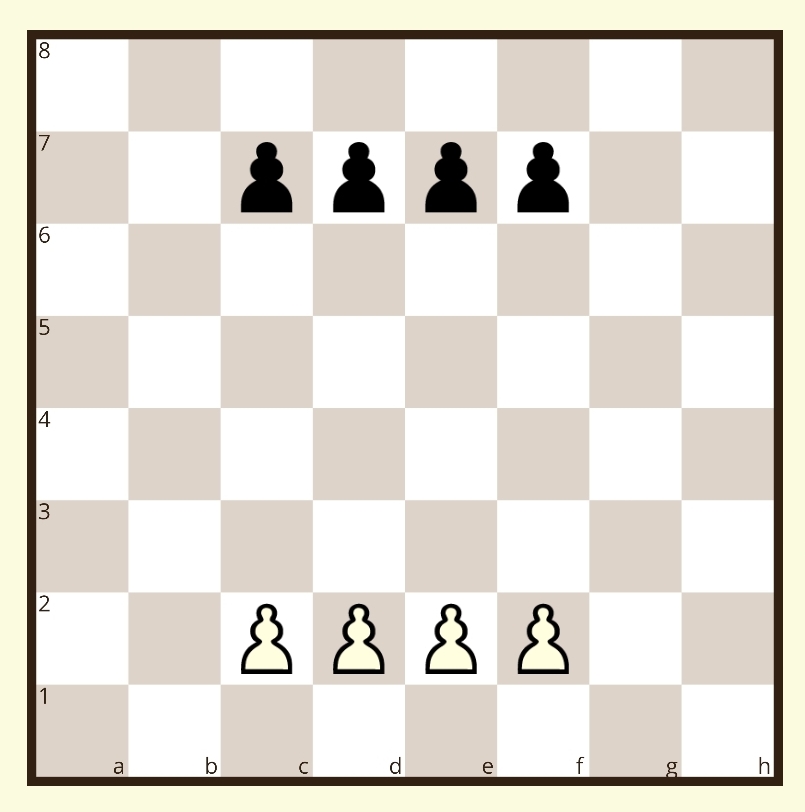
Let’s begin with a Pawntastic. You may begin with 4 pawns v. 4 pawns The first player to reach a pawn to the other side wins. You can also win by blocking your partner’s pawns so they have no moves to make or by capturing all pawns.
Hungry Horses
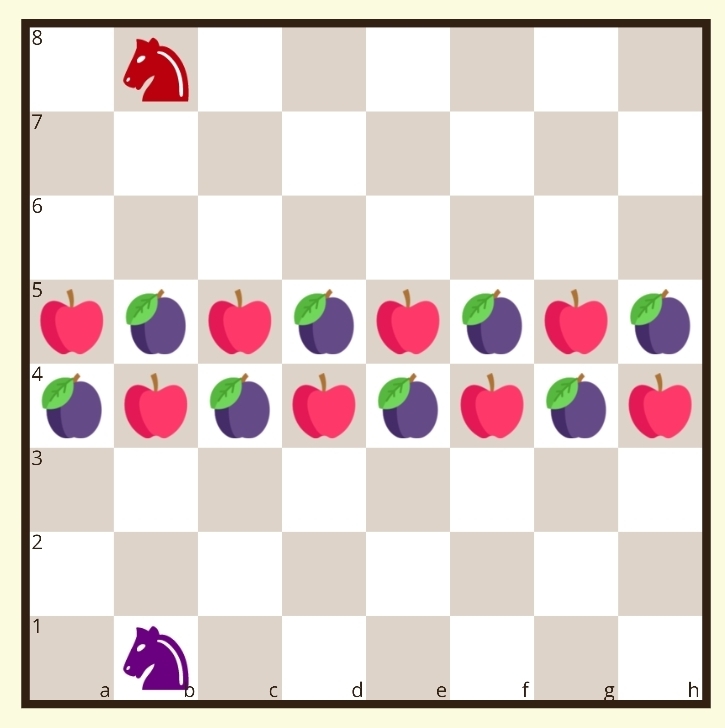
In Hungry Horses players take turns to capture their fruit. We begin with one knight only and focus on knight moves in all directions and correct captures. Knights cannot capture knights at first!
Bishop V. 2 Rooks and a Queen
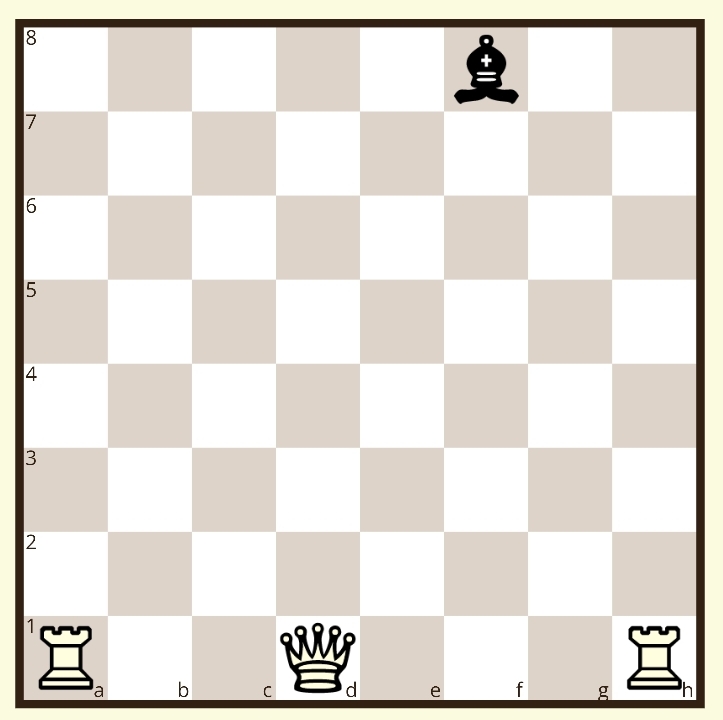
In this game white must capture the bishop in the fewest possible moves. Students visualise spheres of action and restrict the bishop’s space. Defense and sacrifice may also be explored. A game that looks simple but has challenge for the beginner players! (This great game is from the FIDE Preparation of Teachers course.)
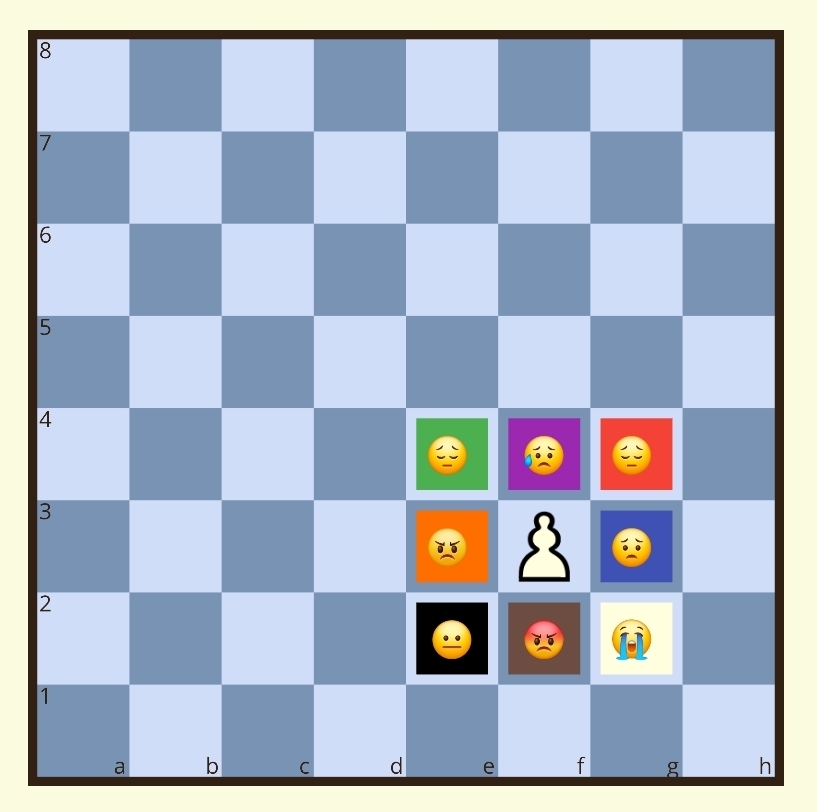
Homecoming
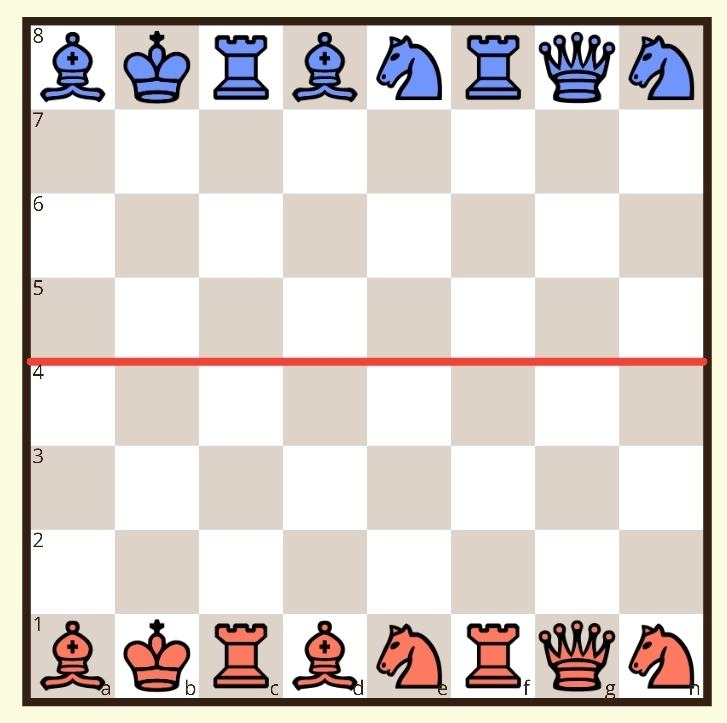
In Homecoming players play with all the pieces from the bank ranks. The aim of the game is to return pieces to their starting positions. Pieces cannot cross the red line! Who will win the race home?
Homecoming is all about visualising moves and revising the movement of the pieces. We pause and explore which pieces should be dealt with first and where they should be moved to in order to reach home in the fewest possible moves!
If the game ends early then I praise children for how many pieces they have returned home. If you’re only one or two pieces behind your partner then that’s also great. Did you make progress as the lesson went on? Did your games improve even if you didn’t win the race? If it’s a yes then be proud too!
These are just a few examples of minigames. They are quick to learn, fun but have excellent opportunities for deeper learning!
Let’s take a look at some ideas for the classroom. How can we help children look beyond the competitive element of chess?
Simple rules means no overwhelm
Minigames need simple rules. I introduce minigames with the following headings.
Aim of the game:
How to Play:
They’re quick to learn but with a focus. This maybe skills practise or strategy. The teacher may give a short introduction and then students apply what they’ve learnt.
Pairings Matter
Avoid putting students who find competitive sports difficult together. Sometimes there is a supportive adult nearby. Sometimes the student who finds it difficult can be given a ‘trainer’ role.
Partner or Opponent?
It’s also worth pointing out that language matters. If you’re keen to install a classroom atmosphere where the focus is learning and not competing then choose your vocabulary carefully. Call students ‘partners’ so the emphasis is on collaboration and training instead of winning.
Chess Etiquette and Sportsmanship
You can also model how we end a game, a handshake, smile and commenting ‘good game’ to our partner.
🌟🪄 You may have lessons where students share one star and a wish, (something they noticed that was brilliant and something to watch out for next time).
How to React to Winning and Losing
I often share how we can react to our games. If we lose take a deep breathe, count to 5, shake hands and smile.
If we win try not to show off, no chess banter or comments that provoke. Maybe your partner needs space, maybe you can talk about something else. Having empathy is key. And sometimes, if you know how hard a friend has tried let them have their moment to shine! Celebrate them! 🥳
If I’m standing at the front of the class I shouldn’t be able to spot winners or losers easily. Being humble and kind matters.
Feedback is about Game Play not Winning
When a game is introduced, explain the rules, the do’s and don’ts and model game play. Let students get into the game as soon a possible.
After some time I pause and recap on the rules. Going over any errors I noticed. We then discuss strategy. When I pause game play the emphasis is on strategy, discovery and progress.
I’m not praising my students for winning I’m praising them for their contributions to discussion and how they’ve applied new knowledge or shared ideas. Progress is the focus. Make a big deal, let students shine. Look for qualities like resilience, good sportsmanship, creative thinking and decision making.
Minigames give you a second chance
Minigames are short. They can take up to five minutes or thirty minutes. If you lose you have another chance to play again within the same lesson. You may even have a third or fourth chance to improve and win!
Plan your pairings
Imagine if you will, having the same partner for the school term and this partner is a great player who likes to boast about winning. Imagine what it might do to your confidence! For a child this can really damage their confidence and create resentment for chess.
Begin with the same pairings and plan this with the class teacher before hand. Once classroom rules and routines are established you can move to more fluid pairings.
Don’t wrap them up in cotton wool!
I should make it clear at this point that competition is good. It’s not a forbidden word. For my top players or students who want to play competitively there will be tournaments with medals. I wait for students to ask me. And you may hear me say, sorry you’re not ready and I’ll explain why without naming names. This makes everyone step up and be better sports people.
There are also tournaments at chess club and school trips with other schools.
There is competitive chess but the foundation of our chess curriculum is about the wider gains of chess, such as problemsolving, communicating ideas, mathematical thinking and strategic thinking.
A Classroom Culture shares Responsibility
It’s very likely that outside factors have contributed to the child who cannot cope with losing. Maybe it was a football lesson weeks ago where the child was ridiculed by a team mate for ‘making’ their team lose. Or rowdy parents at the weekend football match putting pressure on children to score!
For the child at home, maybe there is a parent who has placed pressure. You don’t even need to use words to make a child feel your disappointment. Sometimes it’s your body language. It might be an eye roll or sigh of frustration. Children feel everything. We can all promote kindness and coping with failure by being more mindful of how we cope with mistakes and life not going our way.❤️
Use famous talks by sports players
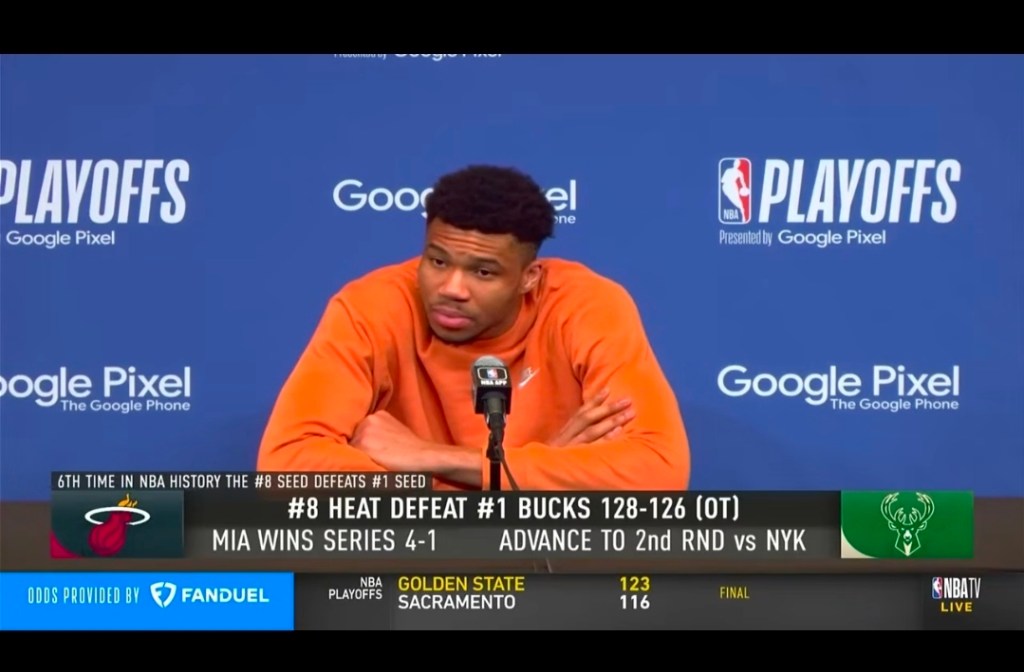
Another idea is to use famous sports players as role models. We have so many! The Greek Nigerian basketball player, Giannis Antetokoumpo, has a great interview with a journalist where he talks about how losing a game is not failure. He does this with passion and it’s so powerful to watch.
https://youtu.be/9mXGSjnUvSM?is=TVZi3paHD51QGGfn
Stories
You can also use stories within your chess lesson. In my new children’s book The Gift of Chess there are key messages about coping with failure. In fact, one could say that the essence of my book is about this.
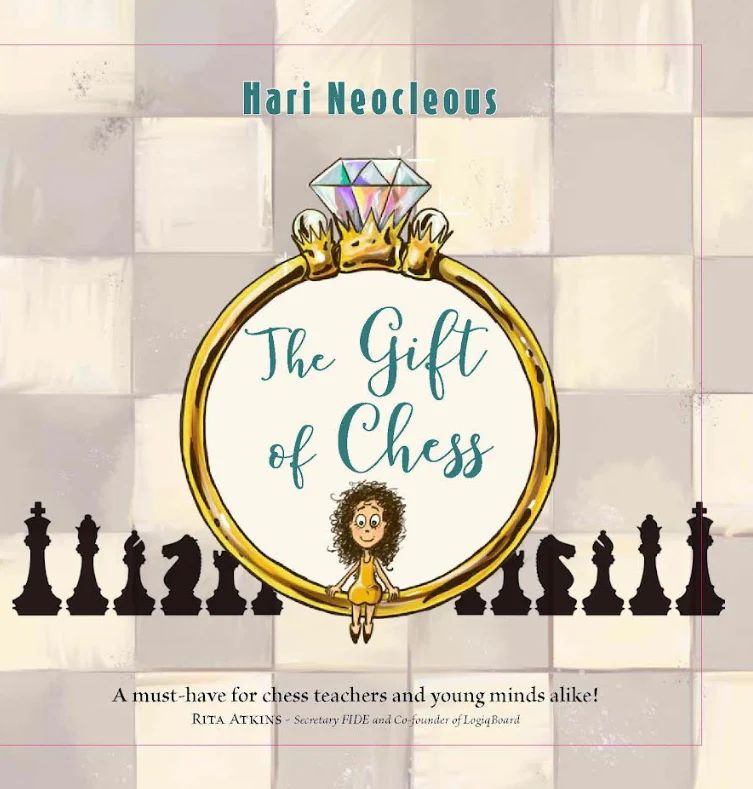
Freedom to take a chance and freedom to fail.
Stories help children make sense of the world around them. I wrote this book because I wanted to share the many benefits of chess and I wanted children to know how wonderful they are to be learning such a beautiful and challenging game.
Winning is part of life. But in chess there is so much more to gain. Find time to reflect on this.
It’s okay to cry
The classroom should feel safe enough to feel anger and tears. I will often watch closely for changes in body language and intervene before disputes. Chess teachers need this sixth sense…
Tuition and 1:1 Support
If a child is losing regularly I let them know next week I will be their training partner or I will watch a game. We’ll unpick games together in the lesson or at lunchtime if possible. This 1:1 time can uncover the weaknesses in their games and help them move forward.
Weekly Disputes
If there are weekly problems and disputes as opposed to losing one of the final actions is that they become my partner. Here there is no room for cheating, if that was the case. Touch a piece you move it. There are clear rules in chess which means no grey areas. If you are the child always involved in a drama then the connections must be made. I won’t accuse but I will discuss cheating or learning to lose. I list unacceptable behaviours and what should happen instead.
Timed Games and Counting Points
In timed games I sometimes leave little time to add up points. I’ll let students know in advance and ask them to watch how they play during the game. I think it’s an experience that’s interesting to feel. You don’t need to have that big moment where you say you’re the winner! Maybe its enough that you were tracking the game secretly as you lined up your captured pieces or that you know deep down you won! End with a handshake, a ‘good game’ and smile!
Certificates
Another great action is to reward weekly certificates for the various benefits of chess or the lesson focus. This is a wonderful way to celebrate the progress of all learners and show the whole school the gifts of chess. 🎁
Final Word
I hope that you’ve found some ideas to help you. This isn’t a quick fix but something that takes time. If a child is really struggling then it’s a long process but worthwhile and will support your student through school.
These ideas are based on my experiences in the classroom. In chess clubs I know the pressure to succeed and win trophies is great. And is central to the world of competive chess but it’s not for all children. A decision for parents and their children to make.
I’d love to hear your thoughts
How do you help a child cope with losing in chess? Send me a message on social media.
Maybe you have a clip from a chess movie or another children’s book to recommend?
Or have you used art or drama to explore losing in chess and sports? 🤔
Are you a school that also uses the Swiss Pairing Method for tournaments where all children win points whether they win, lose or draw games?
Sometimes a quiet word with the class teacher or parent (if the school allows) really helps too…
Wrong Answers Only
Today I asked my two teenagers what advice they would give to a student who cannot cope with losing.
Teenager 1:
Tell them to knock down their own king and leave the table. 😬
Teenager 2:
Choose a different hobby. 🙄
Partner:
‘Practise makes Perfect’ 🤯
I thanked all three of my family members for their unhelpful responses and smiled.
What other wrong answers can you tell me?
I’m leaving you with some holiday snaps. I’ve had a glorious time in Greece and Cyprus and now I’m ready for workmode. Yes I’m finally back although I do wish I was swinging on a hammock underneath the pine trees. ❤️ 🌊 ☀️
Hari x