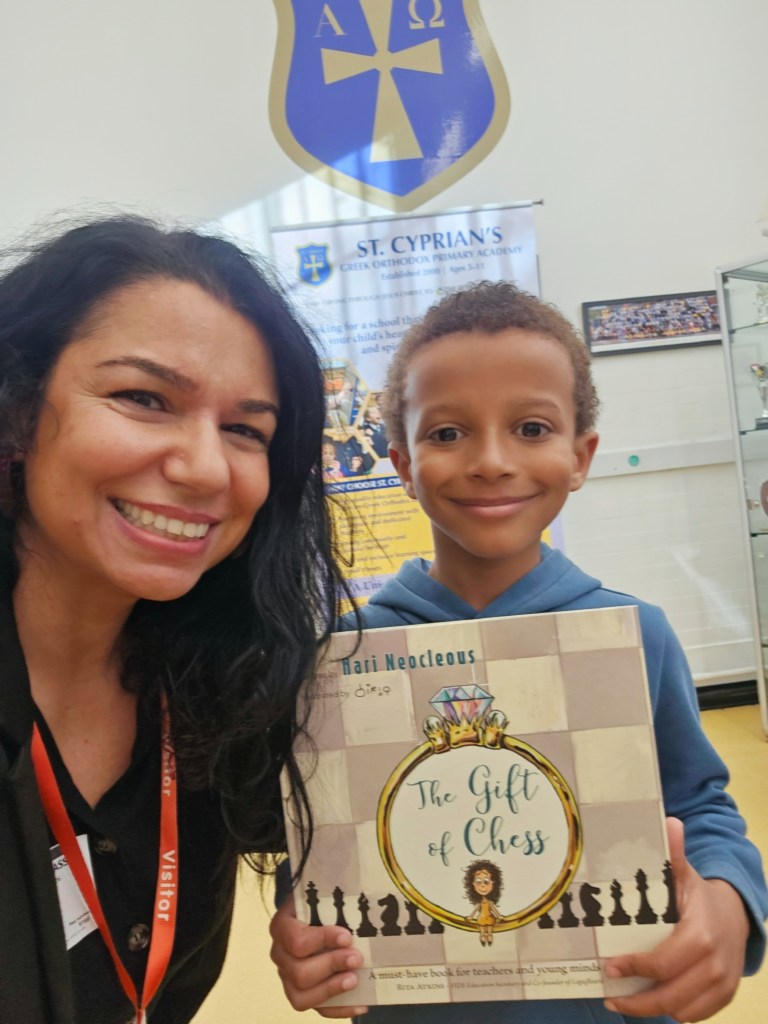
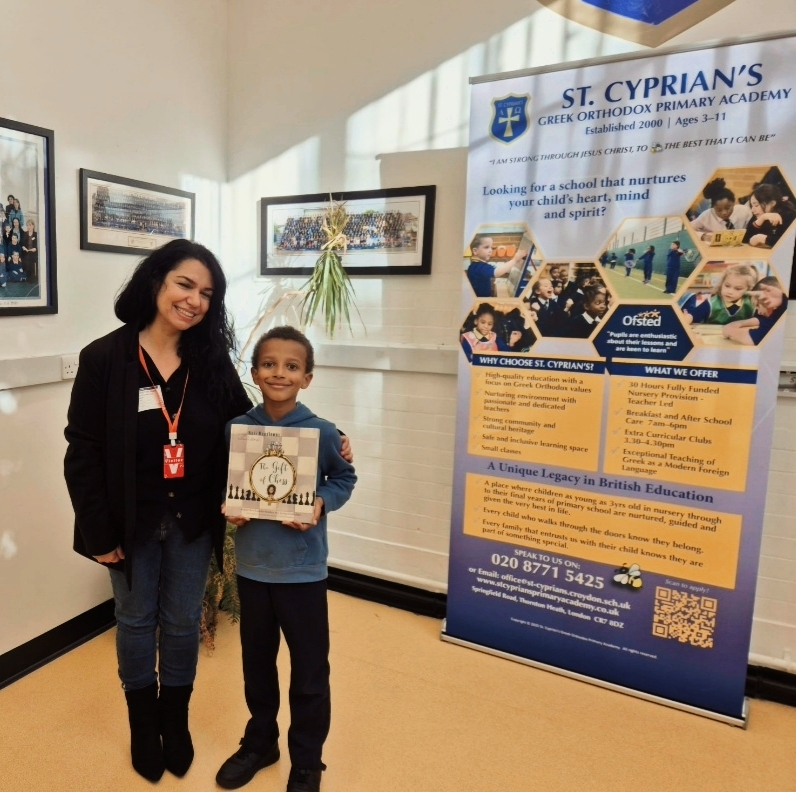
My very first author visit took place on Friday at Saint Cyprian’s primary school, south London.
I was kindly invited by the PTA (parent and teachers association) as they had spotted our problem solving tasks on logiqboard.com and wanted their students be inspired by The Gift of Chess story.
On Friday I led two workshops, one for a year three class (7 – 8 year olds) and one for a small group of chess players, mixed ages.
The Year Three workshop outline :
♟️Story time, read the first part of The Gift of Chess
♟️Pause at the alphabetical Gifts of Ches
♟️The Rook on logiqboard.com
♟️Play rook minigames
♟️Read the second half of the story.
♟️Reflection time
Arrival
I arrived in good time and was invited in to watch the year three class assembly by Zakynthos class. At the end of the huge hall were the children, with parents, staff and other year groups watching. The assembly was about the little Greek island of Zakythos. As I watched a giant paper turtle being lifted into the waves, I scanned the hall for clues of Saint Cyprian’s students.
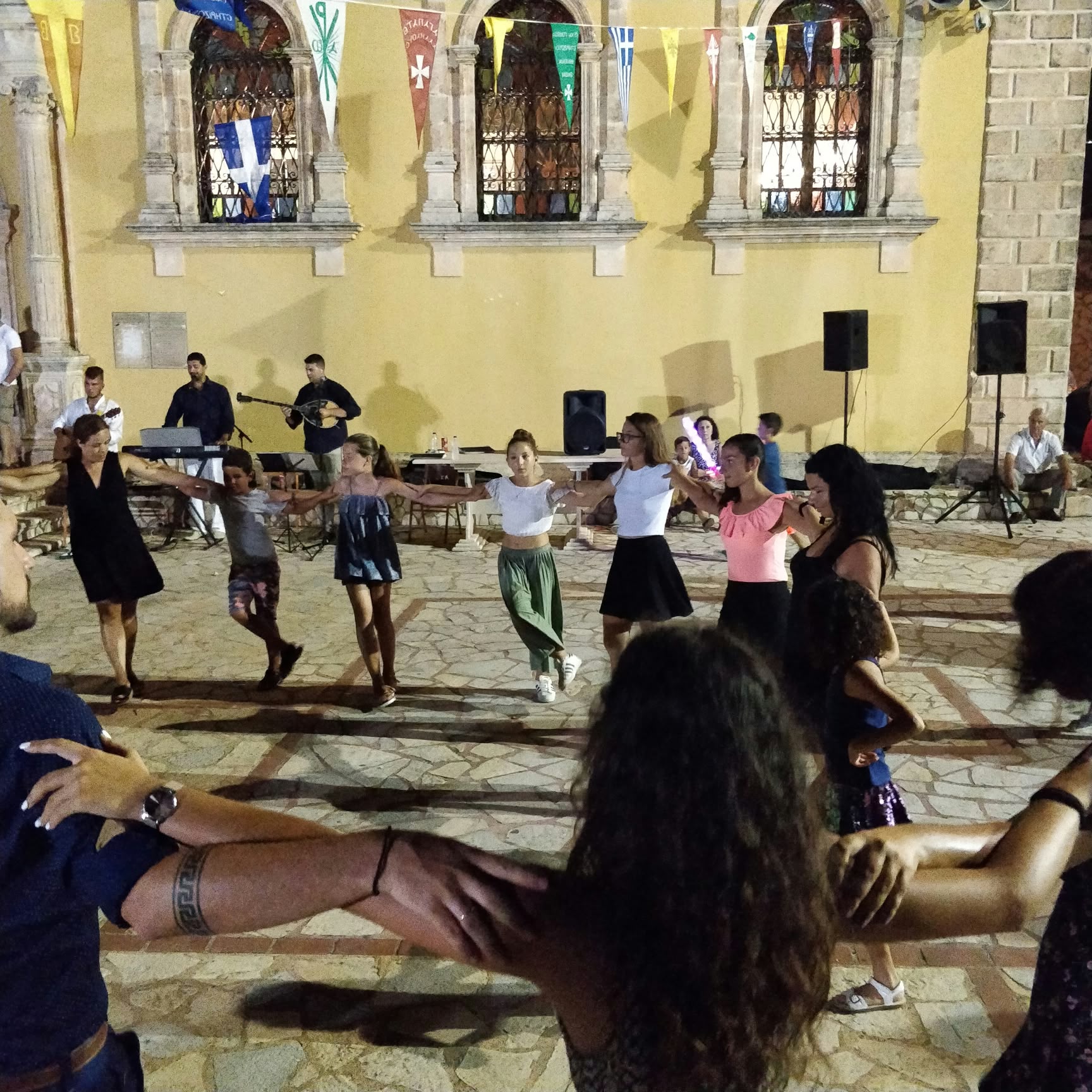
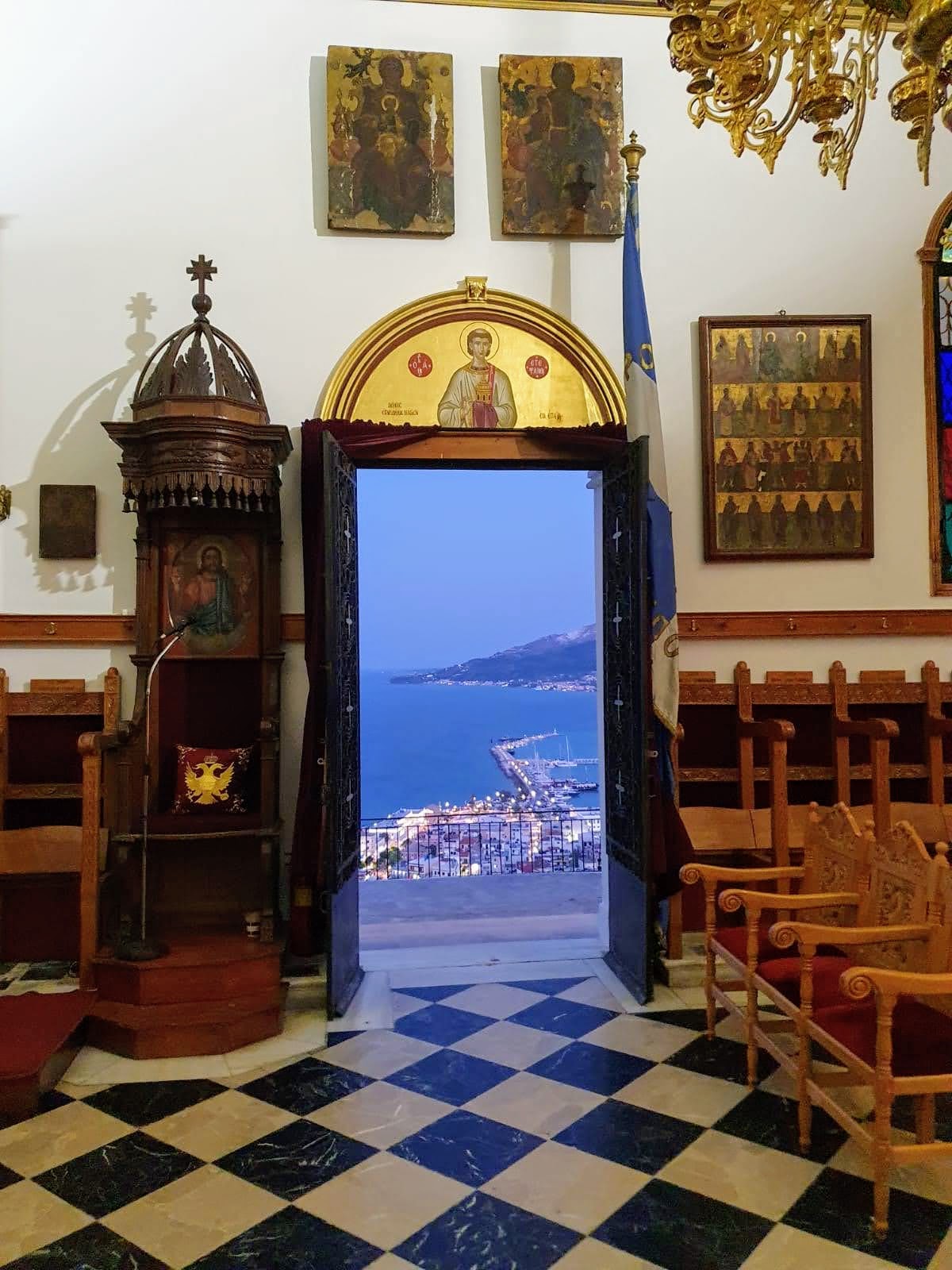
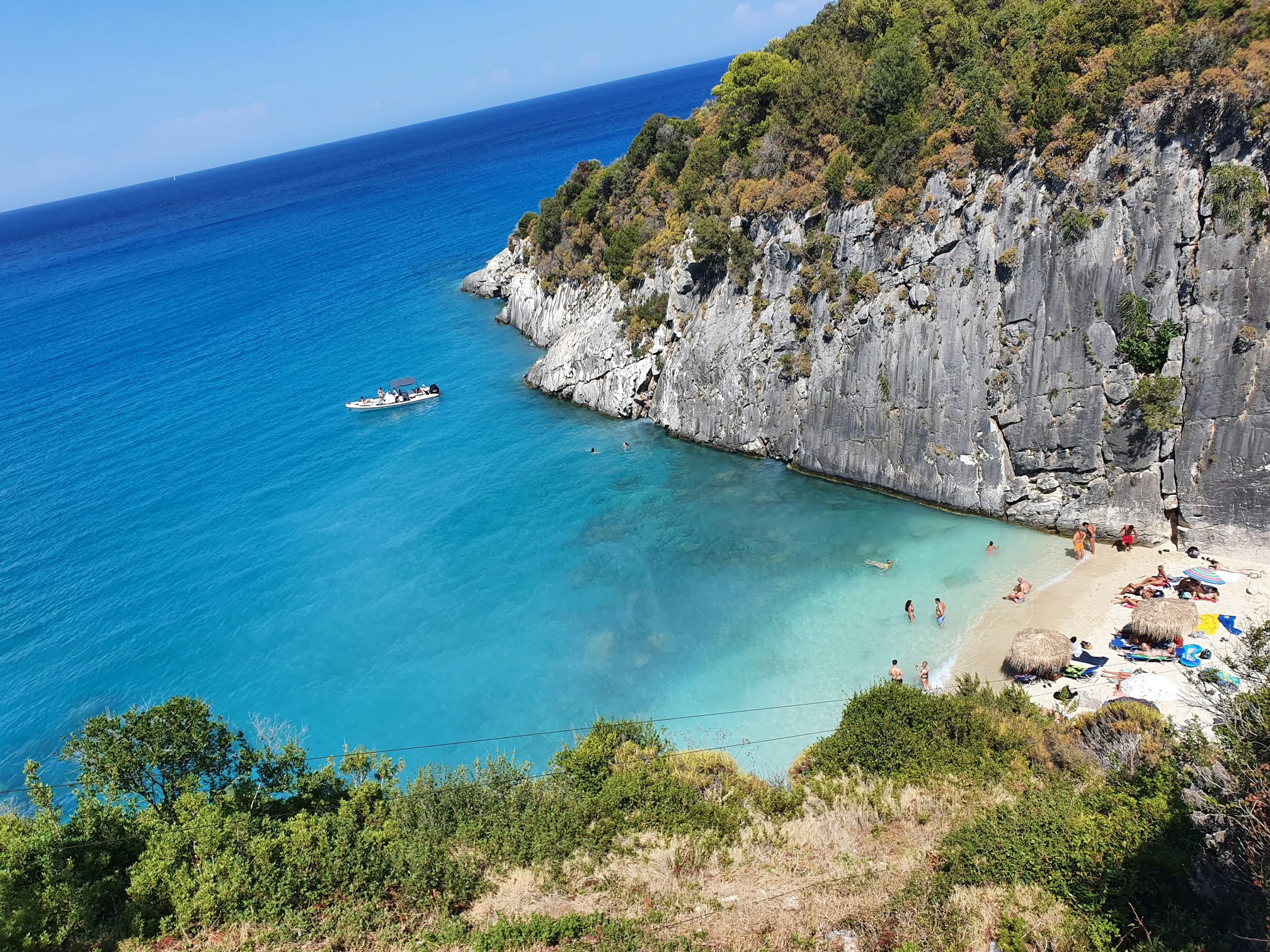
A group of boys picked up their guitars to play. Music, singing and Greek dancing followed. I had a lump in my throat and felt a wave of emotions. I’ve worked in a Greek school in the past. These children today sounded different, they spoke Greek as if it was their mother tongue and not their heritage language/second language or an additional language they learn at school. It was beautiful. The huge hall was filled Greek melodies. I was transported back to Zakynthos, a sweet little island I’ve visited three times.
I soaked up the atmosphere and watched reactions of parents, students and staff. I knew right then I was in a very special place. I wish this school was closer, I’d love to work here…
Workshop Time 🎉
Zakynthos class joined me shortly after their amazing performance.
The class included complete beginners and some children who knew how to play chess.
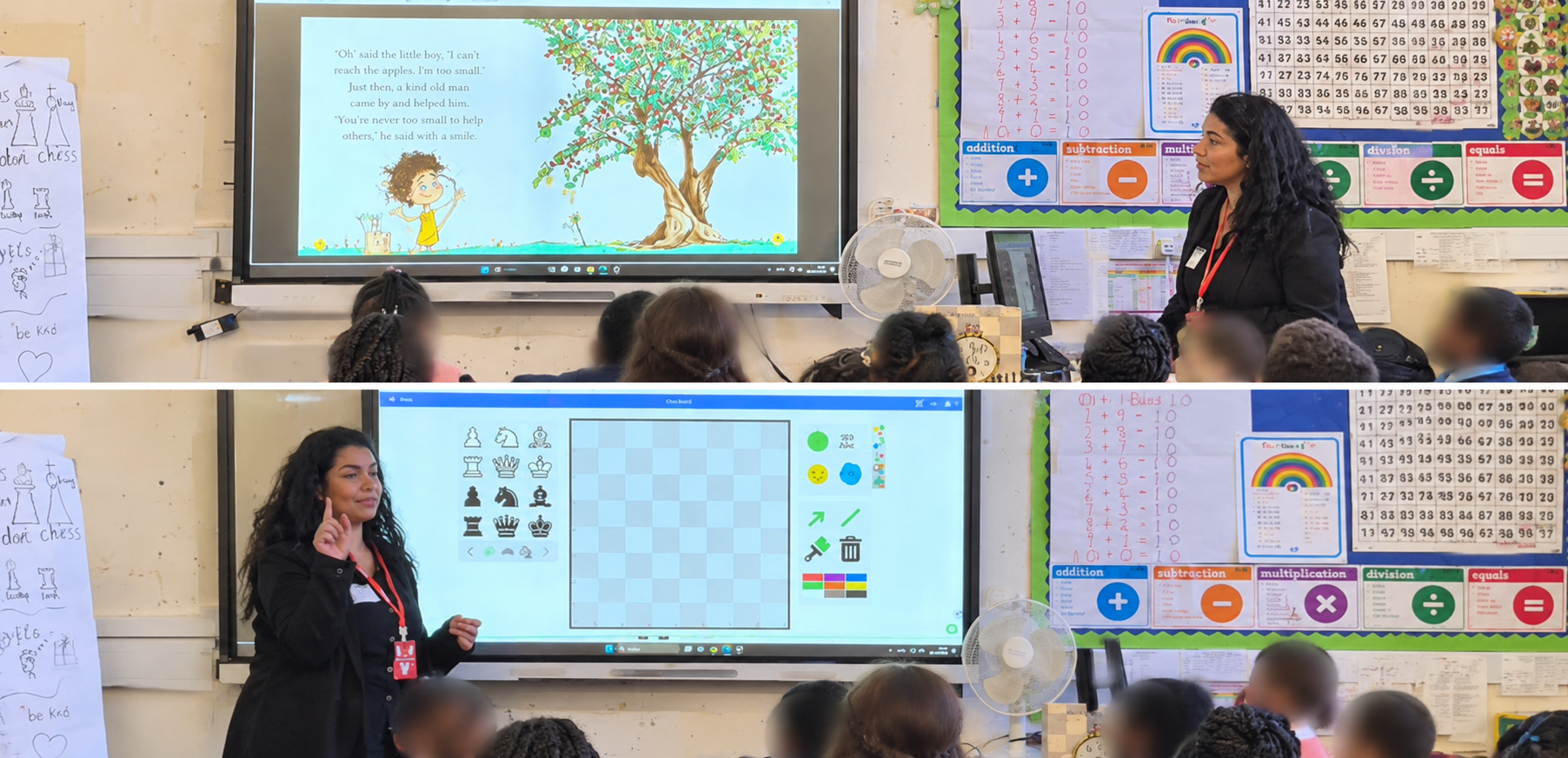
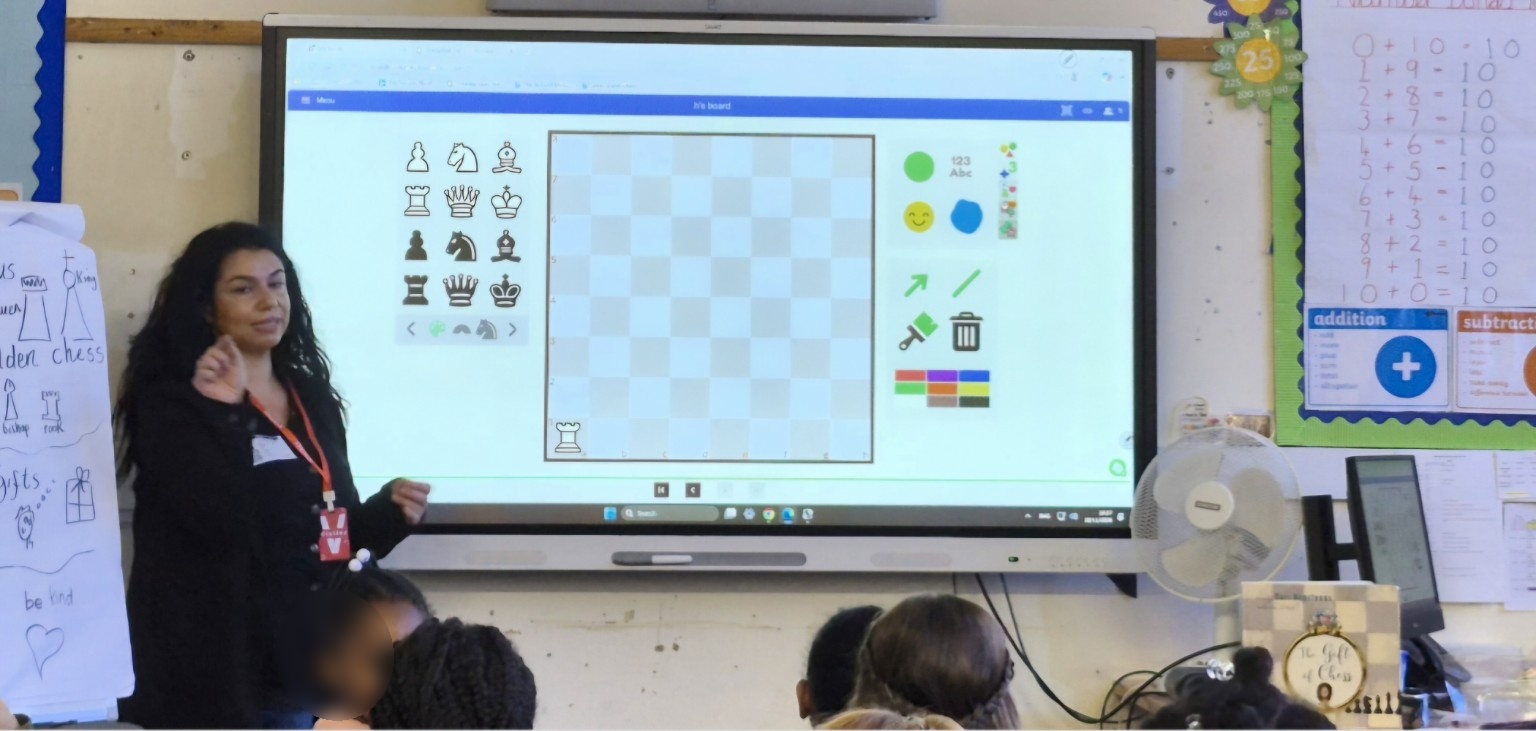
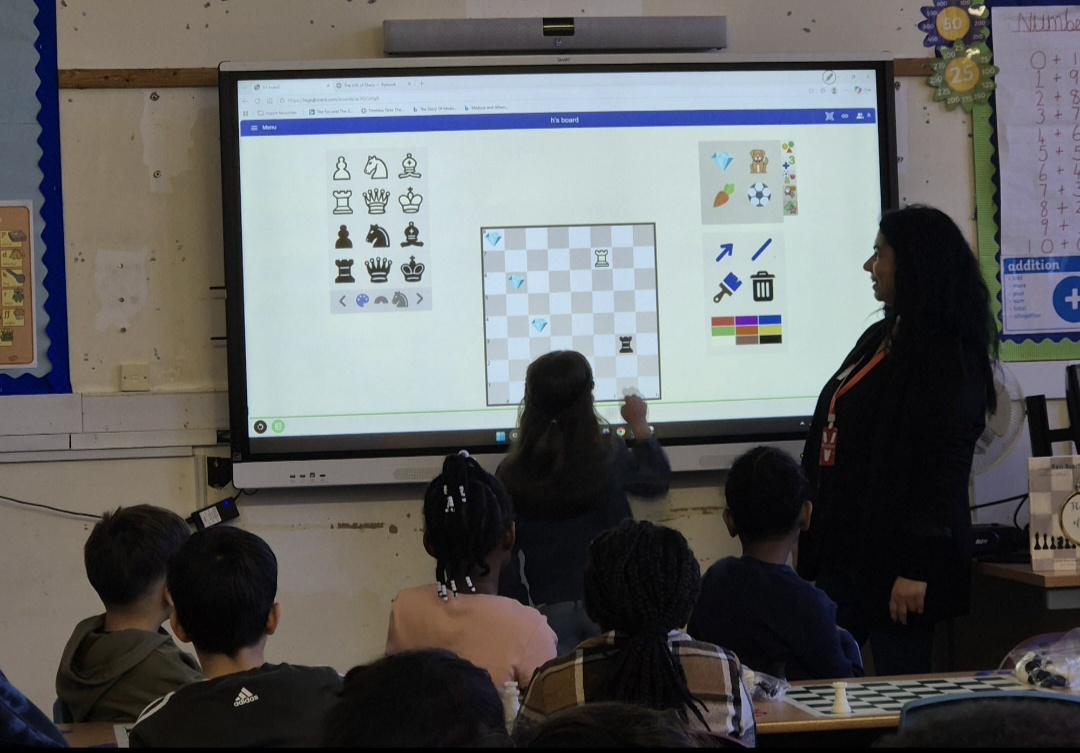
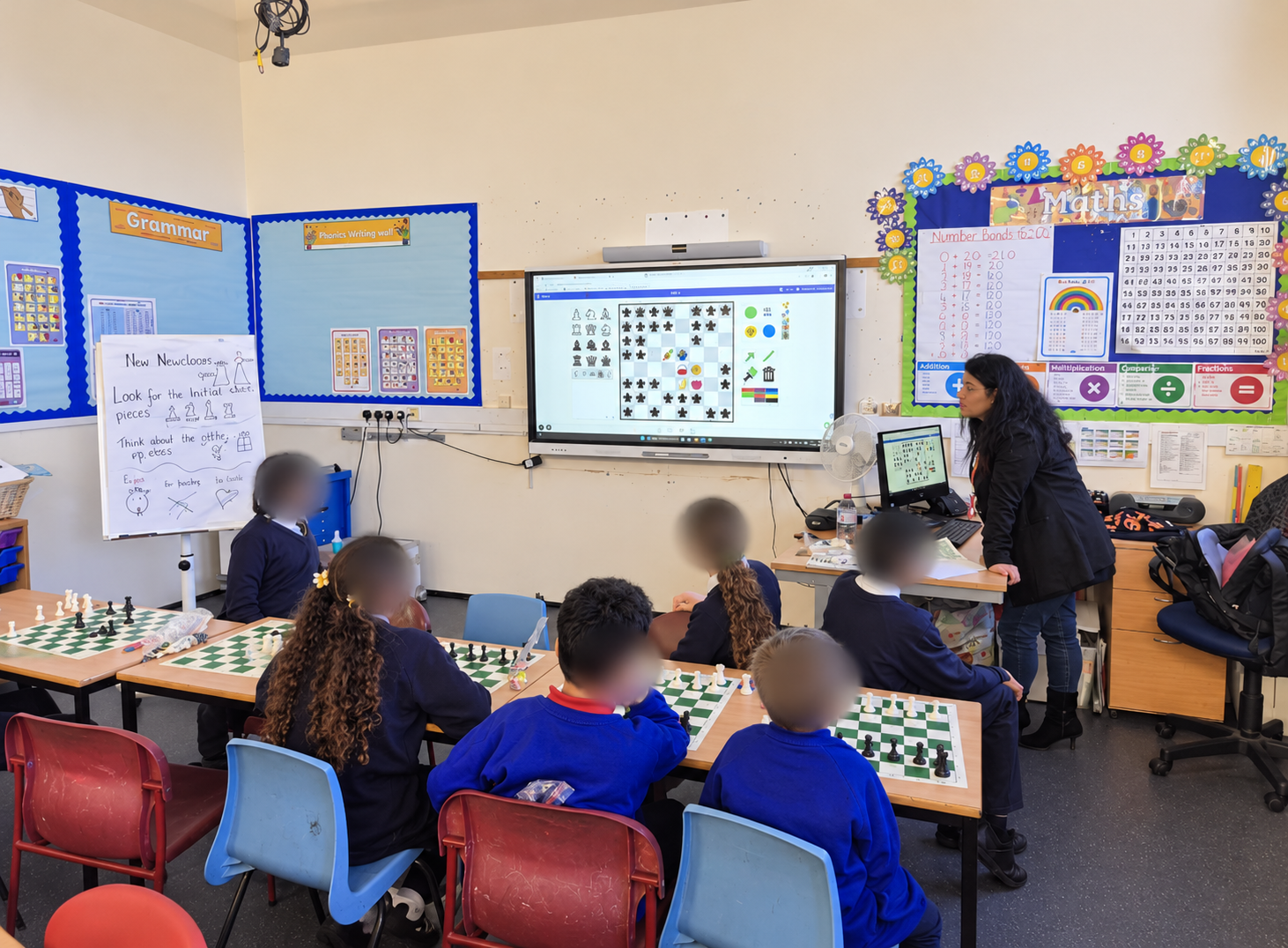
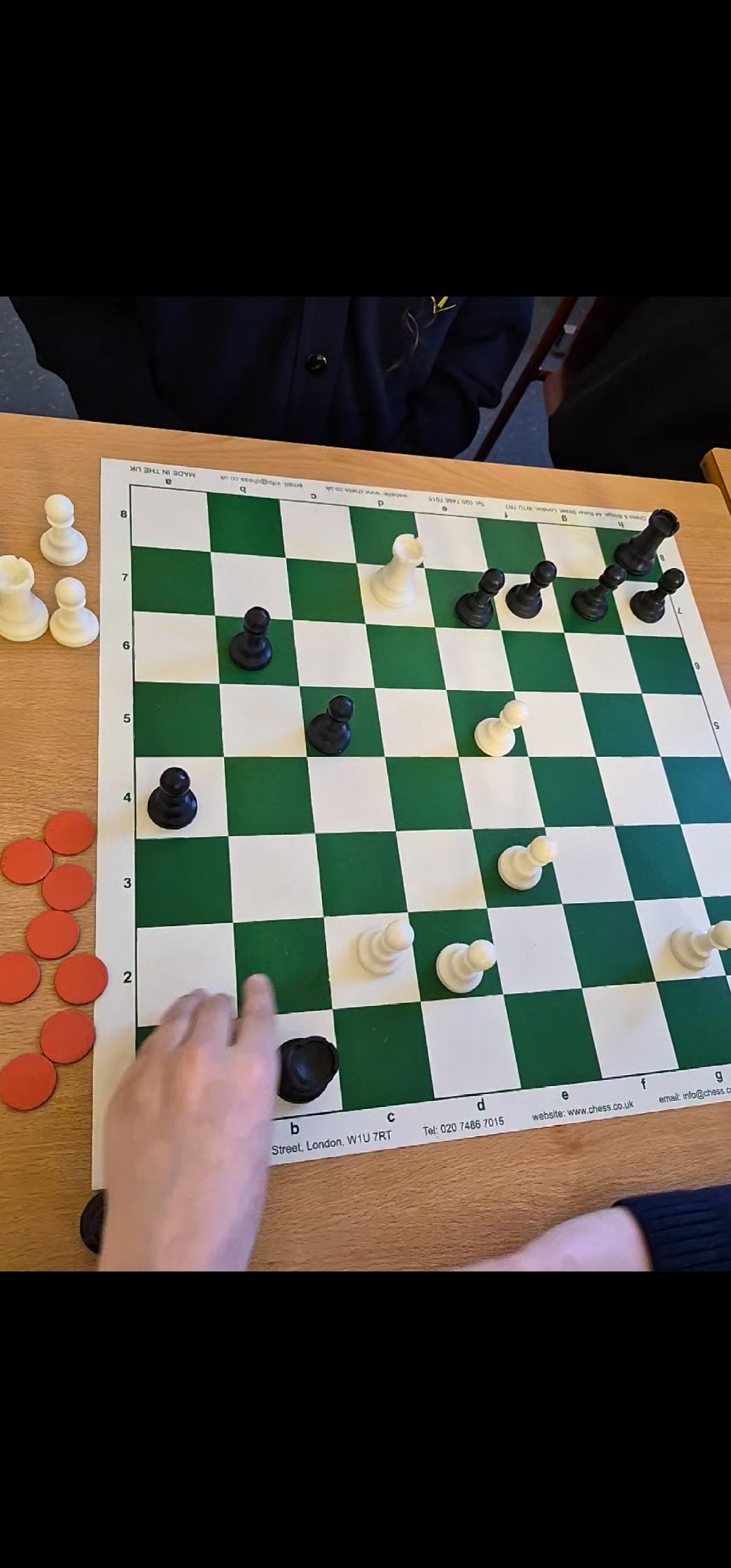
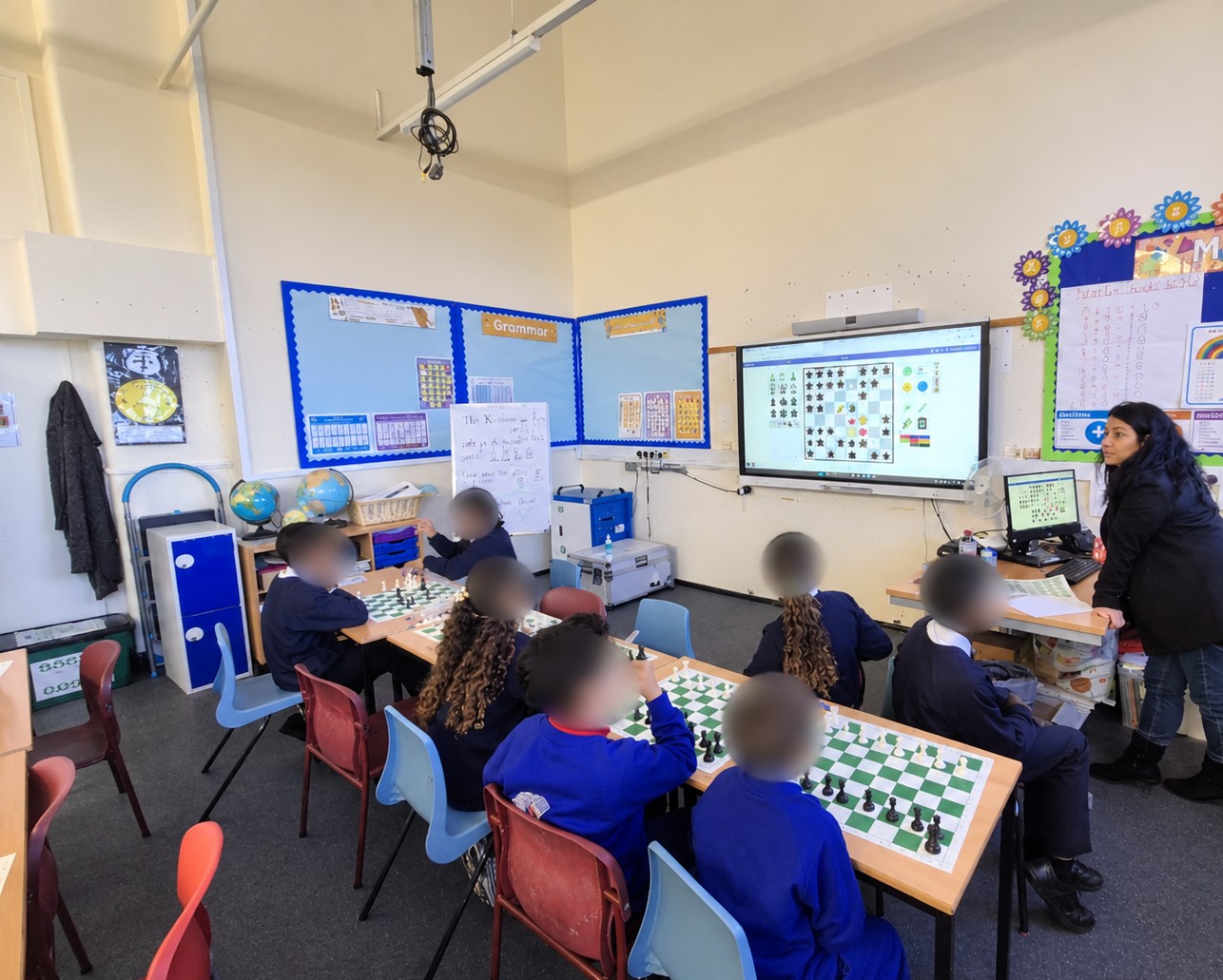
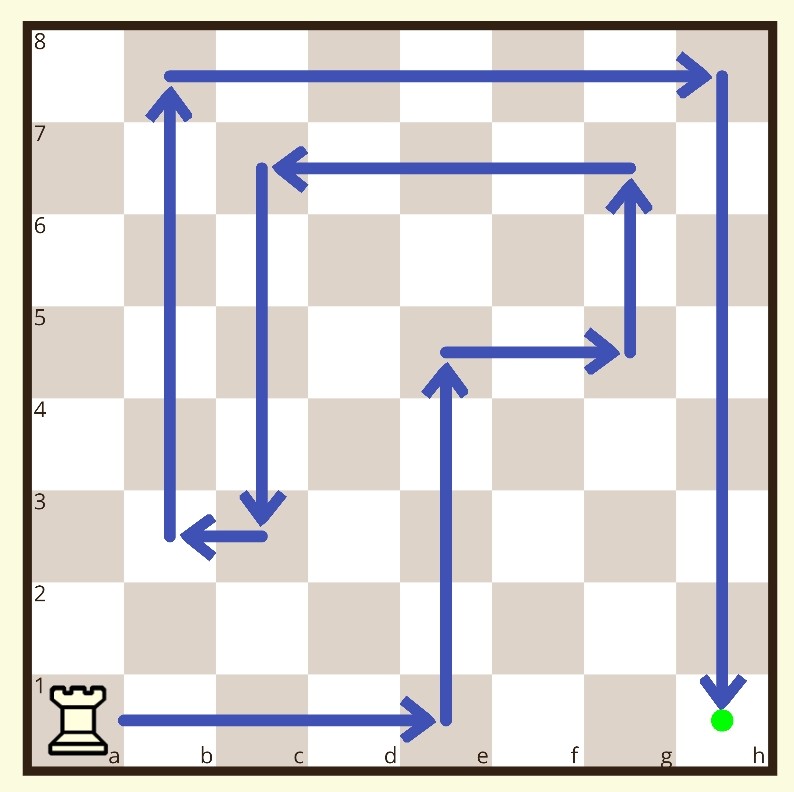
I introduced the rook, how it moves and captures, what it can and cannot do and modelled out first game.
Rook Moves
Mini game 1 Rooks and Gems
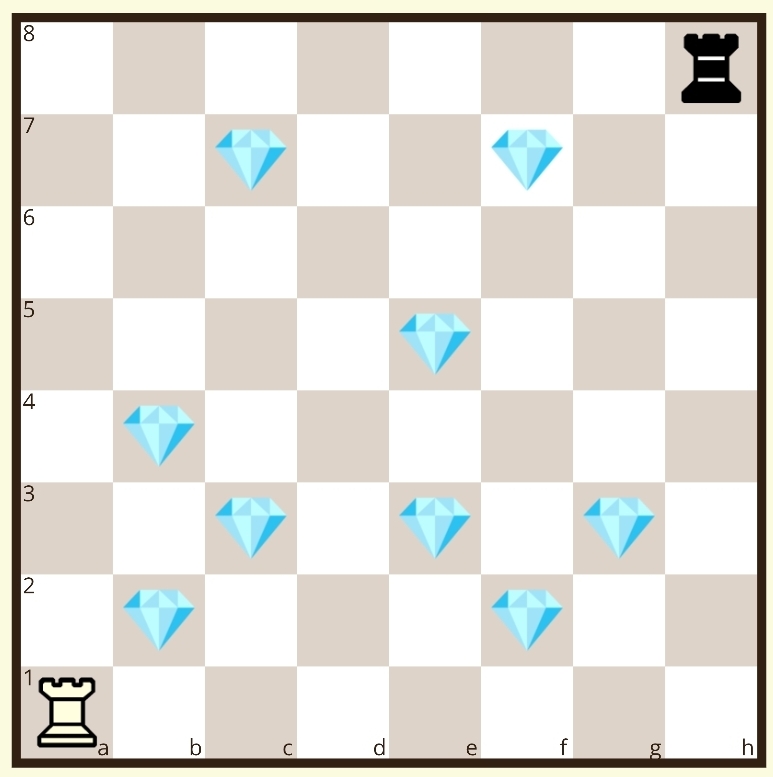
Aim: To collect the most gems
How to play: White places 9 gems on the boards (no gems on the outside ranks/rows or files/columns). Players take turns to capture gems. Rooks cannot capture eachother.
Students play again, this time, they swap colours. White places the 9 gems on the board.
Rules and Expectations
I wasn’t too concerned about correct piece placement (white rook on a1 and black on h8). This was an isolated chess session and every second mattered! Listening, not touching pieces and being focused were the rules that mattered.
‘Check in’ time on LogiqBoard
After a few games, I stopped the class to tell them all the positives I noticed: taking turns, helping eachother and correct moves and captures. I reminded them that a rook cannot jump, it cannot move diagonally and it cannot do ‘L shape’ moves as that counts as 2 moves! I modelled each error on LogiqBoard.
Strategy time
I then created a teachable moment from one of the children’s minigames.
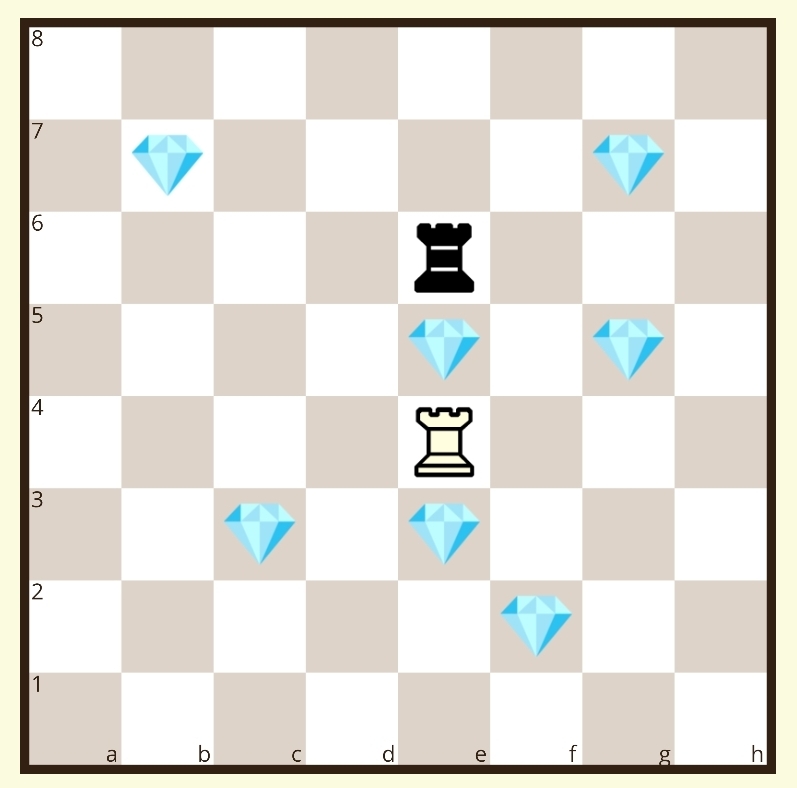
It is White to move. Some gems have been captured. Should White capture the gem above or below? Why? Tell your partner what you think and why. 🤔 💭
We had a mini discussion of ideas…
Plan your route before you begin. Be flexible in your thinking as you may have to adjust your plan. Can you play strategically? Can you block your partner and slow them down. We looked at captures and ‘preparation moves’.
The students continued to play but with a greater awareness of strategic thinking. Making decisions wisely. Planning their route. A wider vision of the whole board. Some students noticed that starting with a row or column that has three gems is a better choice than a row or column that has one gem. Some wanted to block their partner and slow them dowm. 👀
Minigame 2
Rook captures allowed
The same rules applied but this time a rook could capture a rook. I modelled this on logiqboard.com and reminded students that you win my capturing the most gems. However if a rook is captured it’s ‘game over’ and the winner is the person who made the rook capture. (If there is no leader in that army then the gems collected are pointless….)
The session was pacey, exciting and these young 7 and 8 year olds were passionate about chess! 💪
One student told me she felt satisfaction as she captured a rook, I noticed her huge smile from across the room!
Minigame 3
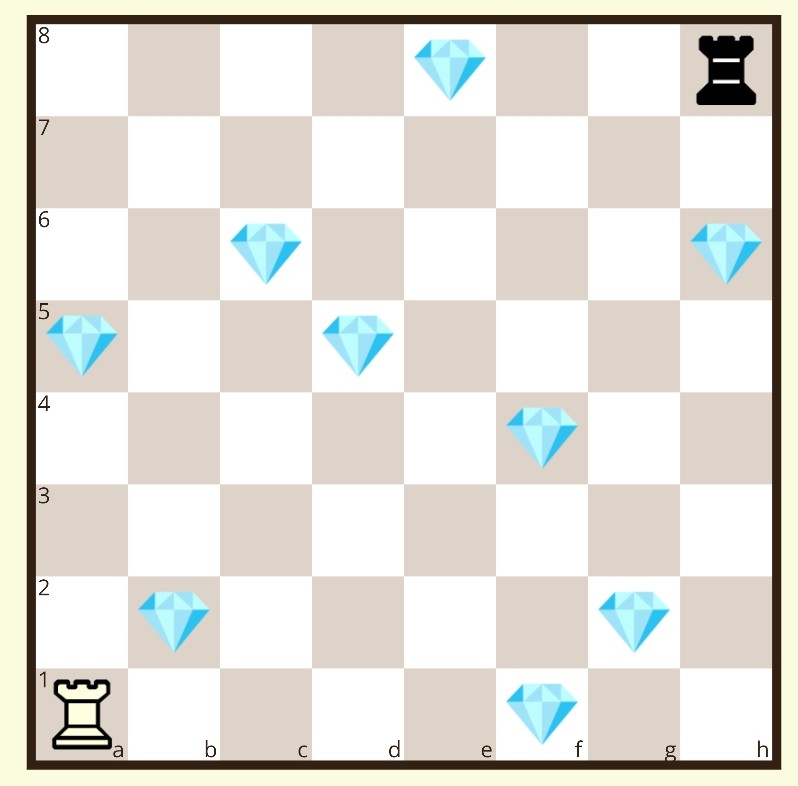
This time rook captures were allowed and gems could be placed anywhere on the board by White.
Back to the Story 📖 📕 🎨
After some exciting minigames we swiftly returned to story time.
It was such a joy to see all the little faces hooked in. Mesmerised once again.
Diriq, the illustrator of The Gift of Chess, creates art that is captivating. Zakynthos class noticed the tiny details in the illustrations and the ways I honoured my Greek heritage.
Being seen 🪞
Seeing yourself in a children’s book gives you a sense of self worth. From my big greek messy hair, the ancient ruins or the musician playing the Greek lyra, I could feel the sense of pride amongst the Saint Cyprian students. They could see something in my book that was a part of their world.
Metaphors and descriptive language 🖊
I stopped occasionally to ask questions and I loved hearing their interpretations and words of wisdom about life, failure and chess. I realised on my way home that I need a note book to record these. What they take away from the book and their experience of playing chess is the most important thing to me.
Small group workshop
My second session was with a smaller group of chess players from year two onwards. We played Rook minigames. We also solved a challenge and finished with a group team game. I shared part of the story and told them they could read the rest in school.
Rook game: Capture the Flag
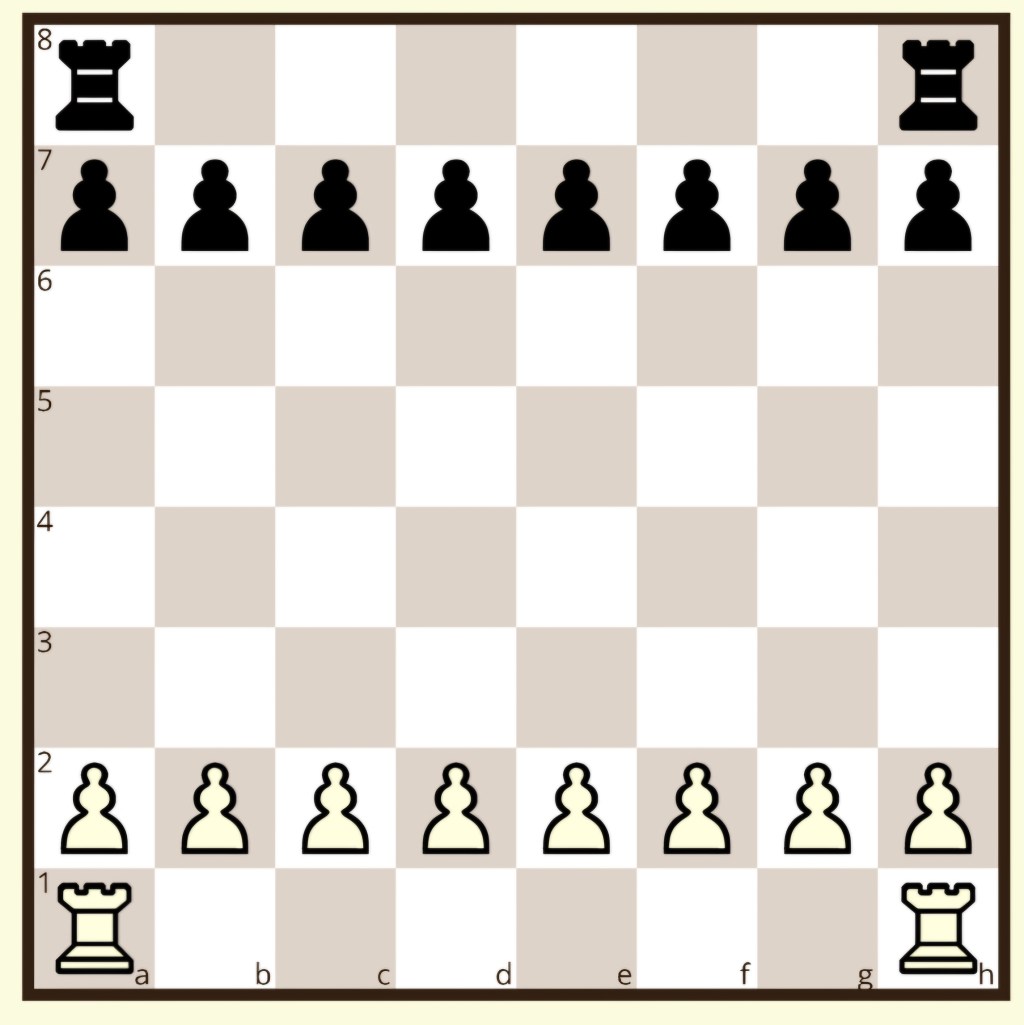
Aim of the game: The first player to reach a pawn to the other side wins. You can also win if you capture all of your partner’s pawns.
How to play: Players take turns to move rooks or pawns. Rooks can be captured but capturing a rook doesn’t not mean you have won.
Discuss: Pawn defence, using rooks to capture pawns, positioning of rooks.
After the first few games the students decided to make a new variant which allowed pawns to be promoted. This meant the winning rule had to be changed too. We had some great discussions on game design and rules.
Problemsolving: Guess Who? 🤔
We moved onto a challenge.
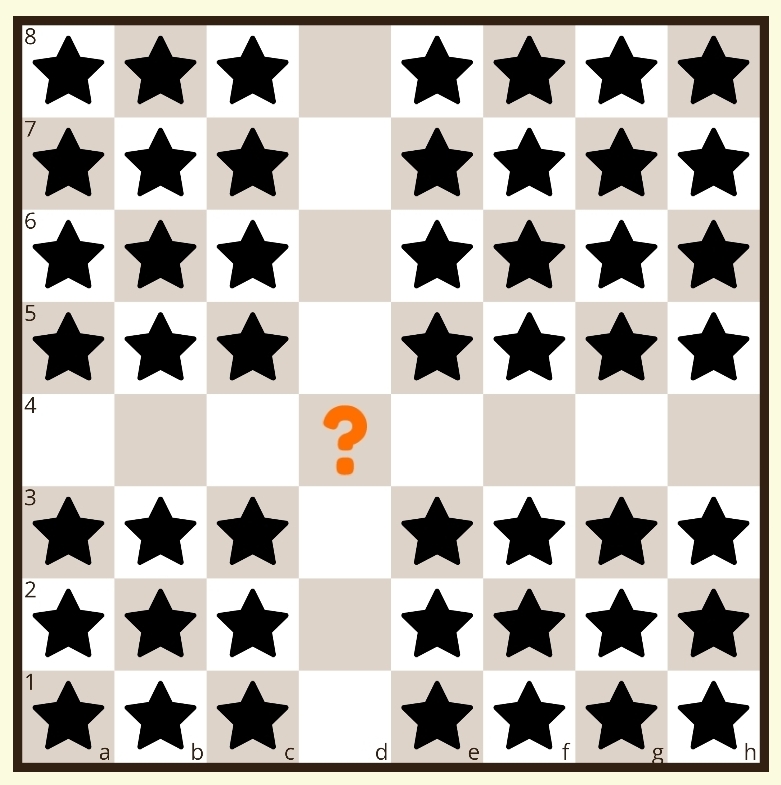
Look at the board below. The chess pieces have been replaced by fruit and vegetables. Look closely at the stars captured. Where are the six chess pieces hidden? Who might the plum be? What about the banana? Which chess piece should we begin with?
There were many ideas. The students used their reasoning skills, eliminating pieces or explaining why they thought it was a specific piece.
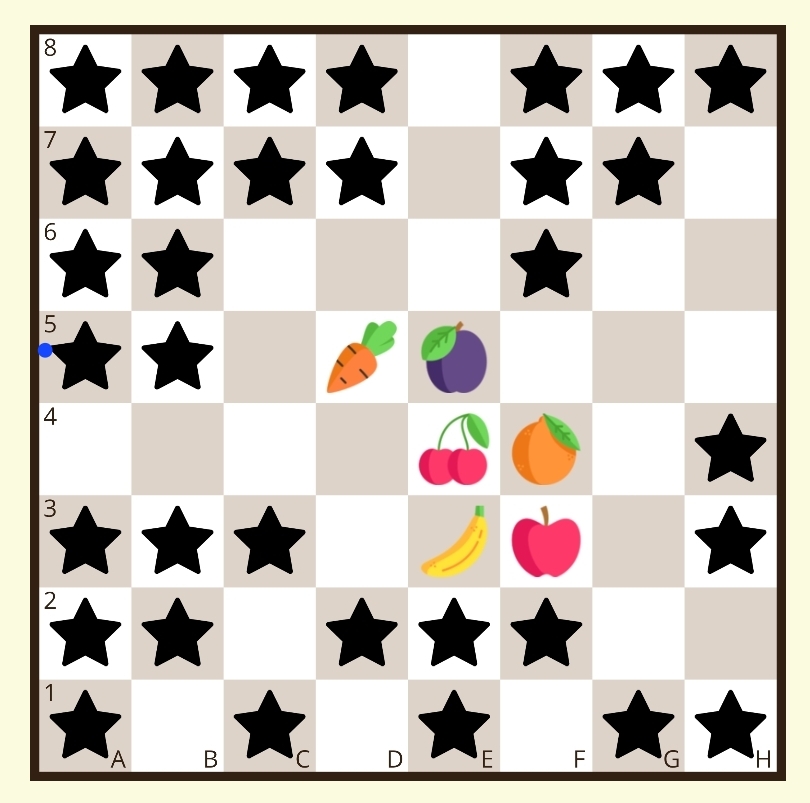
You could (or should) begin with a more simple puzzle. The beauty of LogiqBoard is that it allows you to teach ‘live’, in real time but it also allows you to access key boards in seconds!
Look at the board below. Which chess piece has captured all the stars?
These warm up puzzles would precede the one above in a normal lesson.
Back to Storytime
I read the beginning of The Gift of Chess. This time I stopped here and asked:
If you were a chess piece in life, which chess piece would you be and why?
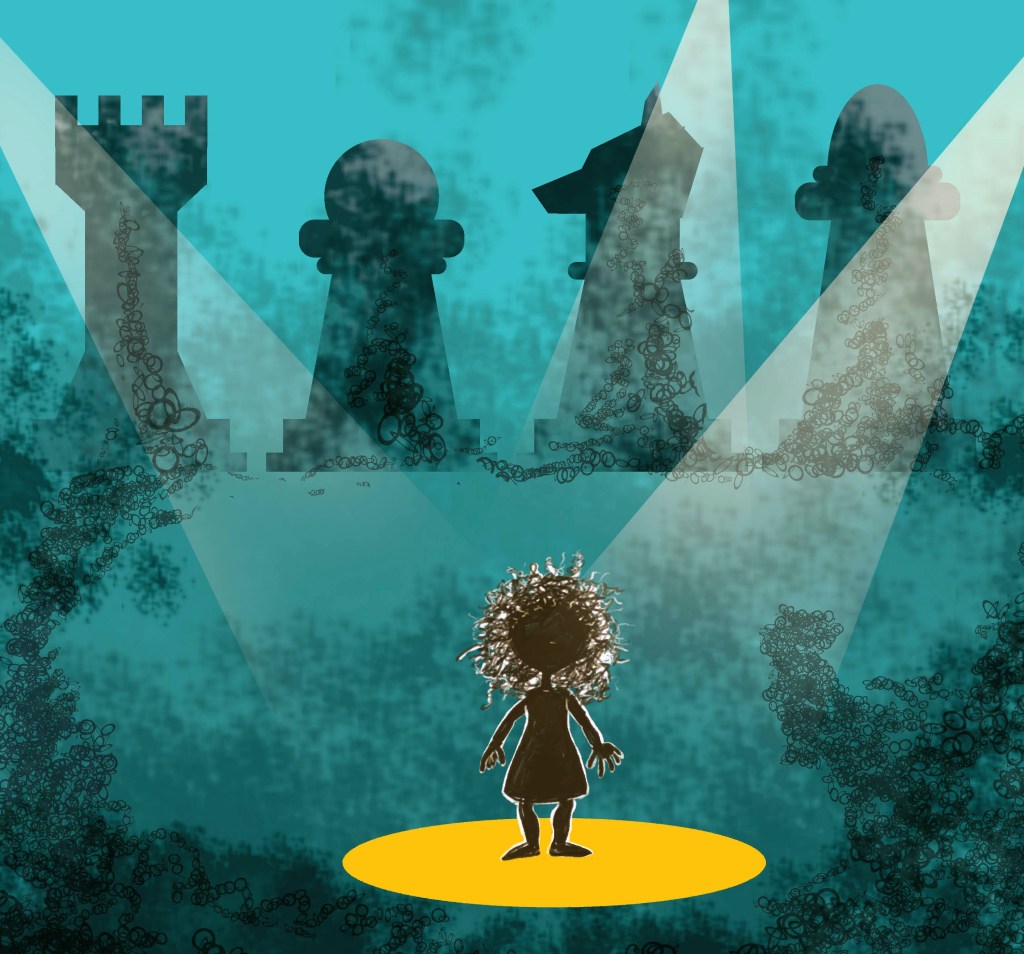
I loved listening to their ideas. One of the boys wanted to be the queen, he knew how powerful she was. She was the popular choice. One saw himself as a rook, being solid and hard-working. Another chose the bishop, who appears when no one expects it to.
This question isn’t only about the way a piece behaves on the board but how each child see themselves in the world.
We finished with a quick team game on logiqboard.com
Final Game: First Check
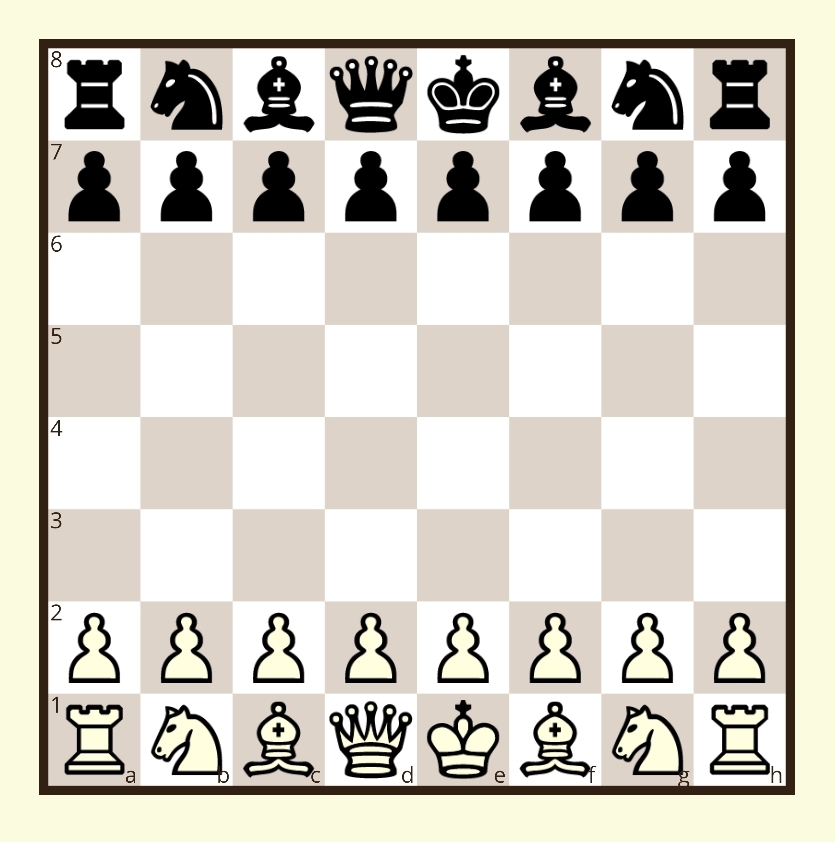
Set up the chessboard with all pieces. The students stand in teams on each side of the board and take turns to move a piece. The first team to check the king wins. The game ends with check.
Where did the writing go?
You may be asking yourself, Hari where is the writing task? Aren’t your author visits about inspiring children to read and write?
The answer is yes. But it is also a celebration of chess and I wanted them to experience the gifts of chess by playing aswell as listening to my story. They felt the joy, the excitement, the friendship and competition. They planned ahead, visualised, questioned, strategised and felt success and loss…
Teacher tasks
I do have a whole teacher booklet of tasks and these are for class teachers too if they were to use The Gift of Chess as a focus text in class.
Final thoughts
Author visits are going to be a very special part of my week.
Inspiring a child to pick my book to read or to learn chess is a great feeling. And inspiring a school to bring chess into its school day is just as wonderful.
Thank you Saint Cyprian’s primary and to George and Nicky from the PTA who invited me. A magical day indeed.
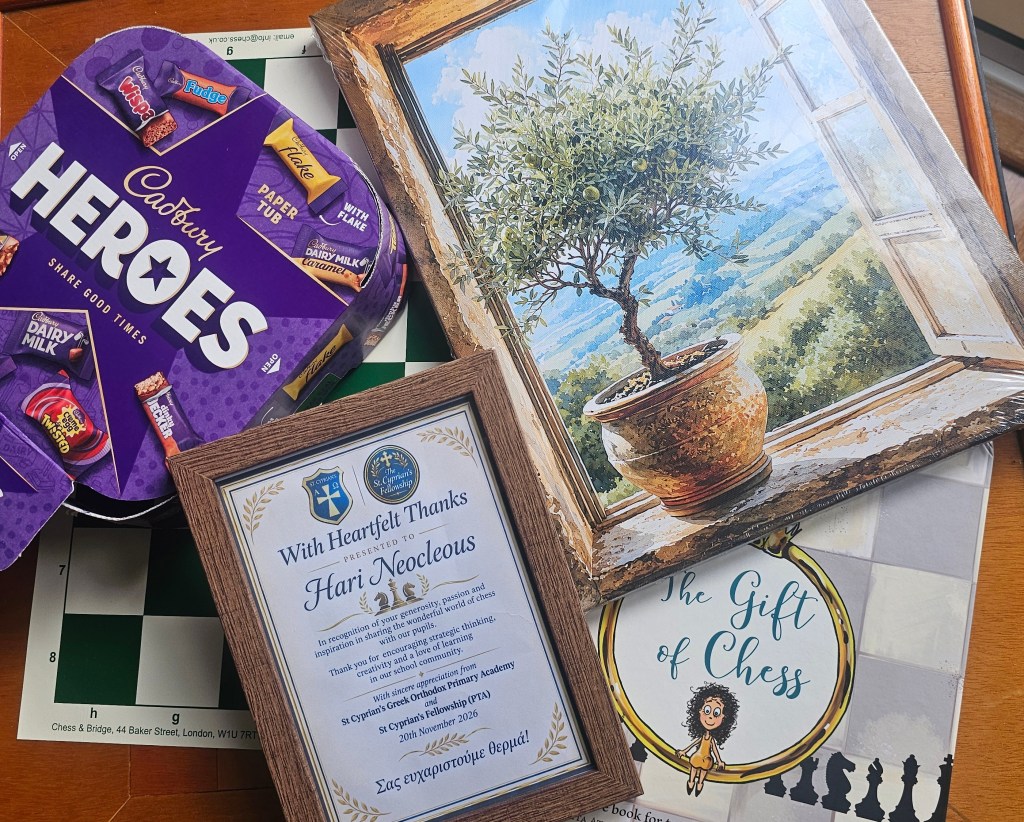
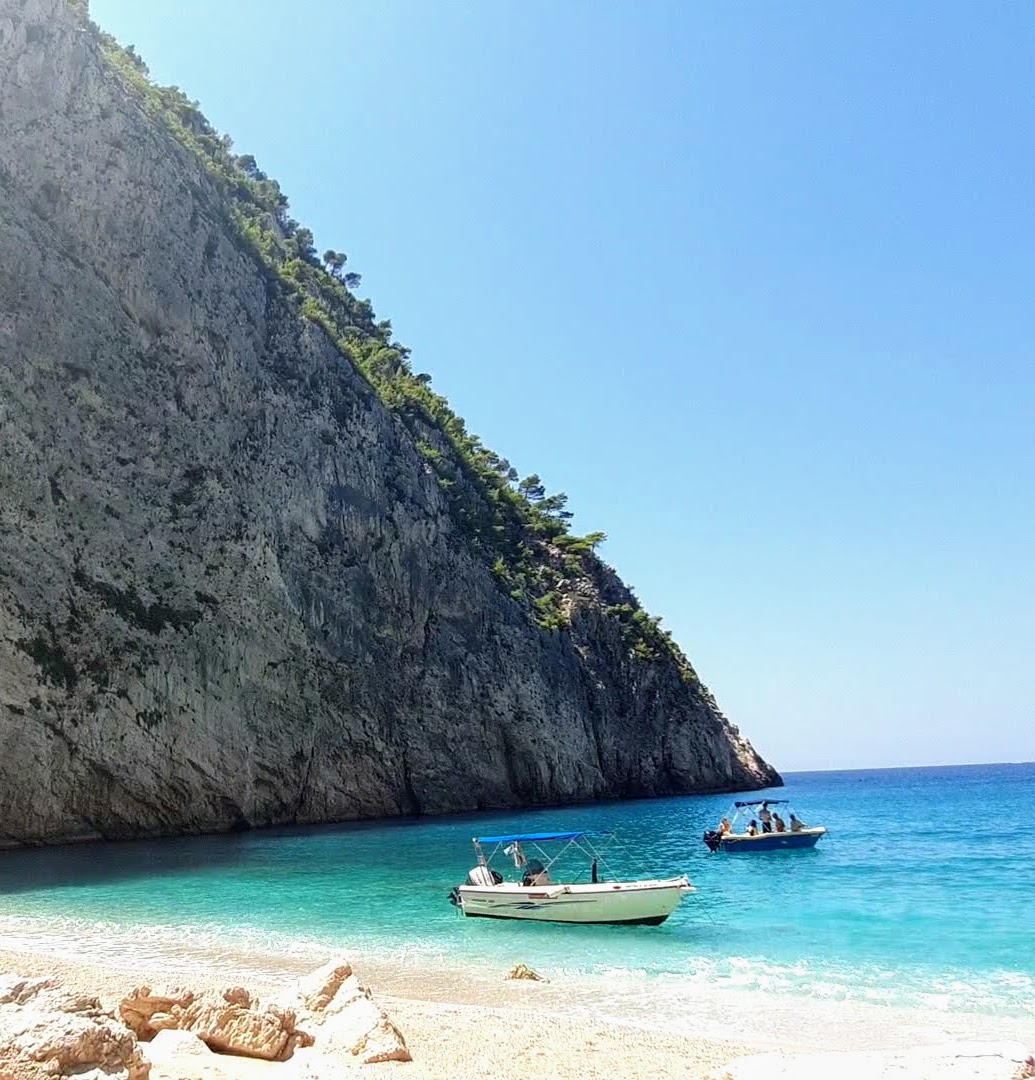
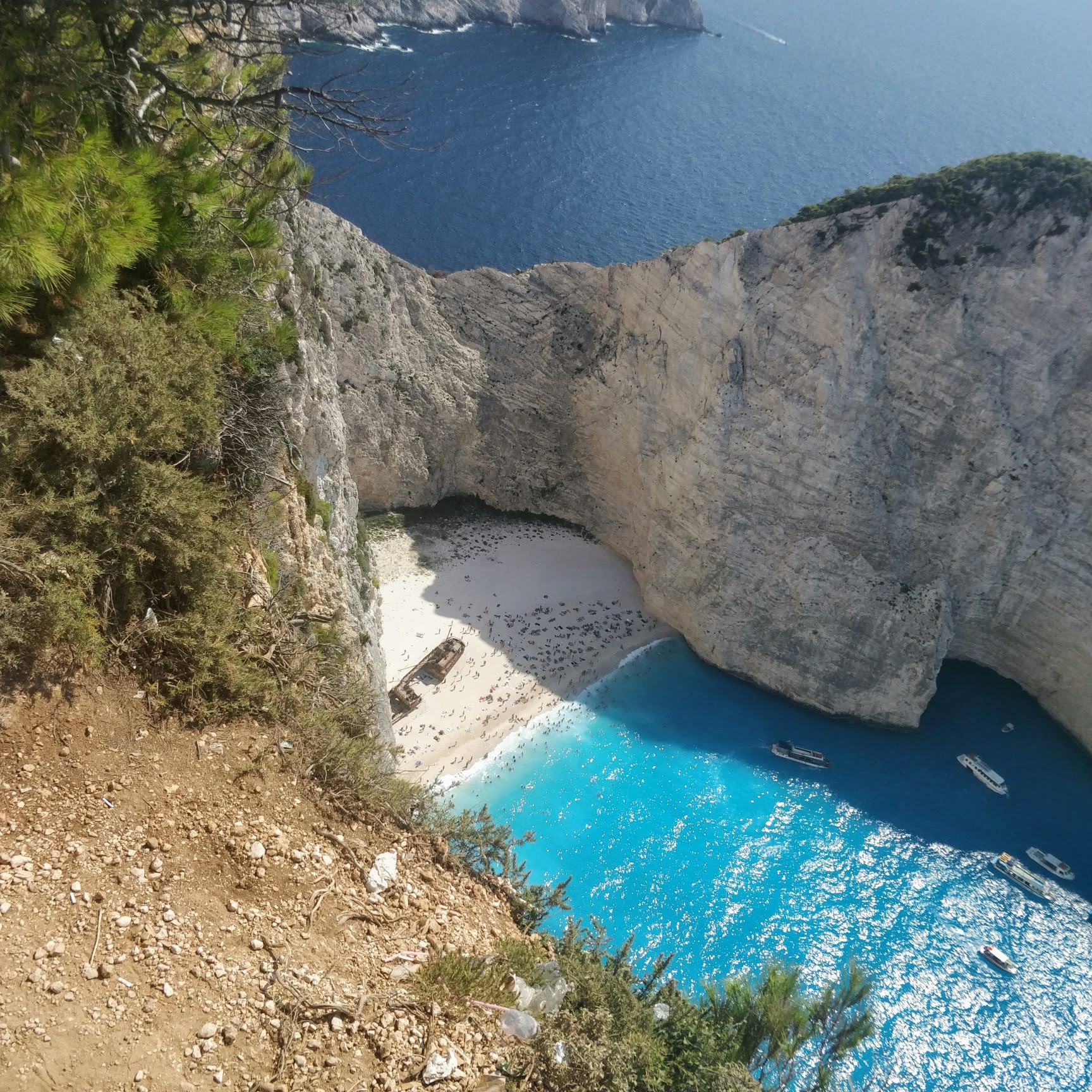
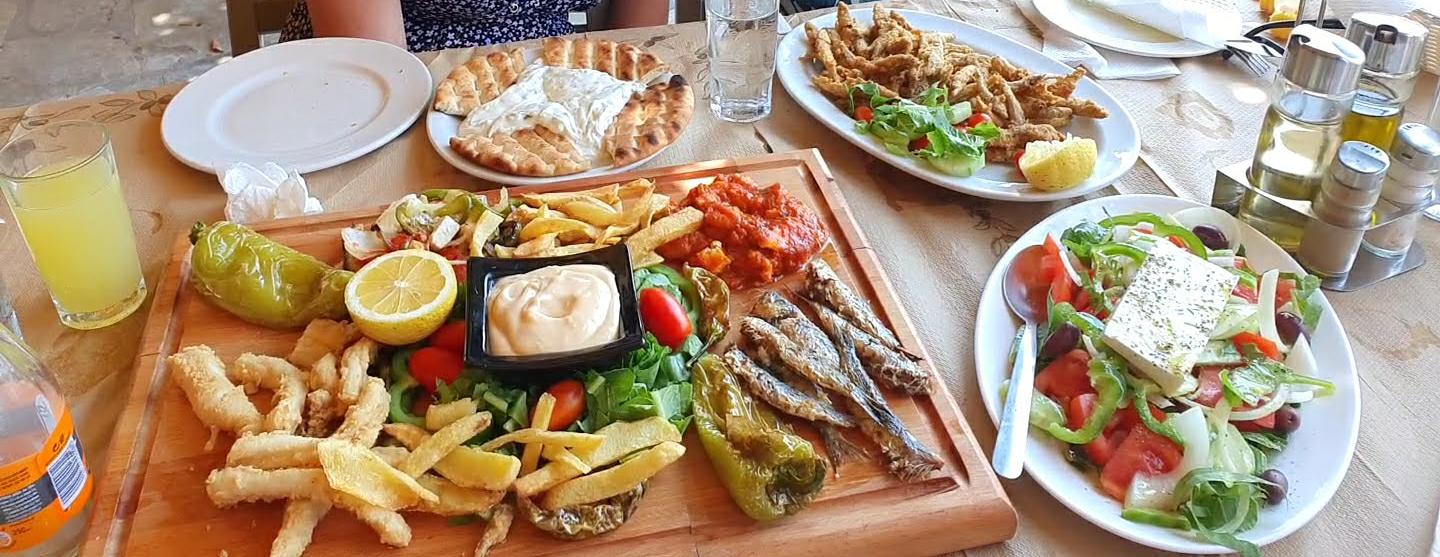
I’m leaving you with more Zakynthos memories….
Hari x