

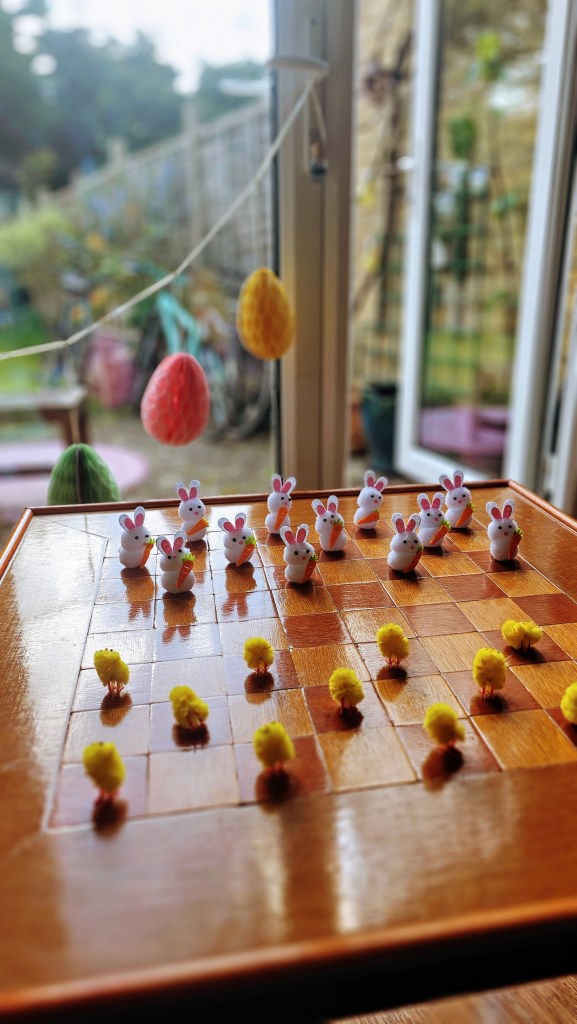
Hi everyone, I hope you’re enjoying your spring break. Today’s blog is a gentle reminder about the power of play.
It’s a Bank Holiday Monday here in England and I’m a having a slow day. The Easter weekend has been busy.
Left over Easter treats anyone?
Before I continue I’d like to ask if you have any little chocolate eggs left over or fluffy chicks? Are you too exhausted to organise another Easter egg hunt, make rhyming clues, hide eggs in your garden and turn into a happy type of Easter bunny?
If the answer is yes, then this little blog is for you. I have six brilliant strategy games to tell you about. You can play online or recreate them on an 8×8 board.
Here are my 6 recommended games:
Game 1: Four in Row
Start with the familiar Four in a Row. Take turns to place your eggs or any of our other fabulous icons onto the board. Who will make their row of four first?
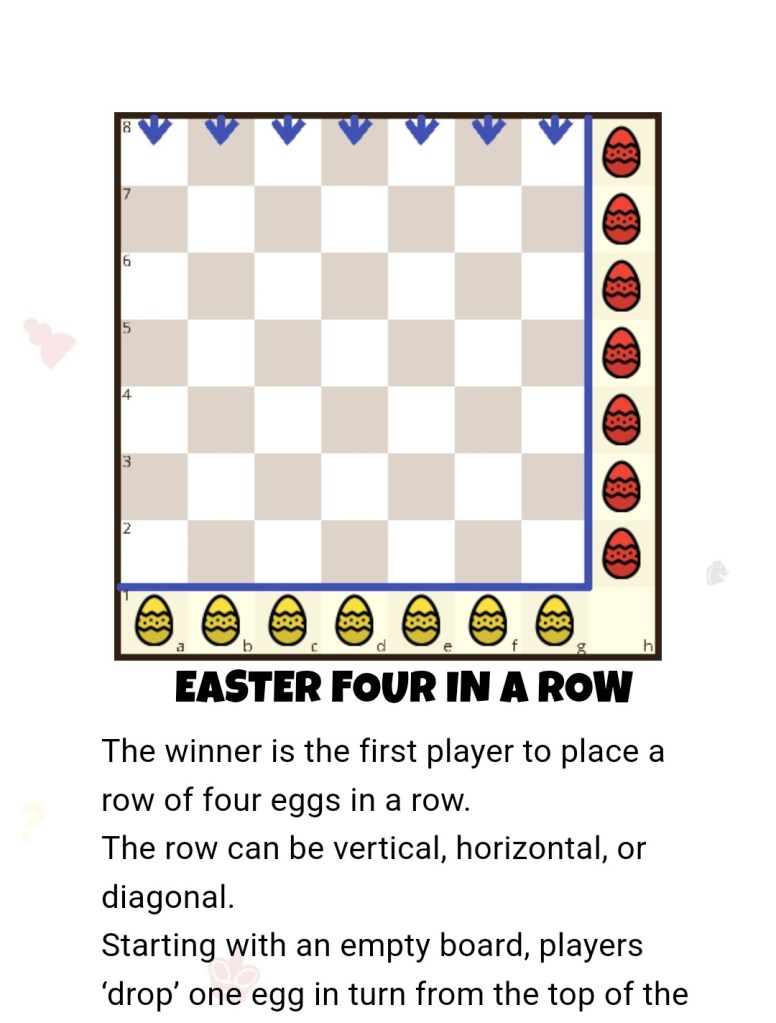
Begin with a game you know
Start with something familiar. It’s always wonderful (and very persuasive) to offer a mini-game that has been played before and that can be played in minutes.
Game 2: ‘Fox and Hounds’ turned into ‘Egg and Bunnies‘
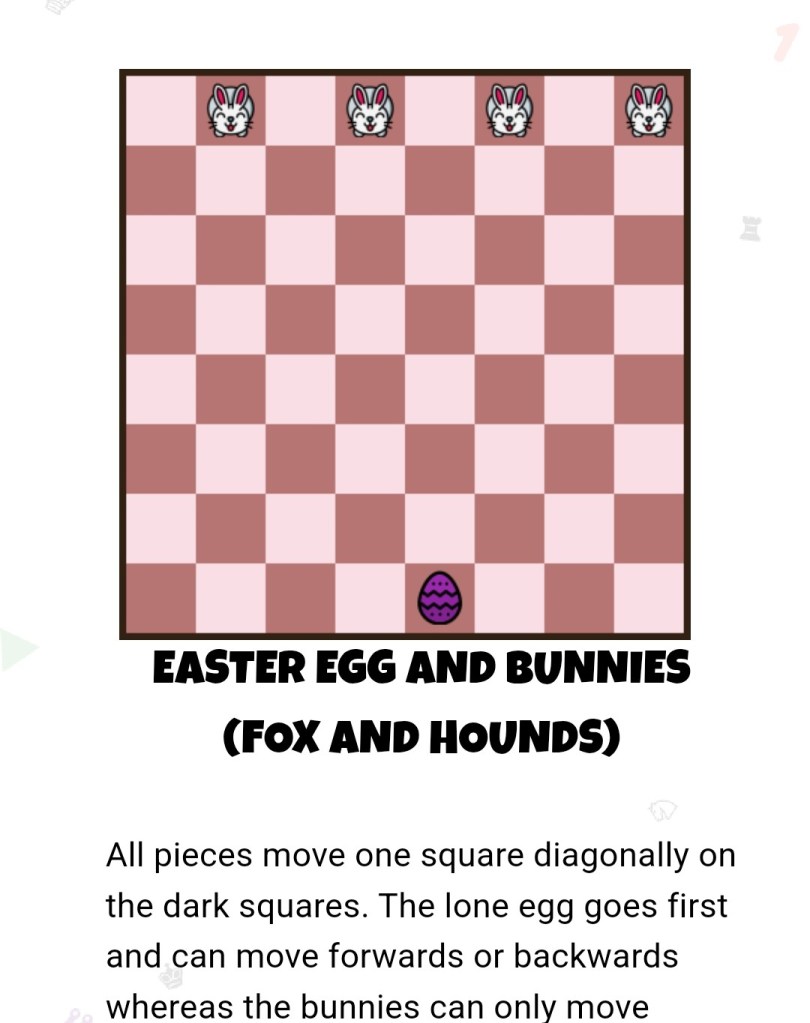
This is the first strategy game to teach new students. It has really simple rules but there’s also strategic thinking involved. How should the bunnies move together? What should they avoid doing? You can play for fun but being aware of strategic game play makes it so much more exciting and challenges you to think.
Game 3: Draughts aka Checkers
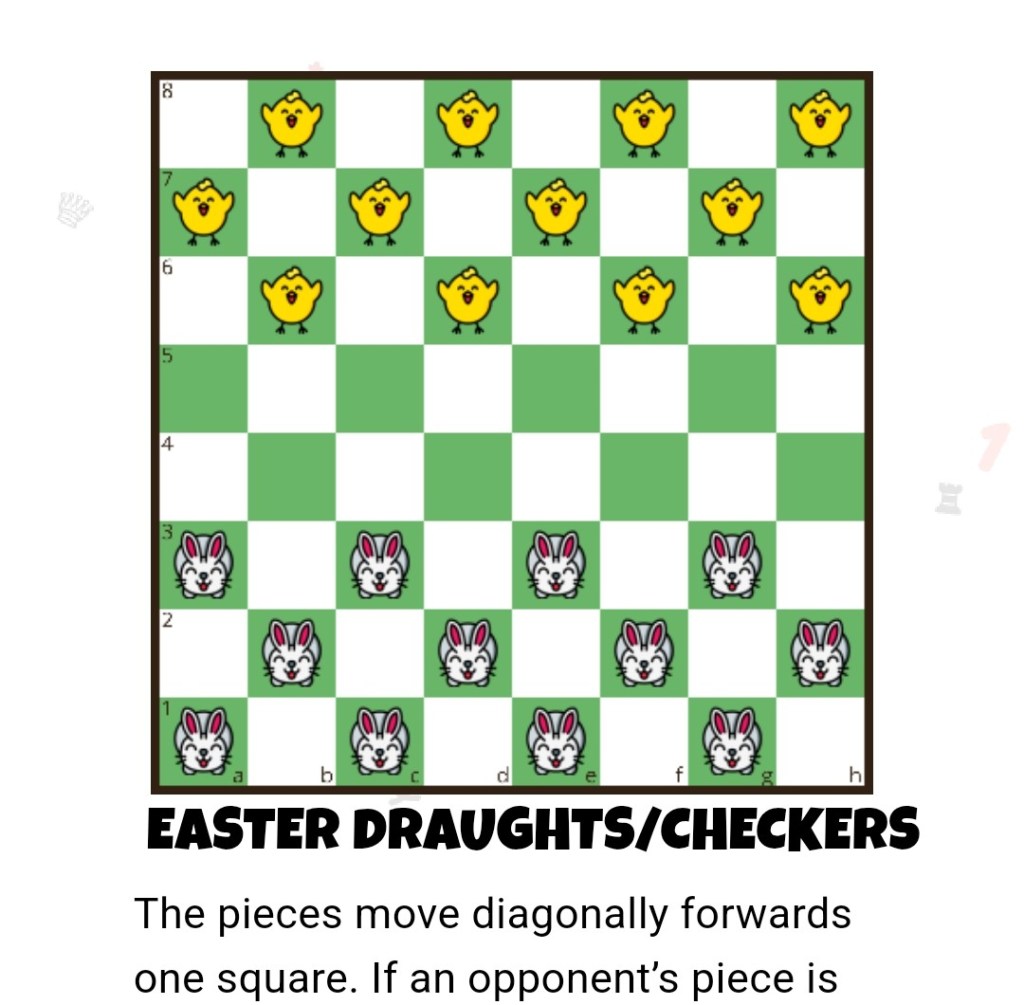
Draughts/Checkers is another classic. I’ve played this as a young girl but only discovered much later in life that that there is an interesting rule. Did you know that captures are compulsory? If you have a piece that you’re able to capture then you must capture it. I also love the feeling of multiple captures in one go. Leap frog again and again… 🐸
Game 4: Cats and Dogs (Chicks and Bunnies)
My next recommended game is something new to many. So you’ve played the familiar Four in a Row and Draughts. You’ve also learnt a new but simple game called Fox and Hounds so now, I throw something different into the mix.
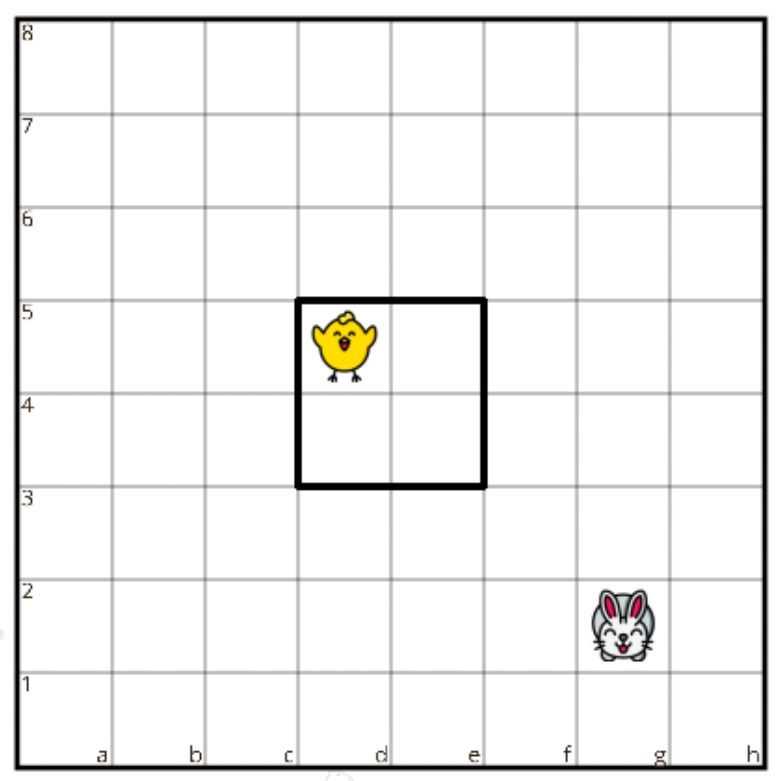
Cats and Dogs (Chicks and Bunnies) is a placing game. There is no capturing in this game or trapping and reaching a destination like Fox and Hounds.
This is a controlling territory game. In this game you take turns to place your pieces down onto an 8×8 square but you cannot place your piece horizontally or vertically adjacent to your opponent’s piece. It can be placed diagonally adjacent but not orthogonally.
I love the new vocabulary that can be used here. ‘Orthogonally’ means horizontally and vertically.
You can place your piece next to another of your pieces in any way but you cannot place your piece next to your opponent’s in any way (only diagonally adjacent is allowed).
Right and Wrong
When you’re teaching a new game make sure you show wrong moves and right moves. This really helps new gamers understand how pieces move.
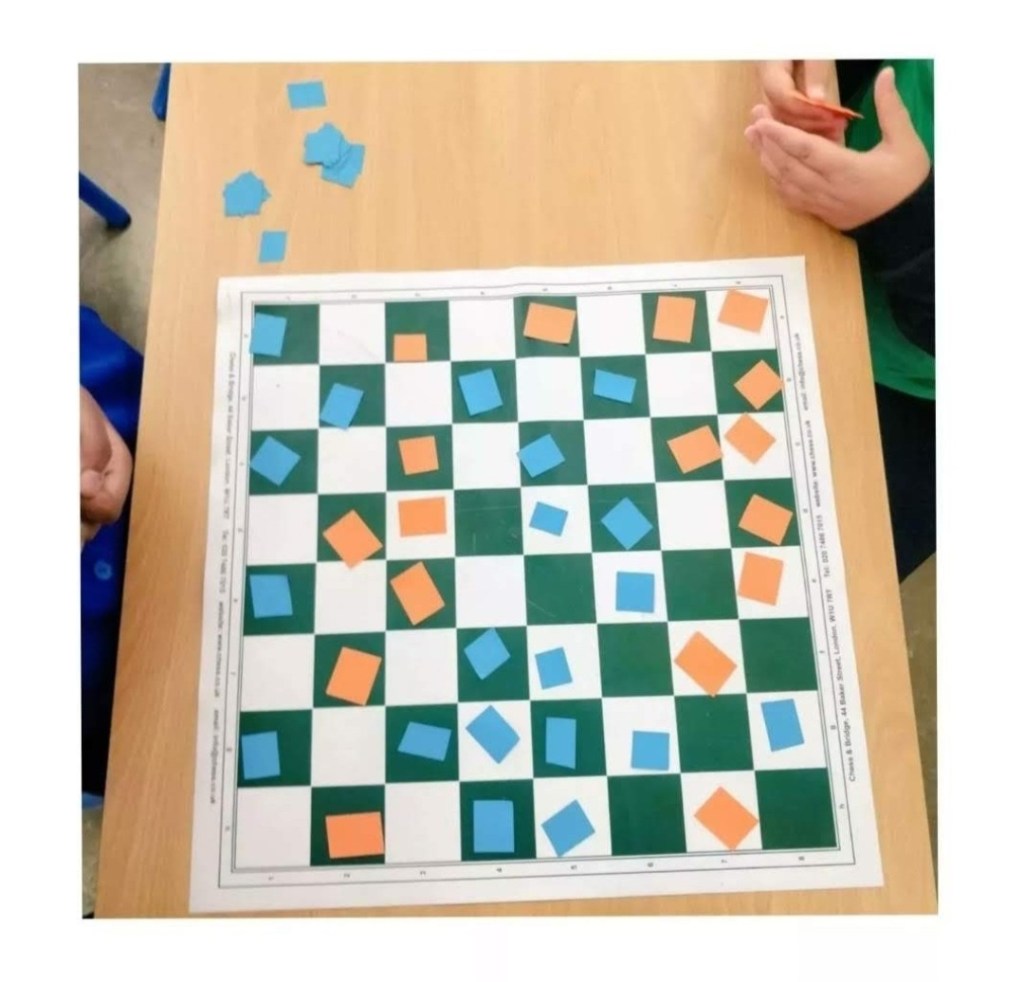
The first move is played in the centre four squares.
The last player to place their piece down wins. You might not have enough easter chicks or chocolate so play online or cut our little pieces of coloured paper. You just need two colours and you’re ready!
Game 5: Halma
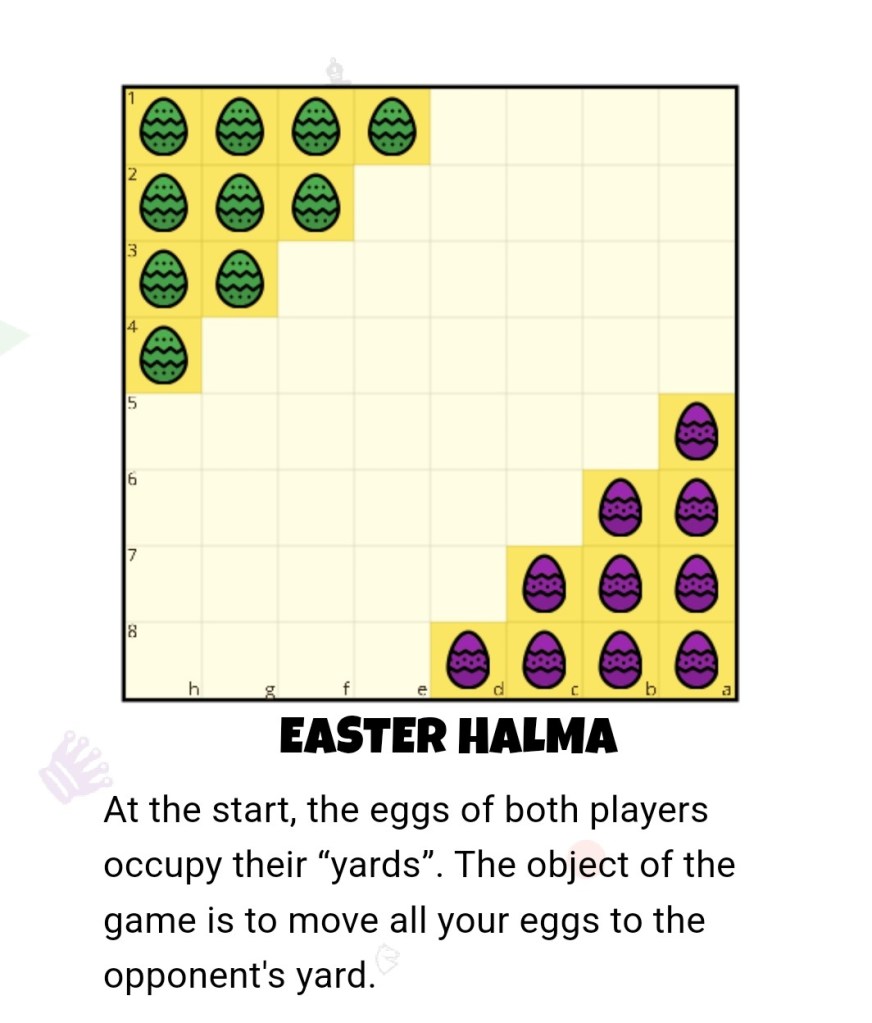
I love this game. For more info on Halma check out my previous blog:
https://blog.logiqboard.com/2023/12/07/the-game-of-halma/
Halma isn’t a capturing game. It’s a destination game. You have to move your coloured eggs into the opposite corner or ‘yard’. In this variant, your egg moves by jumping over your own colour egg or eggs, your opponent’s or eggs of both colours. If you cannot jump over an egg you cannot move. Eggs can move in all directions.
The goalkeeper type player 😉
I love watching the goalkeeper move. My other half and my students have often left one piece behind in the hope that they prevent their opponent landing all their pieces on the opposite corner.
It’s a wonderful moment when they realise that the ‘goalkeeper’ piece they left behind to defend is actually lonely and abandoned. It also prevents them from winning themselves! The lonely piece actually needs rescuing by a team of pieces as it can only move by jumping over other eggs! 🤫
Partner or Opponent?
By the way, if your child doesn’t like the competitive element of the game then call each other ‘partners’. Sitting side by side to figure out the games also makes it less intimidating and more inclusive.
Play to Eat!
If like me, you love to win, (and eat) then add some some edible treats and eat your chocolates as you play!
Games should be fun so know your gameplayers and play accordingly. Start gentle then introduce competition if you prefer.
A time to make memories
The truth is children love quality time with a family member. Ten or fifteen minutes of play is a great start.
The games I’m sharing with you are easy to learn, fun and quick to play. Small changes, big impact. They’ll be quality time, laughter and memories made.
Game 6: Chess
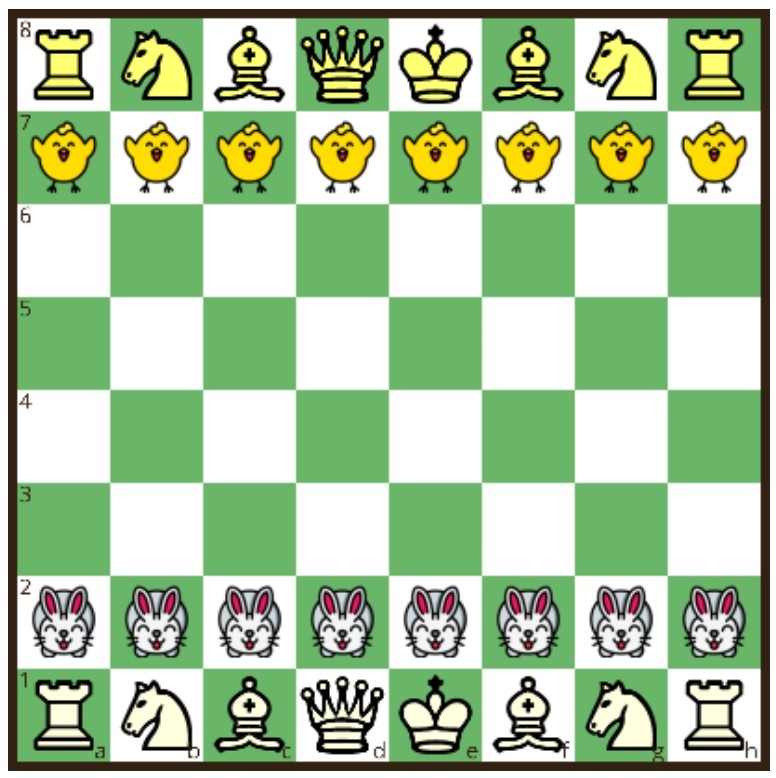
The final game on the online playsheet is chess. Okay, so chess isn’t quick to learn or quick to play in most cases. However it is the most wonderful strategy game in the world. The benefits of learning chess are huge.
If you don’t know how to play chess you could try ‘Pawntastic’ (Pawns versus Pawns). Keep the chicks and bunnies and swipe all the other pieces away.
Pawntastic
Aim of the game: Win by reaching one pawn to the other side. You can also win by capturing all of your opponent’s pawns or blocking them so they have no moves to make.
How to play: A pawn moves one or two squares forwards when it first leaves home. After the first move it moves one square forwards. Pawns capture diagonally one square. They cannot jump over pieces. They cannot move horizontally or back.
https://chessplus.net/interactive-games/the-pawns-game/
Variations: Play with four pawns each as a warm-up. Click in the Chessplus.net link for different levels and explore. ▶️
I hope this blog tempts you to try some of the games today with friends or family. For more info on the games visit logiqboard.com and read the notes on the online playsheet.
Why play strategy games?
⚫️ the social connection
⚪️ develop communication skills
🟣 develop problem solving skills
🟢 practise planning ahead
🟡 develop decision making skills
🔴 practise flexible thinking
🧠 think strategically, look for optimum moves
👀 work on memory, notice familiar positions
❤️ sportsmanship, know how to cope with success and failure
🐣 develop concentration skills
🎲 use maths vocabulary and develop shape and space skills
🐰 have fun
These are just some of the benefits but there are more!
The truth is a little game time goes a long way. Our daily lives are wrapped in routines and work leaving precious moments to pass us by.
Do one thing today.
Play.
Play on a real board.
Play on logiqboard.com
Eat the treats.
Laugh.
Figure out the rules as you go.
It’s really not all about winning but about the fun you have along the way.
Exciting course this April
If you’re a games fan and interested in spreading your passion of games then check out the ECU course ‘Strategy Games in the Classroom’.
This is my number one course. Learn how to play some of the great games above and solve puzzles and problem solving tasks. Teachers, you’ll be ready to start that games club the following week!
Click on the link or scan the QR code for the free online playsheet:
https://logiqboard.com/worksheets/j2HJl-E_My

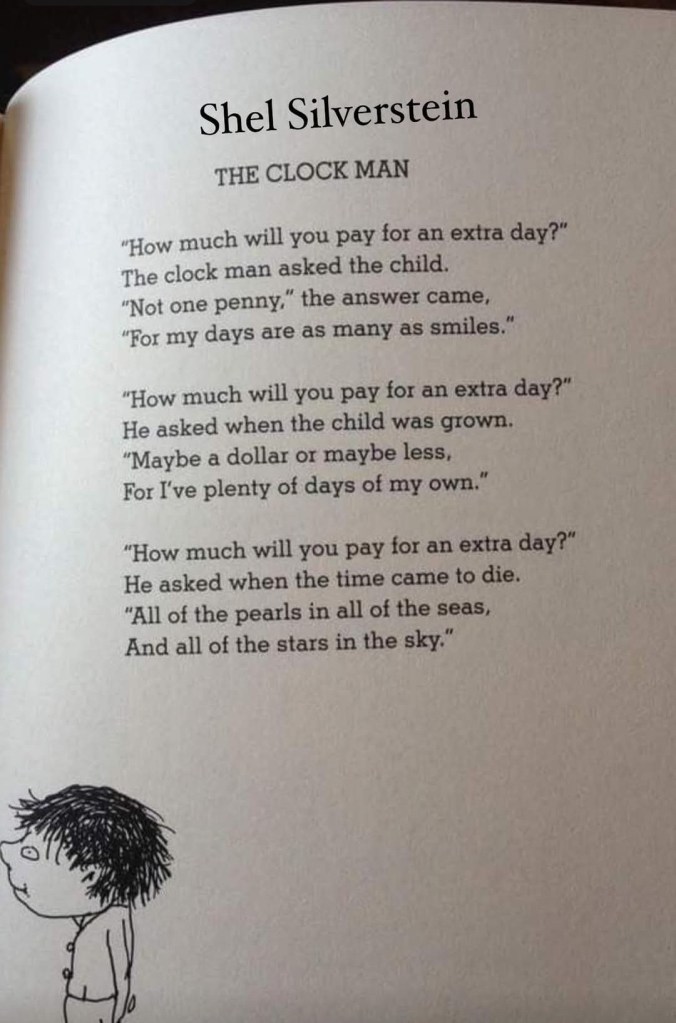
I hope you have a wonderful Spring break. I’ll leave you with a special poem for the season of new beginnings.
Hari x 💕 😘🕯
 LogiqBoard BLOG