
Today’s blog is all about the double-sided counter. It’s one of my top ten maths resources but it’s also a wonderful resource for the chess classroom.
In today’s blog I’m going to share some tried and tested ways you can use the counters when teaching chess.
Using counters as markers
Last Monday my lovely year four students, aged 8 – 9 years old, were learning about the knight. I decided to do two sessions because the knight is the trickiest piece to master.
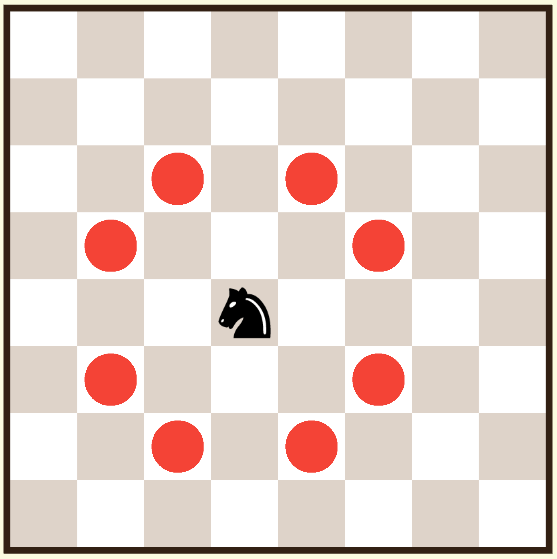
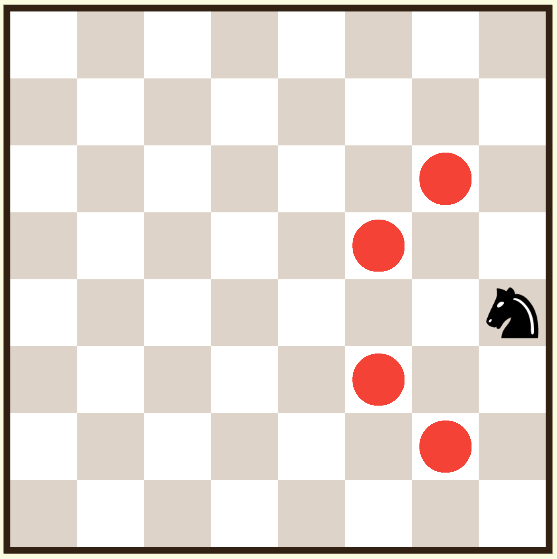
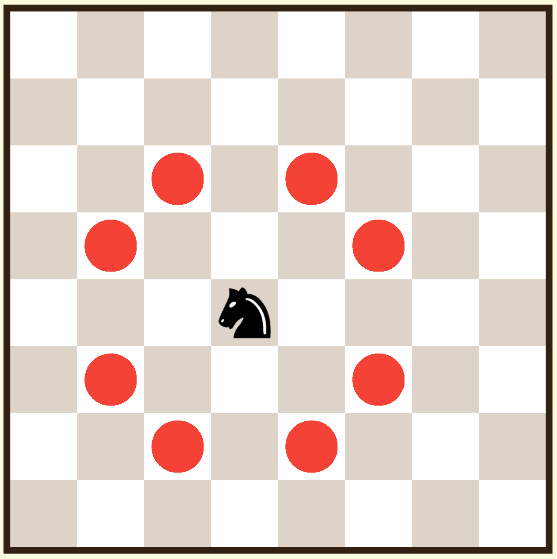
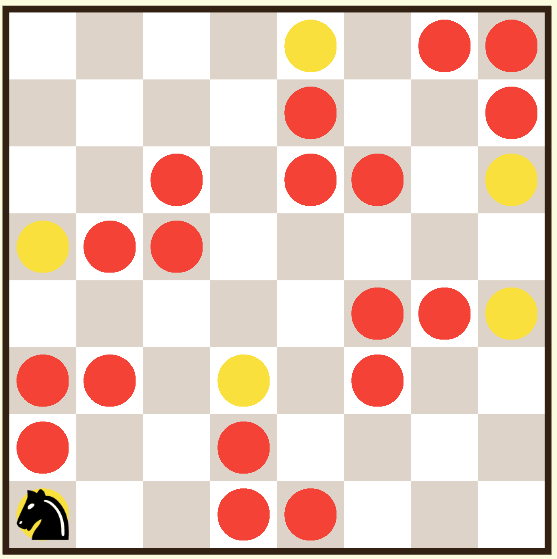
In our first lesson we learnt about the knight’s moves and captures. Students discovered that if a knight starts on a light square, it will always land on a dark square and vice versa. We spoke about the common error, just because you jump over a piece you do not capture it. We looked at the knight on the rim and compared it to a knight in the centre. Students used counters to mark the landing squares.
Practical tasks where possible
We want students to explore and discover concepts for themselves rather than tell them. Using tasks, working in pairs, children are collaborating. They’re helping each other, using language to develop a deeper understanding of the task at hand.
Marking squares
Another task is to mark the journey of the knight. Children can place a knight and mark the knight’s move in different directions.
Puzzle time
Children love a puzzle. I used this task as a plenary in our first session.
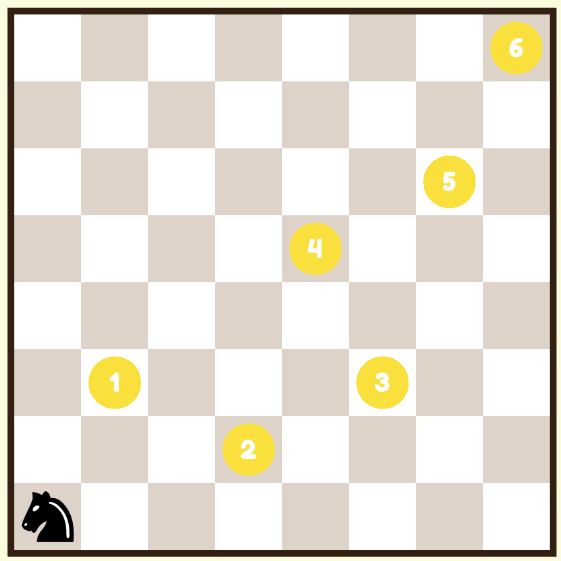
The hungry knight wants to reach the apple in the fewest possible moves. How many moves does it take the knight to reach the apple?
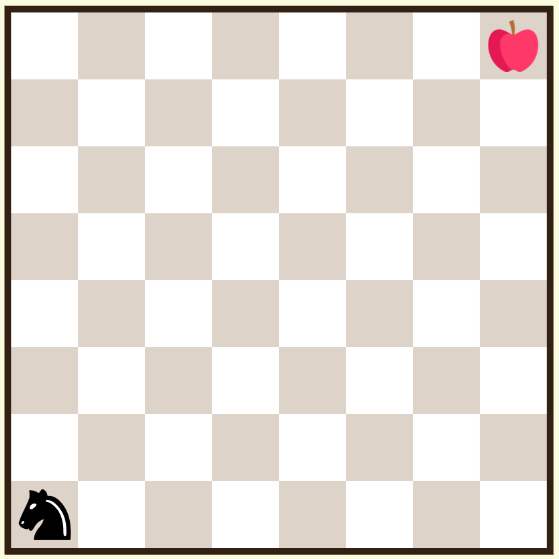
I encourage children to visualise the moves, tracing their finger in the air. | then ask children to explore the puzzle on their boards by placing a counter every time their knight lands. This task supports learners to visualise each move and keep track of the number of moves.
Take it back a step
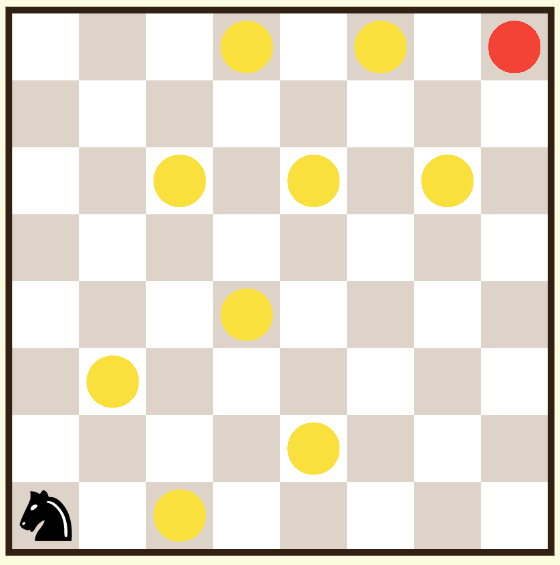
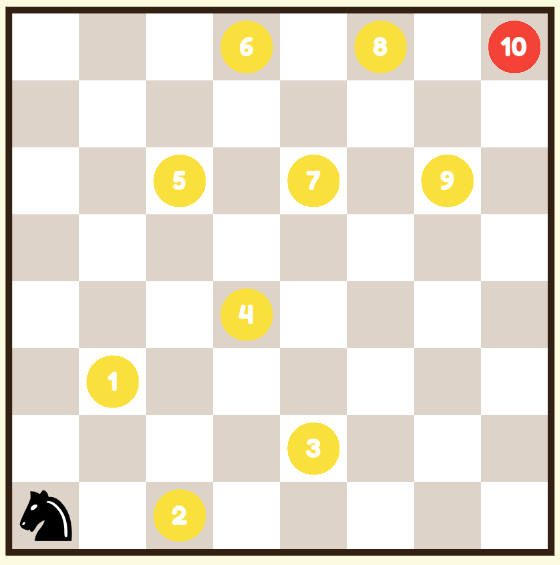
For students who need more support in visualisation you could share a completed puzzle like the board above. Ask students to trace the knight’s journey to the apple. Repeat again, this time, with a different route.
Counters for Collection
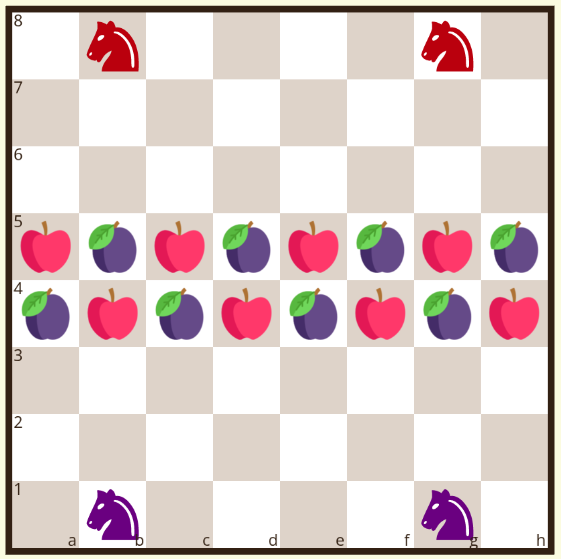
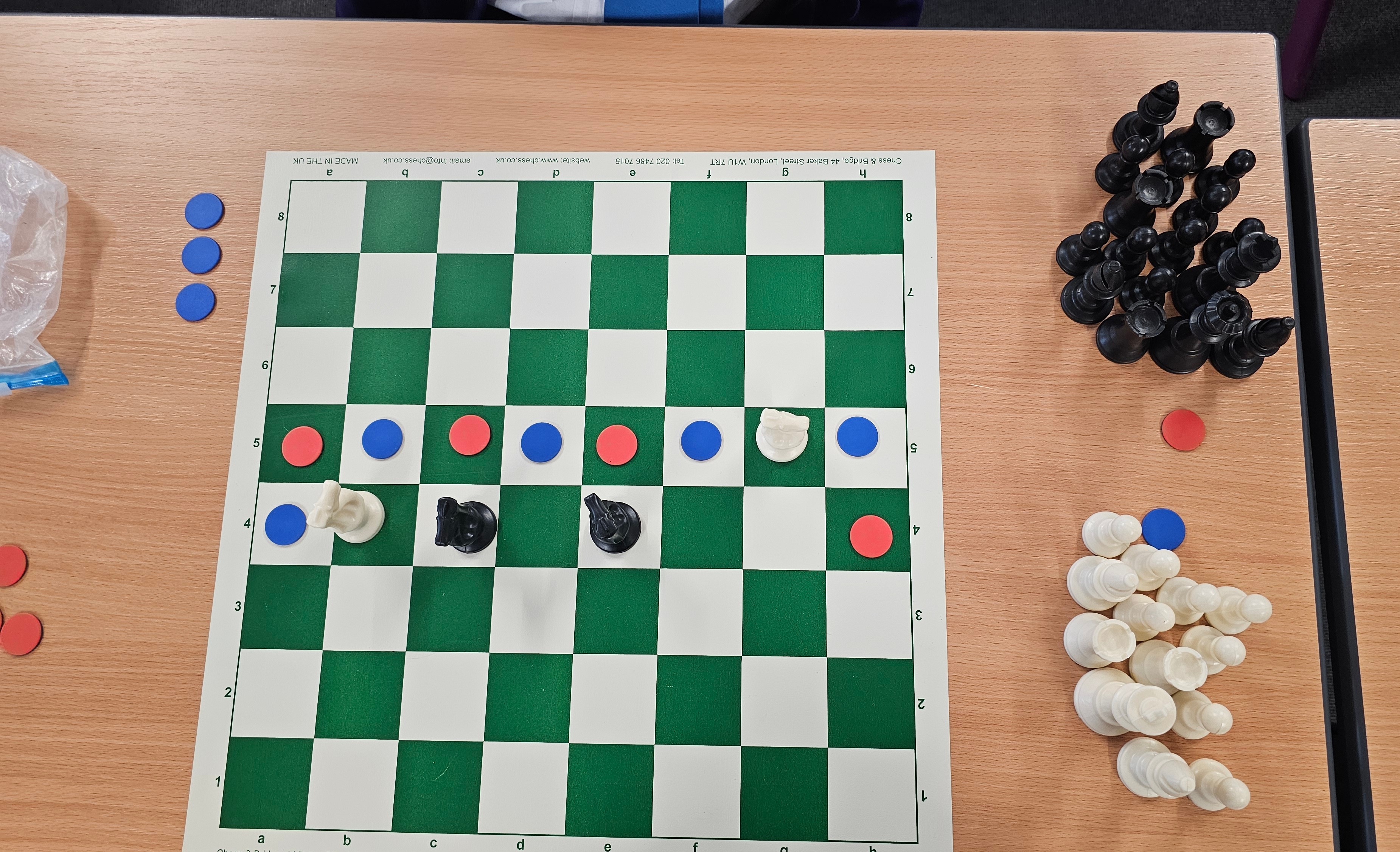
You can also use double-sided counters for collection tasks. Hungry Horses is a wonderful mini-game. Red knights have to collect red apples, the blue knights collect plums. Children play with the red and yellow counters on real boards. Knights can also capture other knights.
When demonstrating how to play discuss knight forks, planning ahead and visualising moves. Not every move will be a capture so we talk about prep moves, the move before they capture.
Mini-game: Hungry Horses

Mini-game: Radioactive horse poo/ Knight blocker
Another nice mini-game is radioactive horse poo also known as horse waste or Knight Blocker! Instead of collecting counters each player (knight) leaves a counter behind (the waste) as they make a move. The knight that cannot move to any free square loses. Knights can also capture each other. Here children need to plan ahead, can they visualise two moves ahead onto a safe square? Planning one move ahead isn’t enough.
Mini Knight Blocker
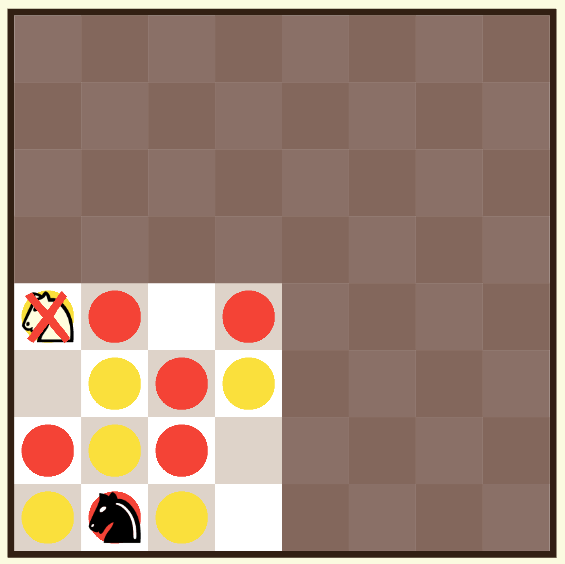
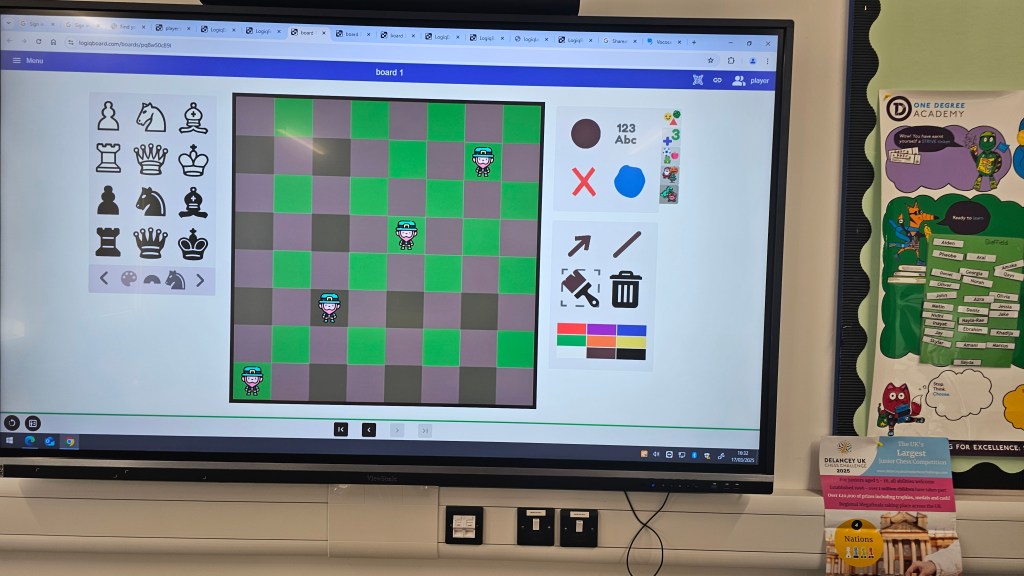
You can also play this on a smaller board. There are two knights in opposite corners. Each player takes turns to move their knight on the 4×4 grid. Every time a knight moves they leave a counter behind. The first player who has nowhere to go loses.
Idea Incoming
As I type this blog a new idea has come to mind. What if you played a game with the opposite rules? This time the winner is the first person who has no where to move. Call it Nowhere to Run or Trapped
Inclusive Chess
As an intervention teacher I plan for all the students but I begin with the needs of those who struggle. I imagine myself teaching a 1:1 session and discovering moments. Everyone starts on the same task, then we move on. Some will progress even further to more challenging tasks.
Top Tips
I also give children top tips. Tiny tips that might seem insignificant to an experienced player but actually make a huge difference. Visualising moves by tracing their finger on the board, turning the knight’s head so he looks where he’s going or touching the landing square with one finger before they move. 👇
I’ll also have more challenging puzzles for more able learners who are ready to move on.
Counters as Targets
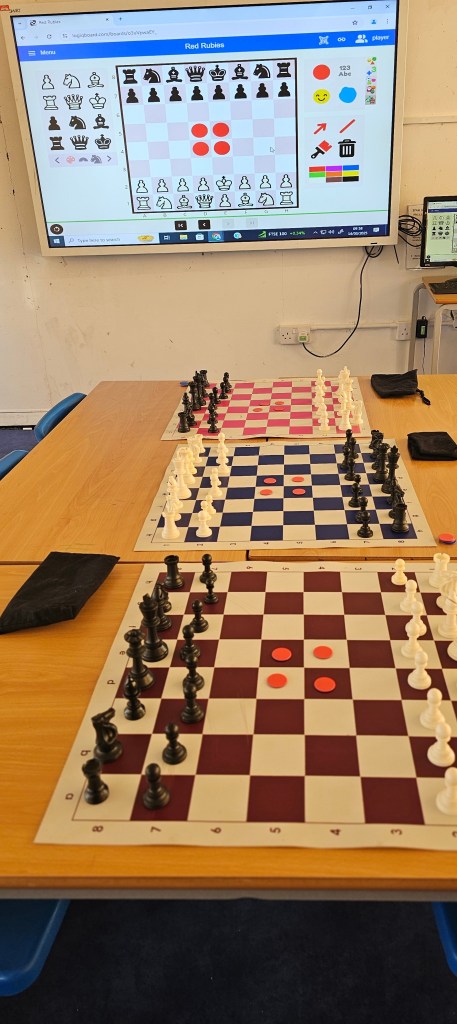
Mini-game: Red Rubies
Red Rubies is my favourite game of the moment. There are two greedy kings who race against each other for the treasure. The king who lands on a ruby first wins. Rules of check apply.
In some sessions you’ll find children don’t always have time to reach the exciting end game. Red Rubies allows all children to get straight into the exciting part. Strategic thinking mode is activated immediately!
If you haven’t played this game I urge you to try it. When I ask for strategies children come up with a selection. Maybe you just race your king to the rubies. Maybe your queen comes out to the row of the rubies preventing the king to land there. If that happens a piece might attack a queen or another piece blocks her pathway.
Children talk about defending pieces, sacrifices, and decoys to reach a ruby. The counter is a target and centre squares are to be controlled.
Exploring Check
Two week’s ago my Friday year five students were exploring check.
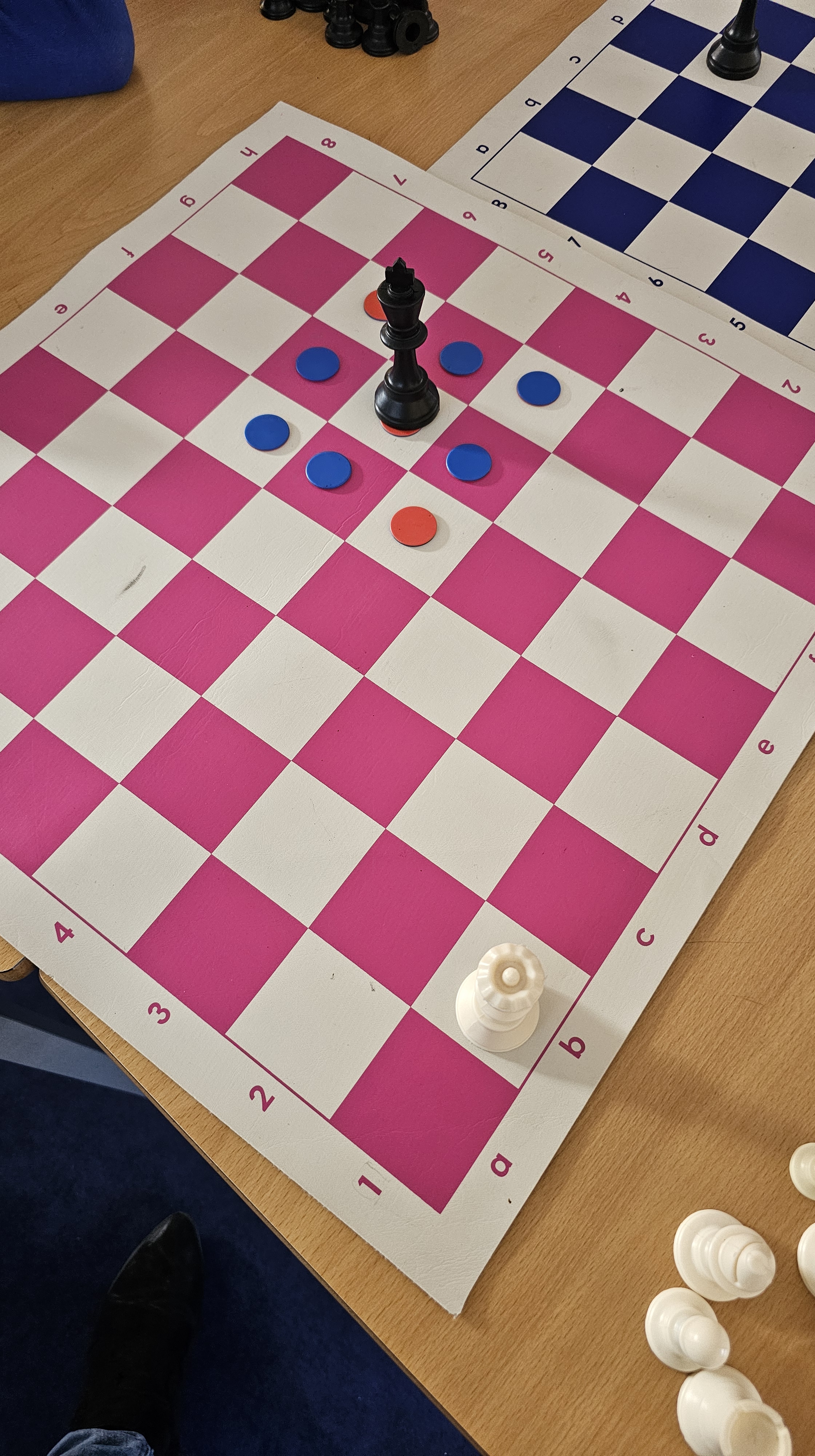
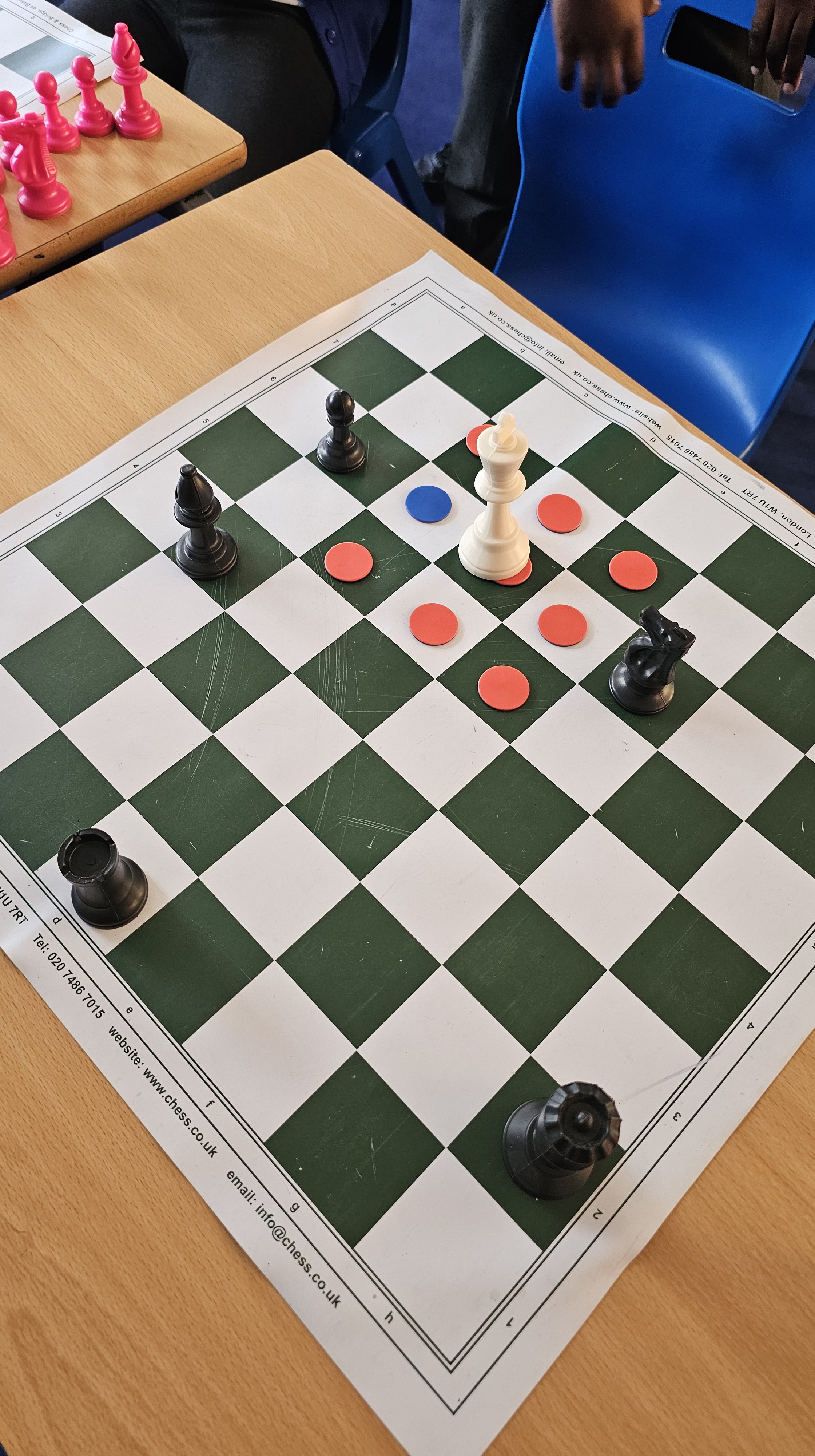
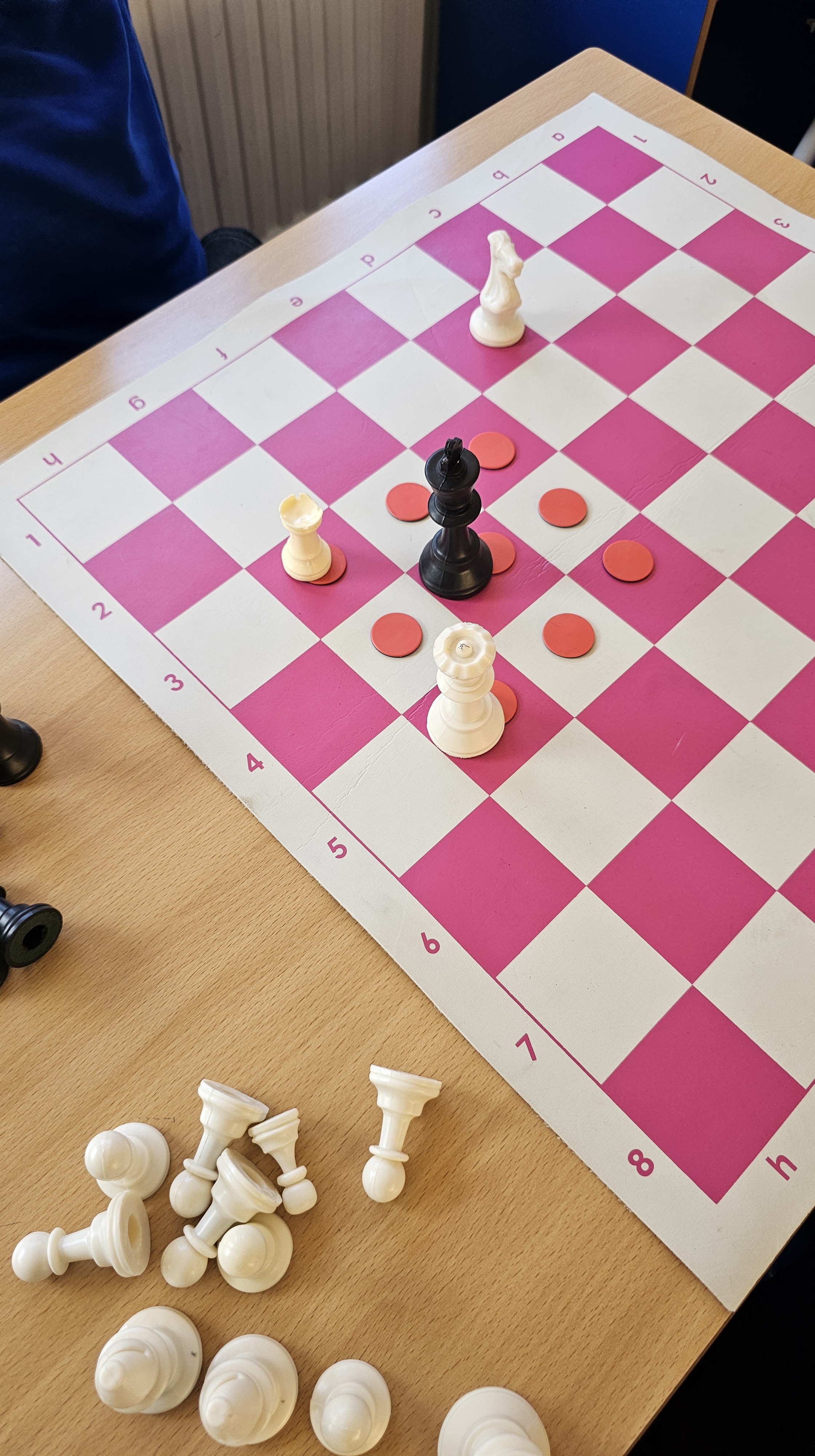
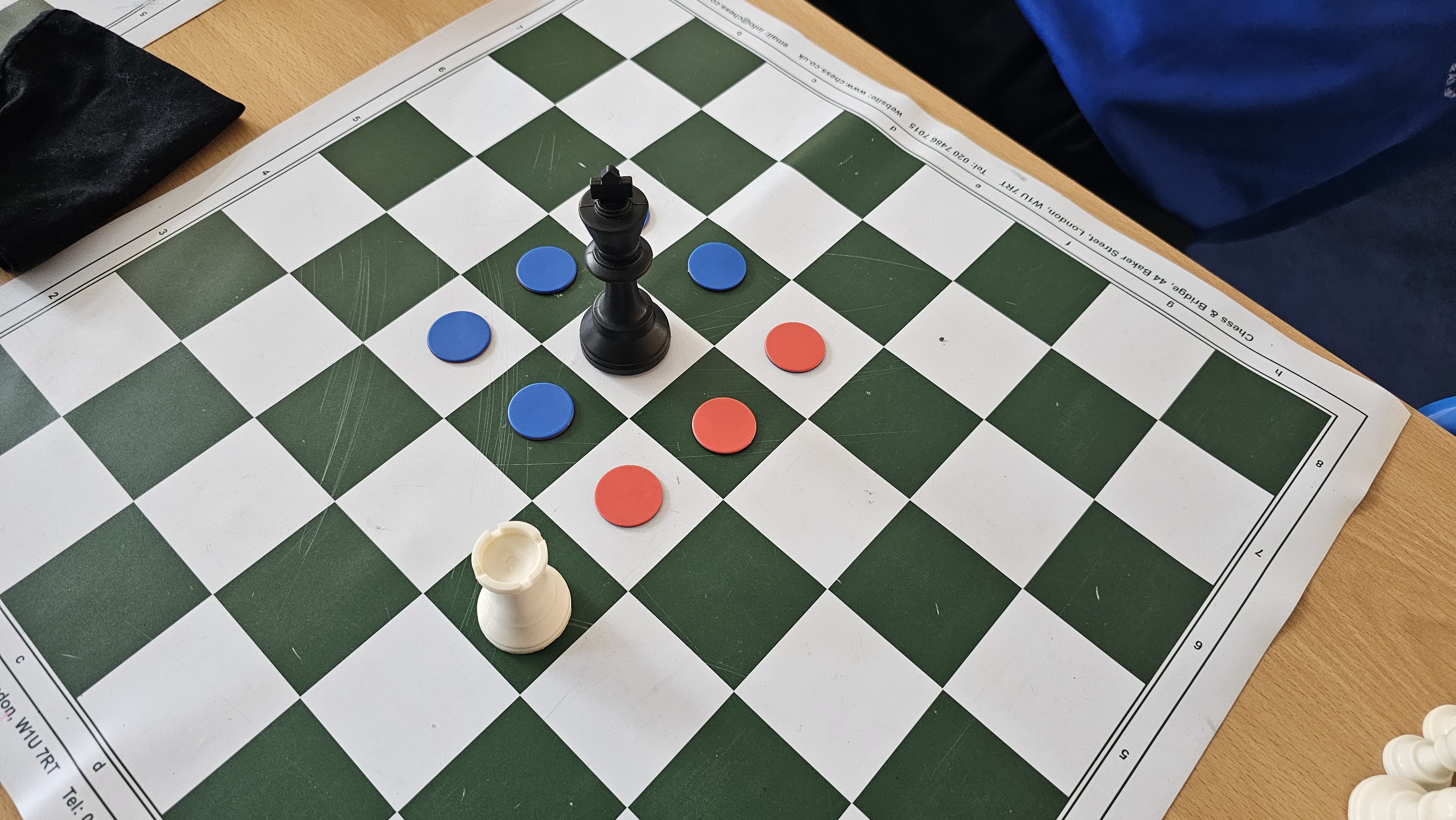
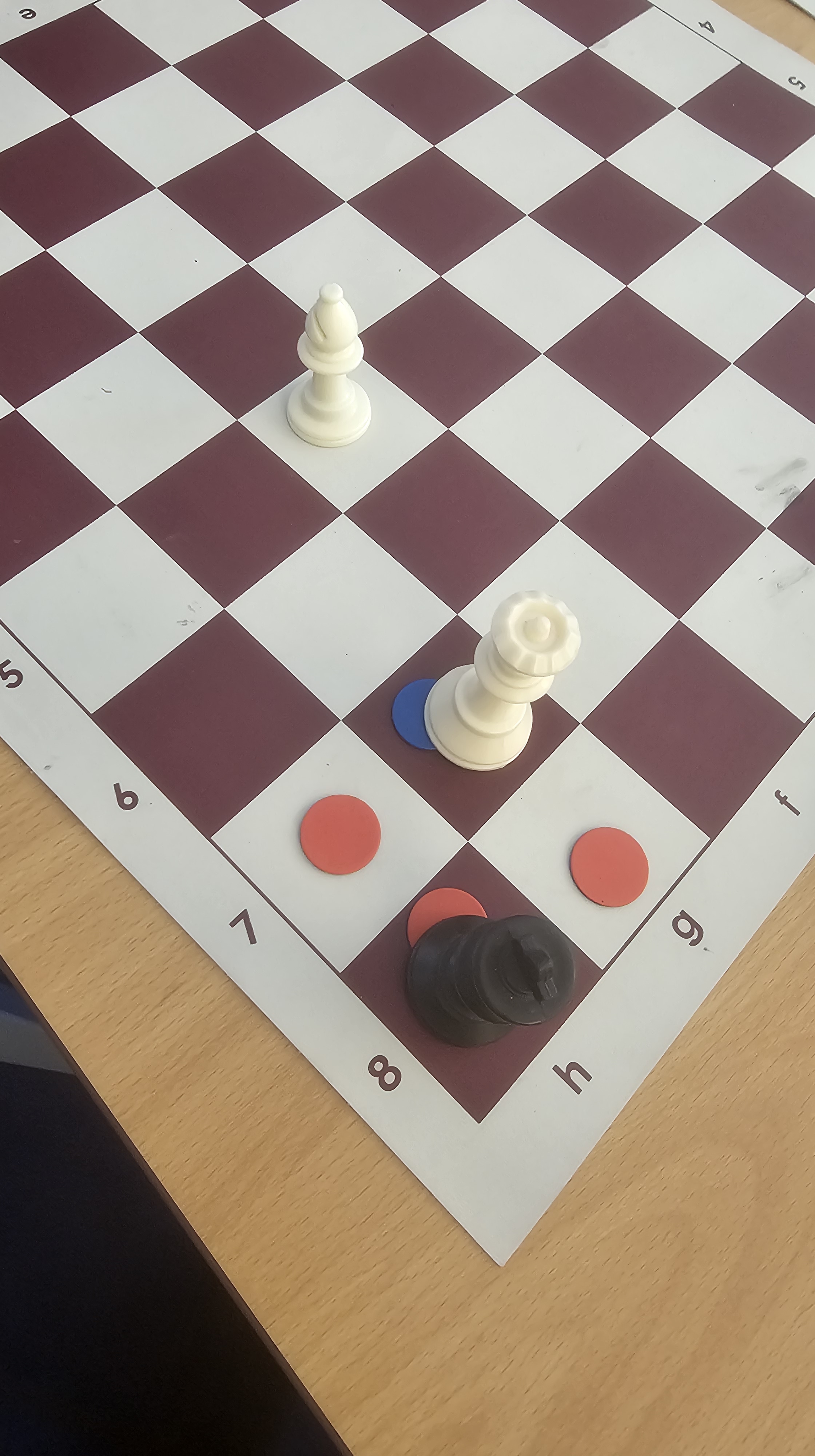
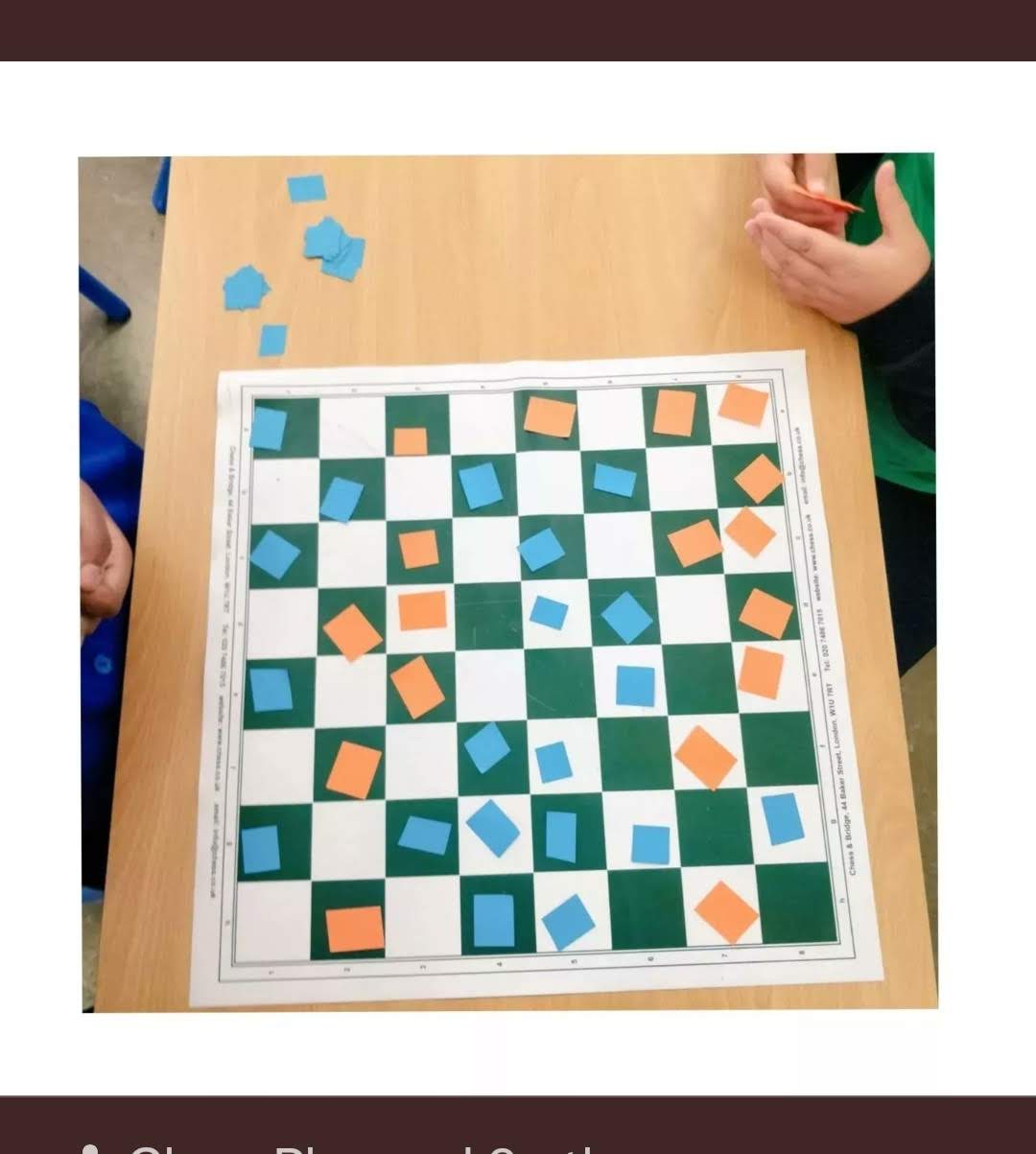
The children worked in pairs. Player A placed the king anywhere on the board, chose an attacking piece and placed it on a square that put the king in check. Player B placed yellow counters on safe squares and the red squares showed squares where the king is in/would be in check. I quickly assessed their boards then asked them to add another enemy piece. They enjoyed going to the next level.
I also made it clear that these boards were not boards they’d find in a chess game and I explain why briefly. If you’re in check for example by the bishop you’d deal with the check before another piece also put you in check. (Discovered check comes later…)
Below are some photos I took of the children’s boards. Board 2 had an error so I responded with, ”one counter is incorrect. Can you find it and tell me why’.
Progression in planning
Last Friday we revisited this task again but as a warm up. This time they would begin with 4 or 5 pieces versus the king and work together. They had 9 counters and focused on the king’s box. This time with increased confidence.
Problem Solving tasks, counters to the rescue!
The next task is where the use of counters gave a sense of relief to my after school club.
The 4 Rooks Puzzle
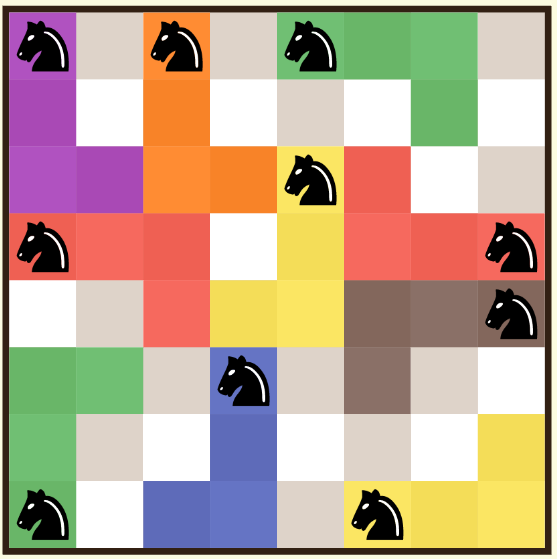
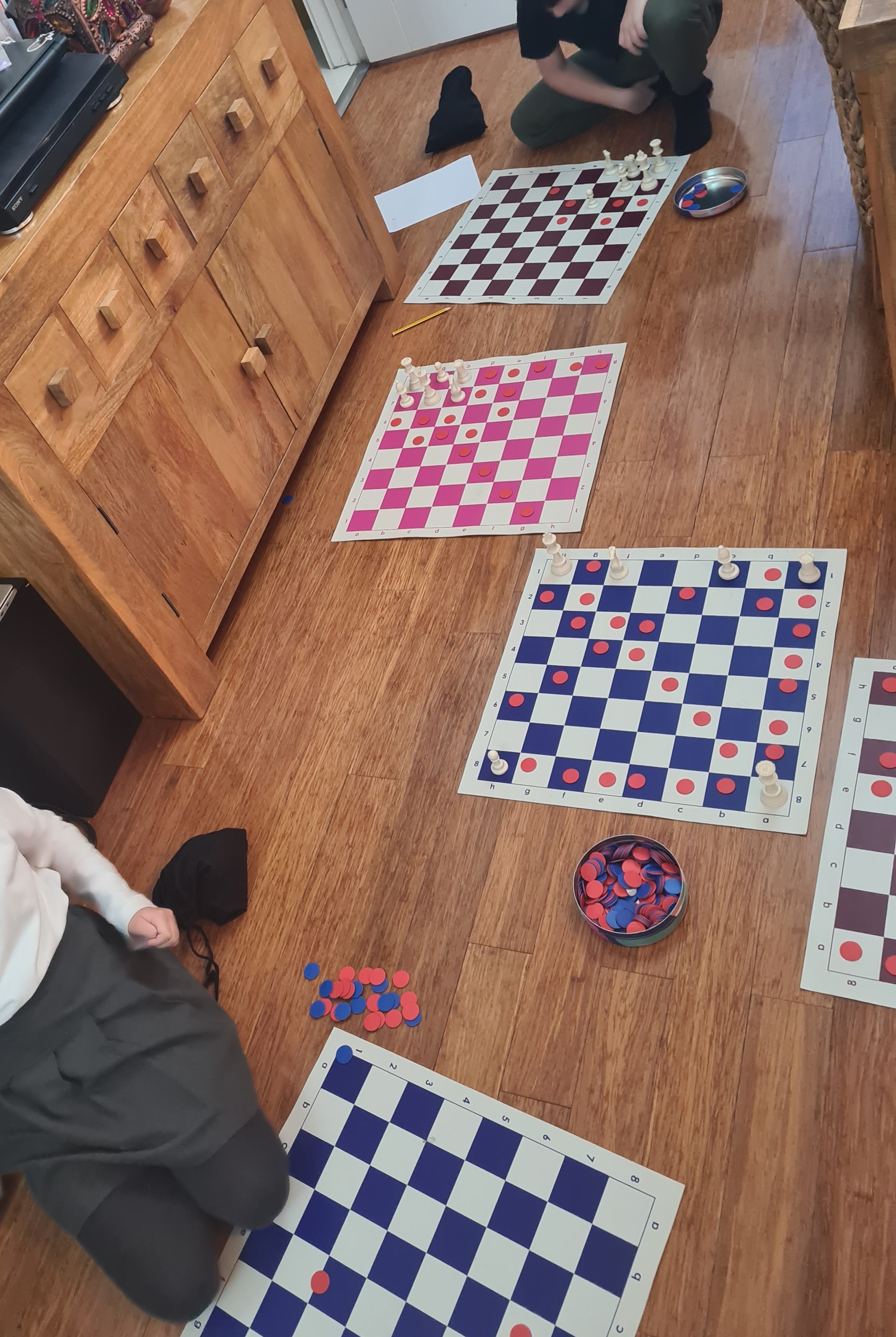
I decided to share a themed 4 rooks puzzles on Saint Patrick’s Day. Children had four rooks and a chessboard. The task was to place the 4 rooks on the chessboard so that all light squares were under attack.
After a few minutes of free exploration time I went over to the top chess players of the ongoing tournament and asked if they would like some counters to mark the squares under attack. They let out a huge sigh of relief!
I often find that the most confident mathematicians need the most support in investigations. This freer way of thinking, being creative and resilient is less familiar to them. Here the counters allowed them to mark squares and be systematic.
Tutoring time
As a primary maths tutor I often add chess themed problems into my sessions. These investigative tasks are where my students fall in love with maths! ❤️
Below are photos from the Minimum Problem.
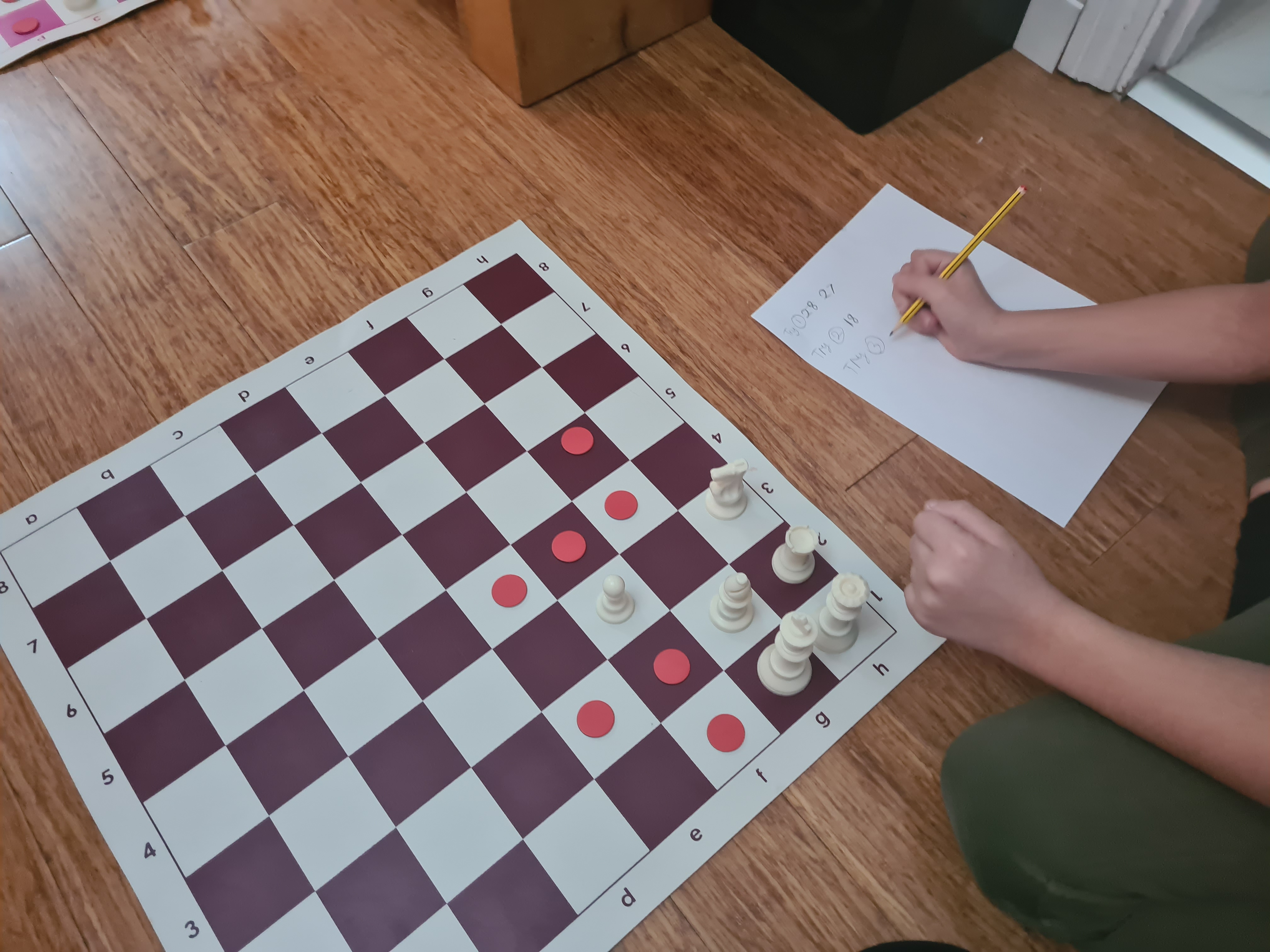
Place 6 chess pieces onto the chessboard so that the fewest number of squares are under attack.
My students were immersed in the task. They chose to use counters to mark the squares and record.

Conclusion
I hope you can see the value of using the double sided counters in chess lessons. We give children as many concrete experiences (practical tasks) then move onto pictorial tasks. I haven’t shared puzzle worksheets with you but they would follow on from practical tasks.
Children need to be taught how to visualise moves, to look for check, to keep track and explore. In school’s chess where the needs of a class vary so much its important to plan for specific skills and make them explicit.
Using counters to collect or as target squares allows children to isolate a skill or concept and develop it. These tasks give children opportunities to talk about their learning and make deeper connections. Two colours is also less of a distraction to some students then a huge pot of multicoloured counters! 😉
If you have any tasks to share on the double sided counter I would love to hear about them. I haven’t even spoken about counters in strategy games. Use them in Othello, Connect Four, Tandem, Halma and more!
Halma and Cats and Dogs below:

So double sided counters aren’t just for maths teachers. They belong in a chess teacher’s resource box too.
LogiqBoard is a great platform to explore all the tasks I’ve shared. I’m leaving you with a little gift. A little starter for your lessons.
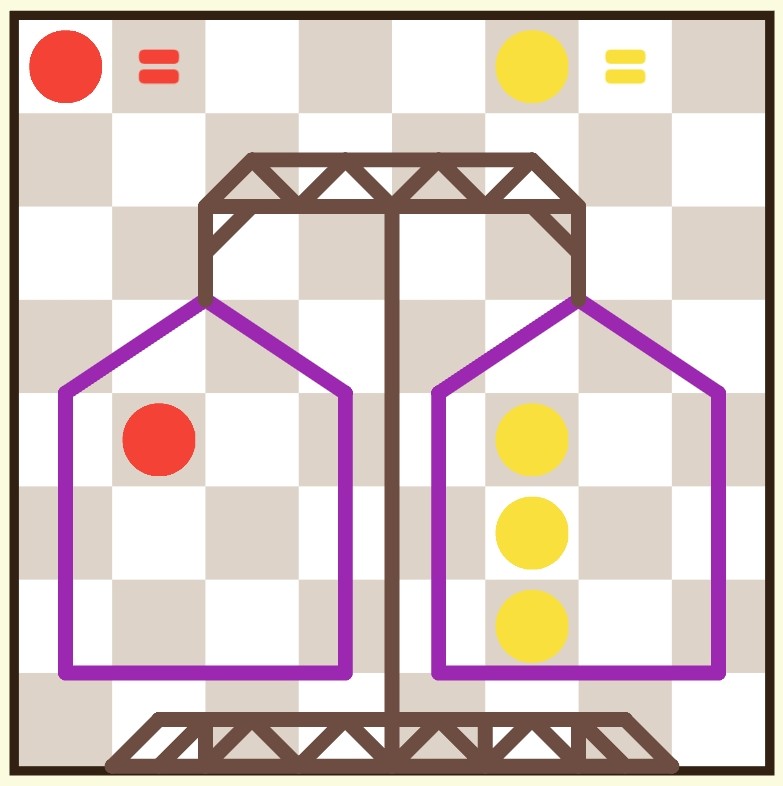
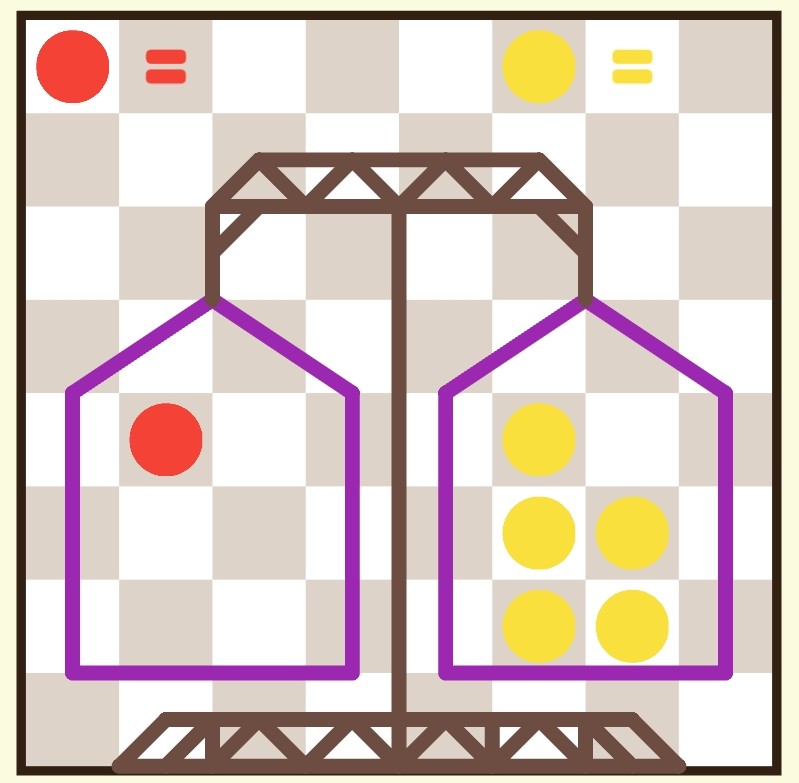
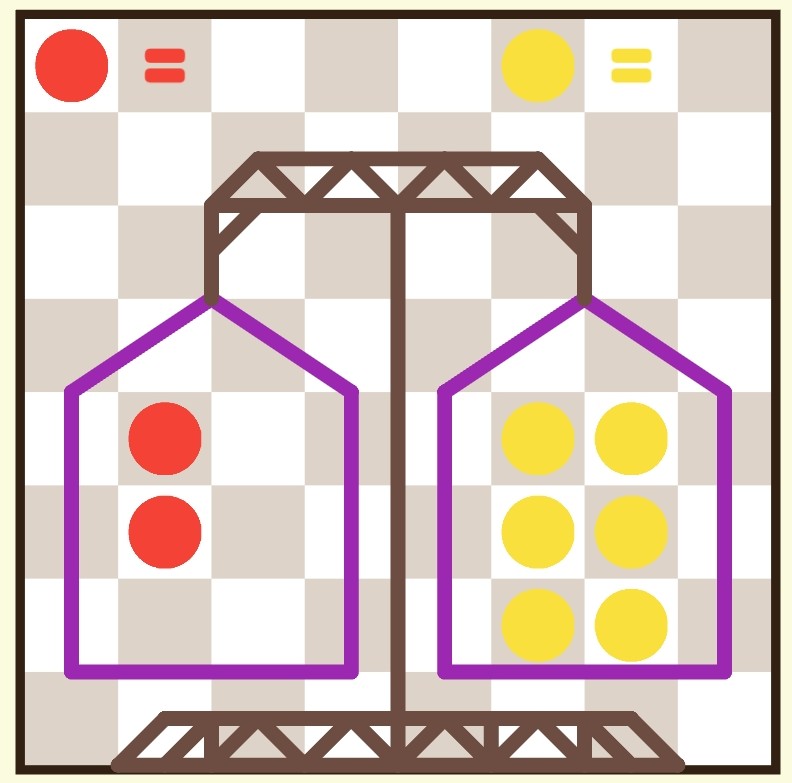
Mystery Pieces, Equivalence
Two chess pieces have been placed on balancing scales. The scales are balanced. The left side is equal to the right. Which chess piece might is represented on the left? Which chess piece is represented on the right? How do you know? Give me a wrong example too.
Your homework is to try a task with double sided counters and to like my posts. 🙂
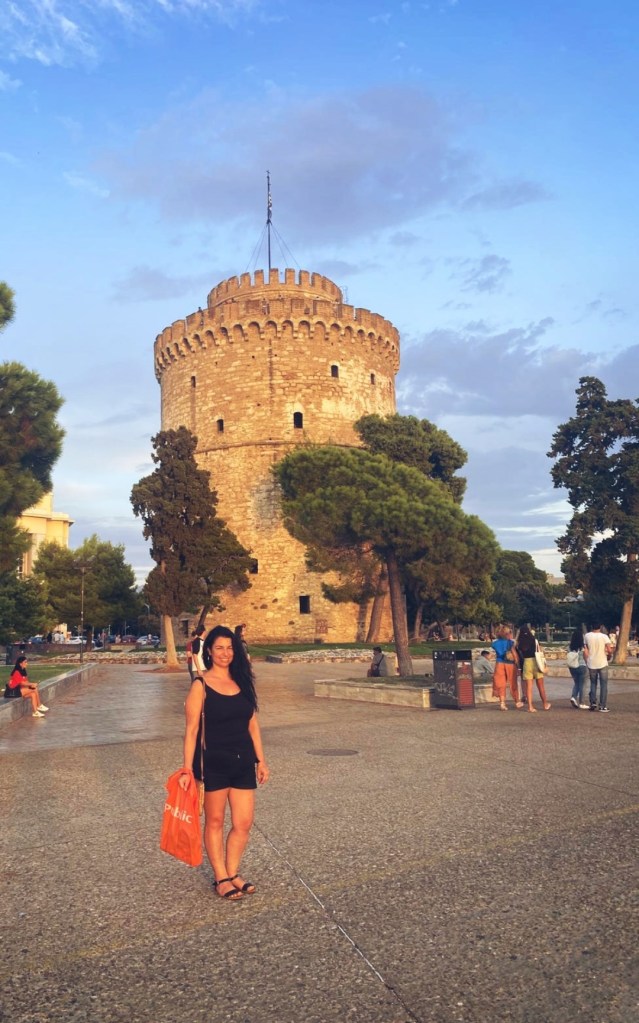
I’ll leave you with a photo of my favourite rook in Thessaloniki, on a day where Greece celebrates.🎉
Bye for now,
Hari x ❤️💛
 LogiqBoard BLOG