
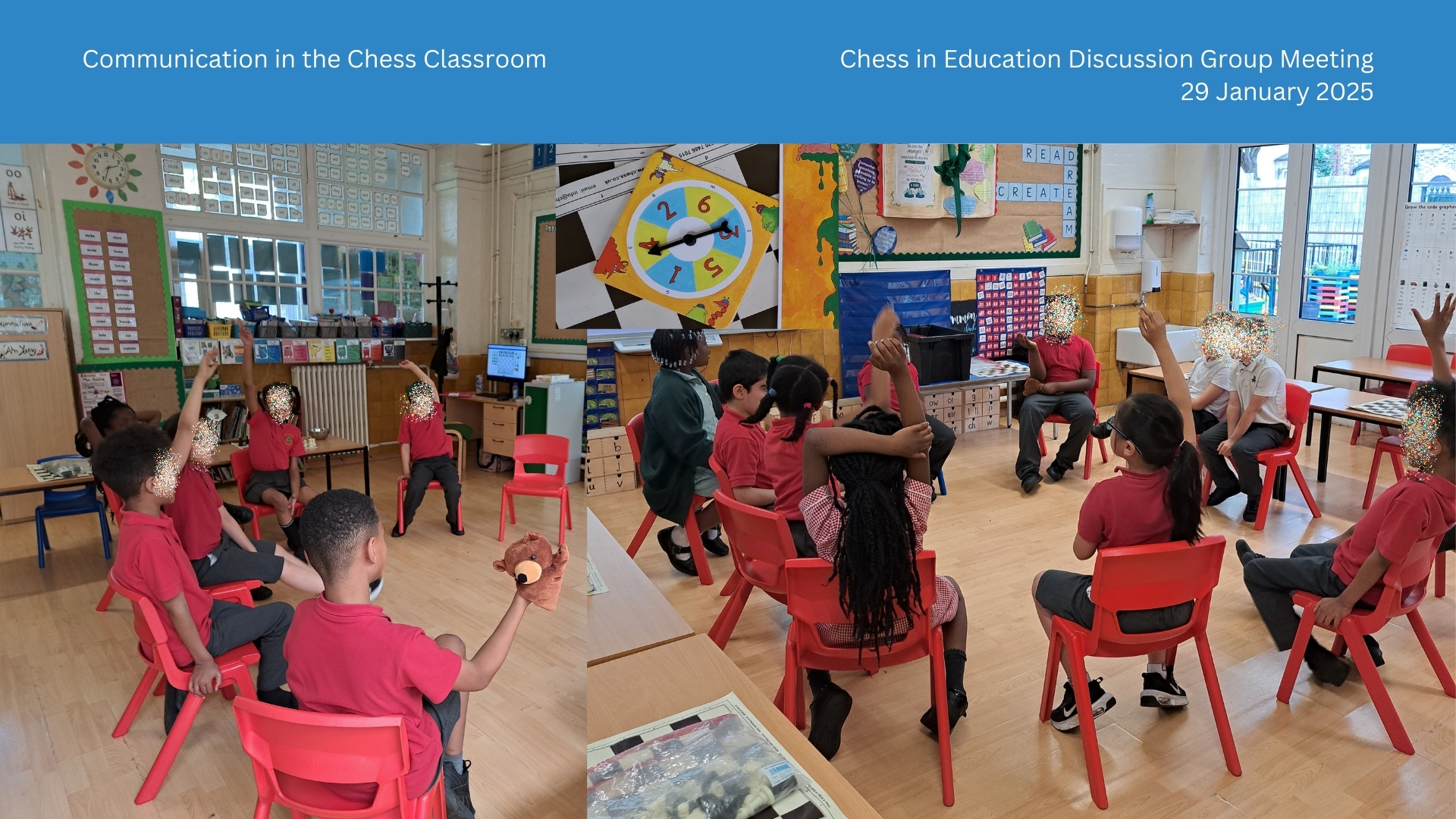
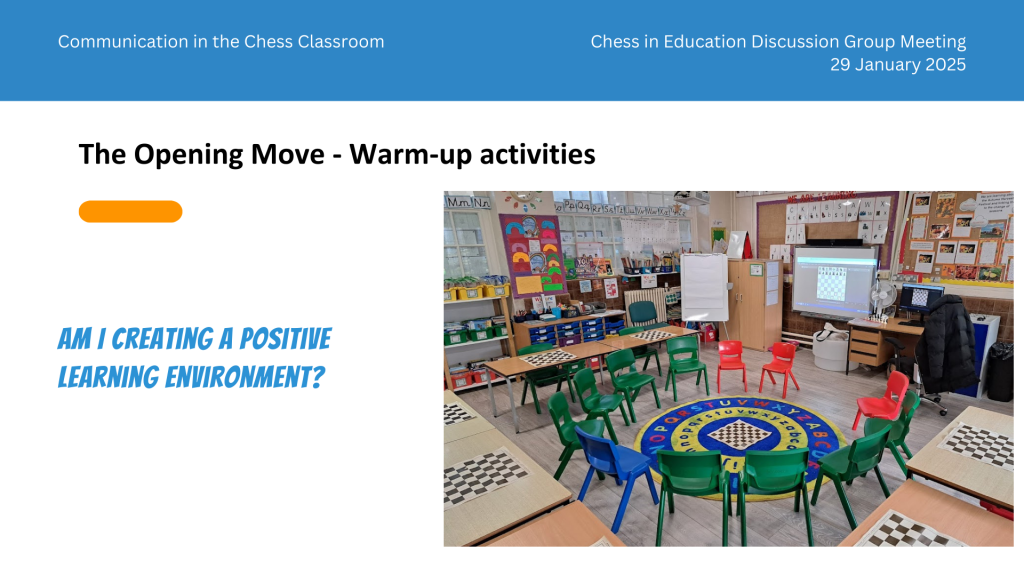
A few hours ago I finished presenting the ECU monthly disussion group with my dear friend, Brigitta Peszleg. Our focus was Talk Tasks in the chess classroom.
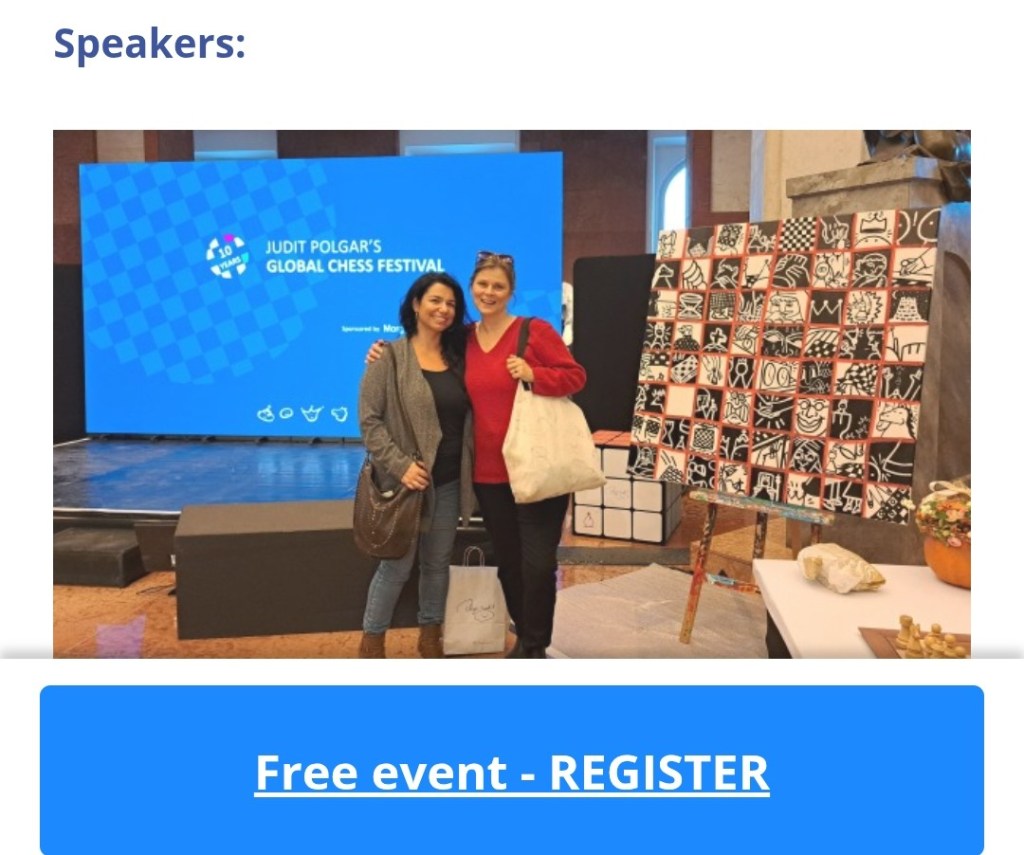
Brigitta presented a talk about the 4 C’s (communication, creativity, collaboration and critical thinking skills) but she also added two of her own, care and compassion. Controversial I know! 😉
It was wonderful to see photos of Brigitta’s classrooms, her different set -ups and teaching tasks. If there’s an opportunity for discussion, be sure that it’s happening. A word game, story, puppet or memory game, Brigitta will always find something different to engage her young learners!
Variety is the key to her chess lessons. Zoom into the photos above and you’ll find welcoming learning environments and happy students!
Brigitta’s other half in the chess world, John Foley and my LogiqBoard queen, Rita Atkins are in Portugal at the Recreational Maths Colloquium. Both are presenting at this very special conference and we’re very proud! More to come on this soon.
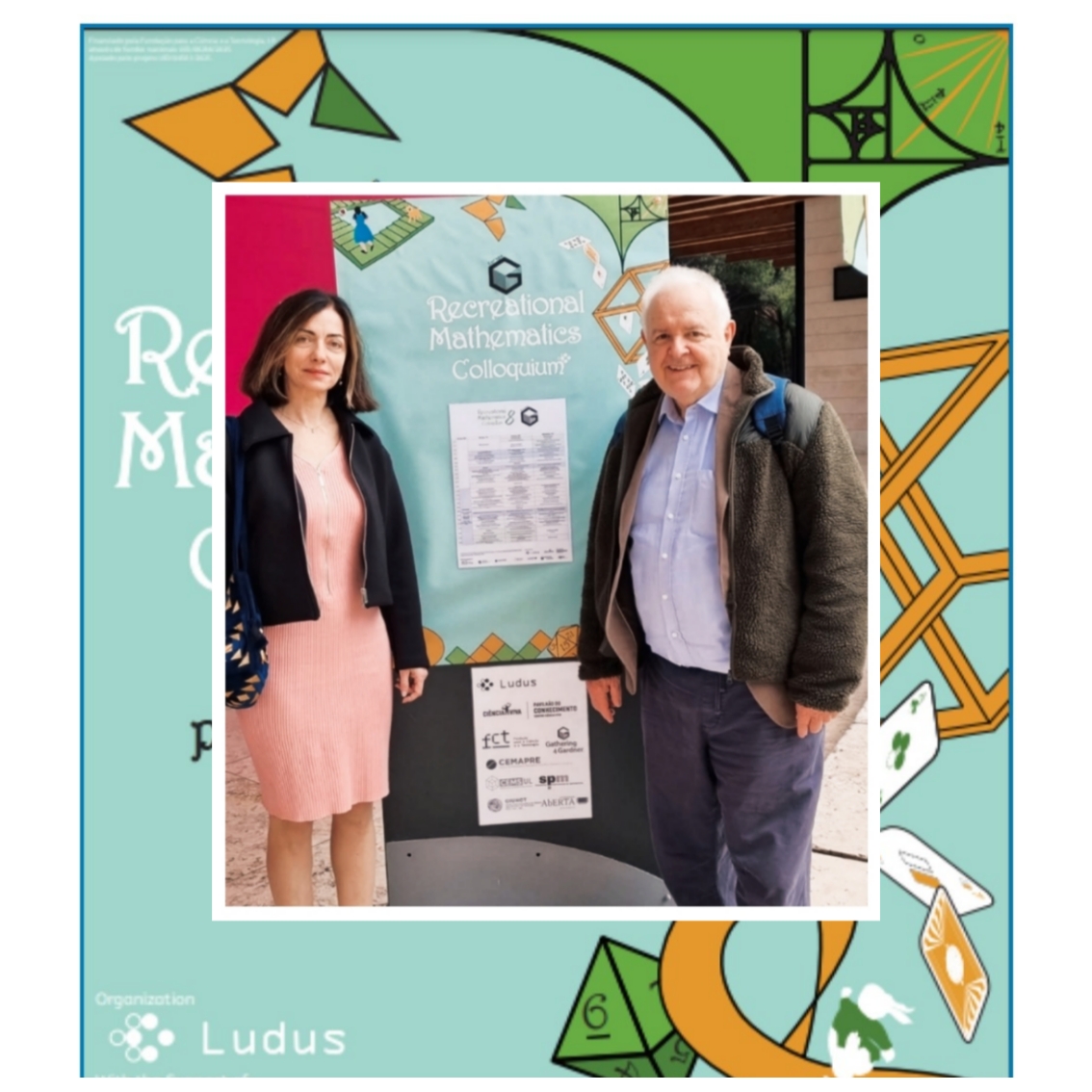
Connecting Chess Educators from around the world
In the mean time, Brigitta and I got to work together and present at the monthly meeting. It’s a wonderful way to connect and learn. 🌍
Every month is different but there’s always something to take away. I hope our participants felt like this tonight.
If Brigitta’s talk was a tour into her beautiful classrooms and the buzz she creates with her students, my talk was the magnifying glass that takes a very close look at what talk tasks look like. Brigitta broke down the 4 C’s into 6 C’s and I broke them down even further.
How often have you heard that chess develops the 4 C’s but wondered how? What does that look like in the real classroom?
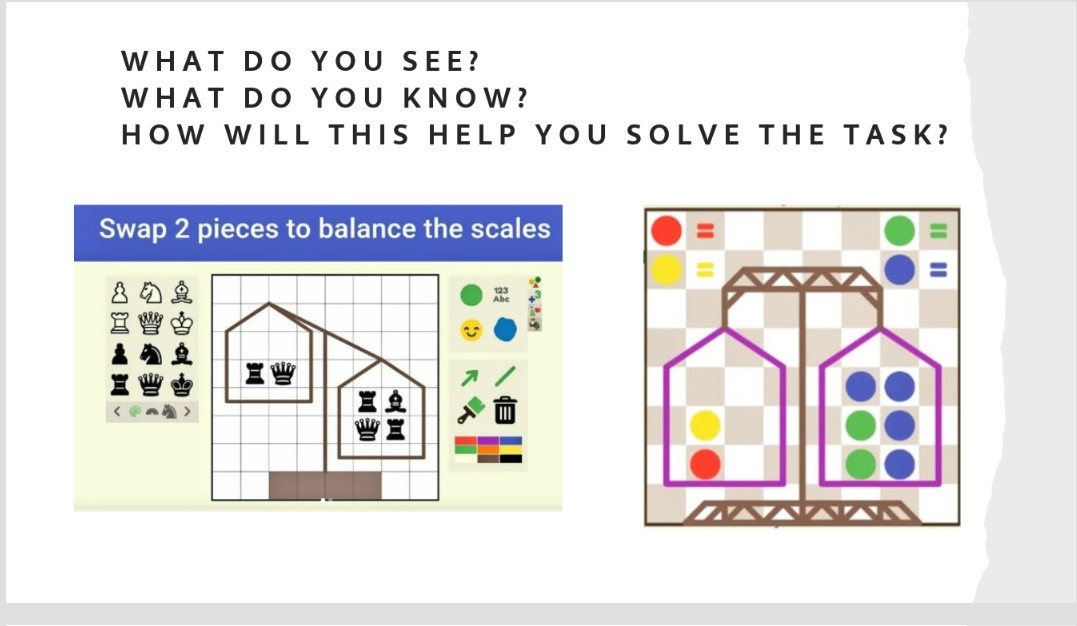
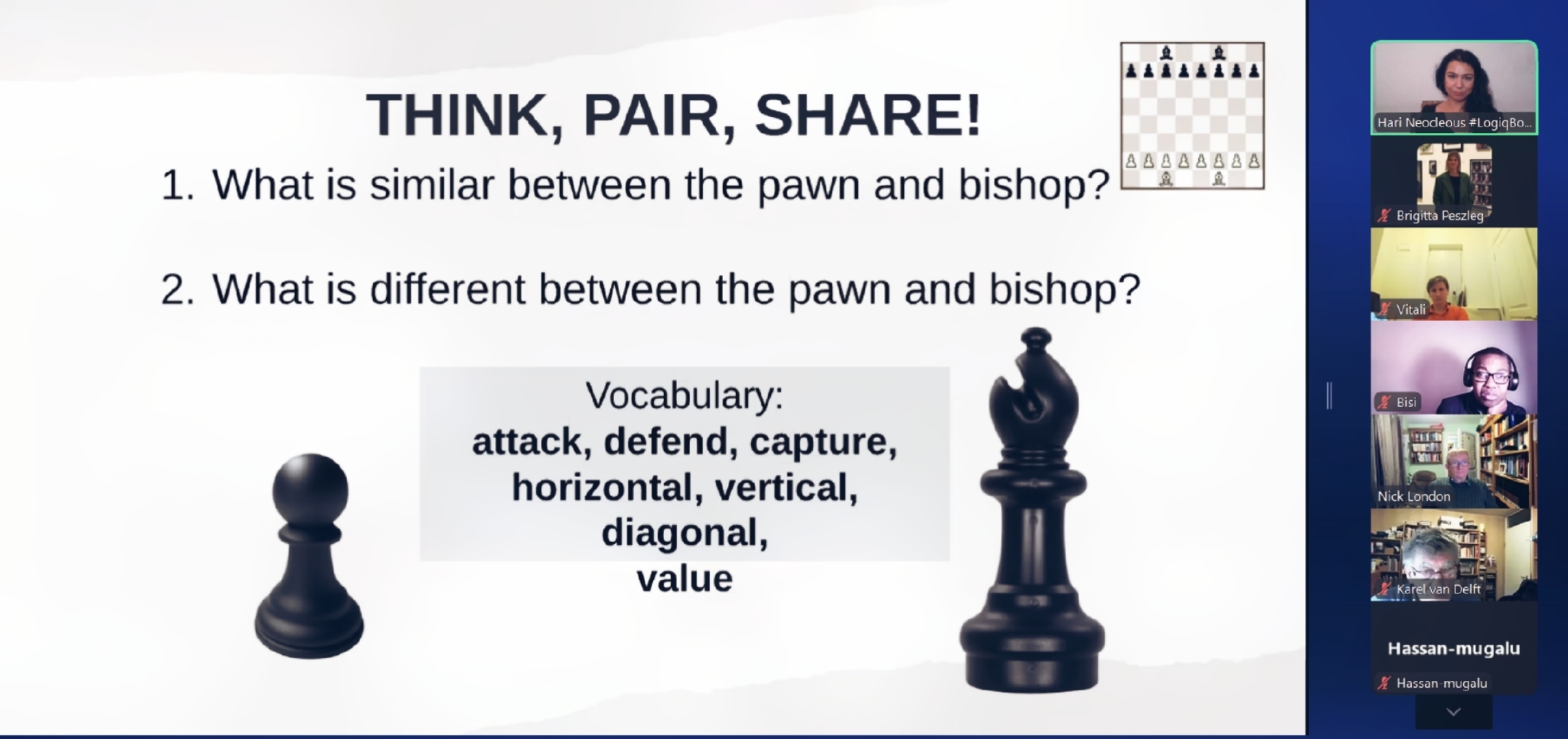
The photos below show examples of talk tasks. These tasks are used at the start of my lessons. They promote talk, allow children to explore concepts, revisit previous learning and use key chess vocabulary in purposeful tasks.
The first two tasks below are more focused on chess content. The third is about observation and comparison. Looking for what is the same and what is different.
The final task is problem solving. There is visible information on the balancing scales but there is also the unknown. Children need to use their reasoning skills to solve and explore equivalence. They use talk to explore ideas and arrive at the solution. I’m interested in the process of thinking.
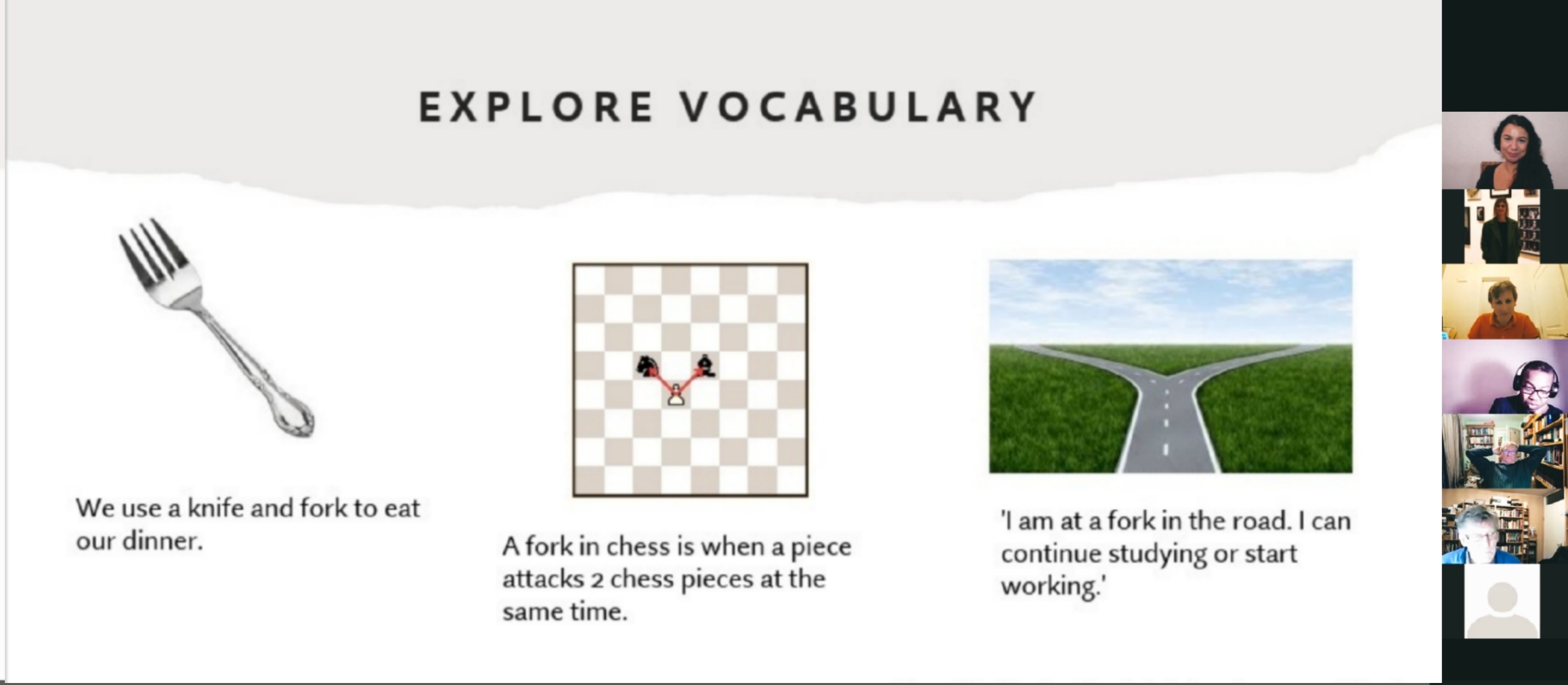
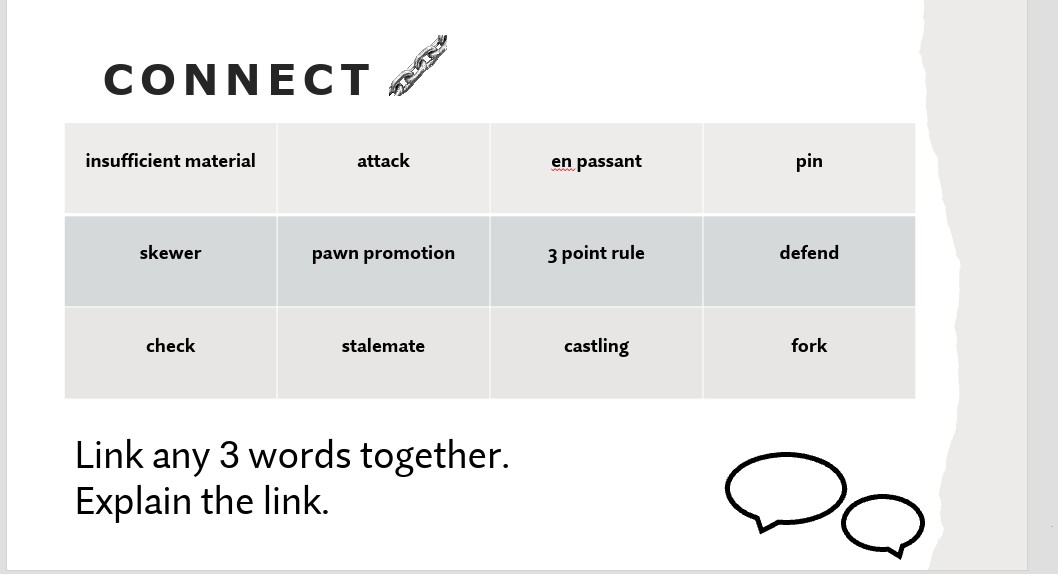
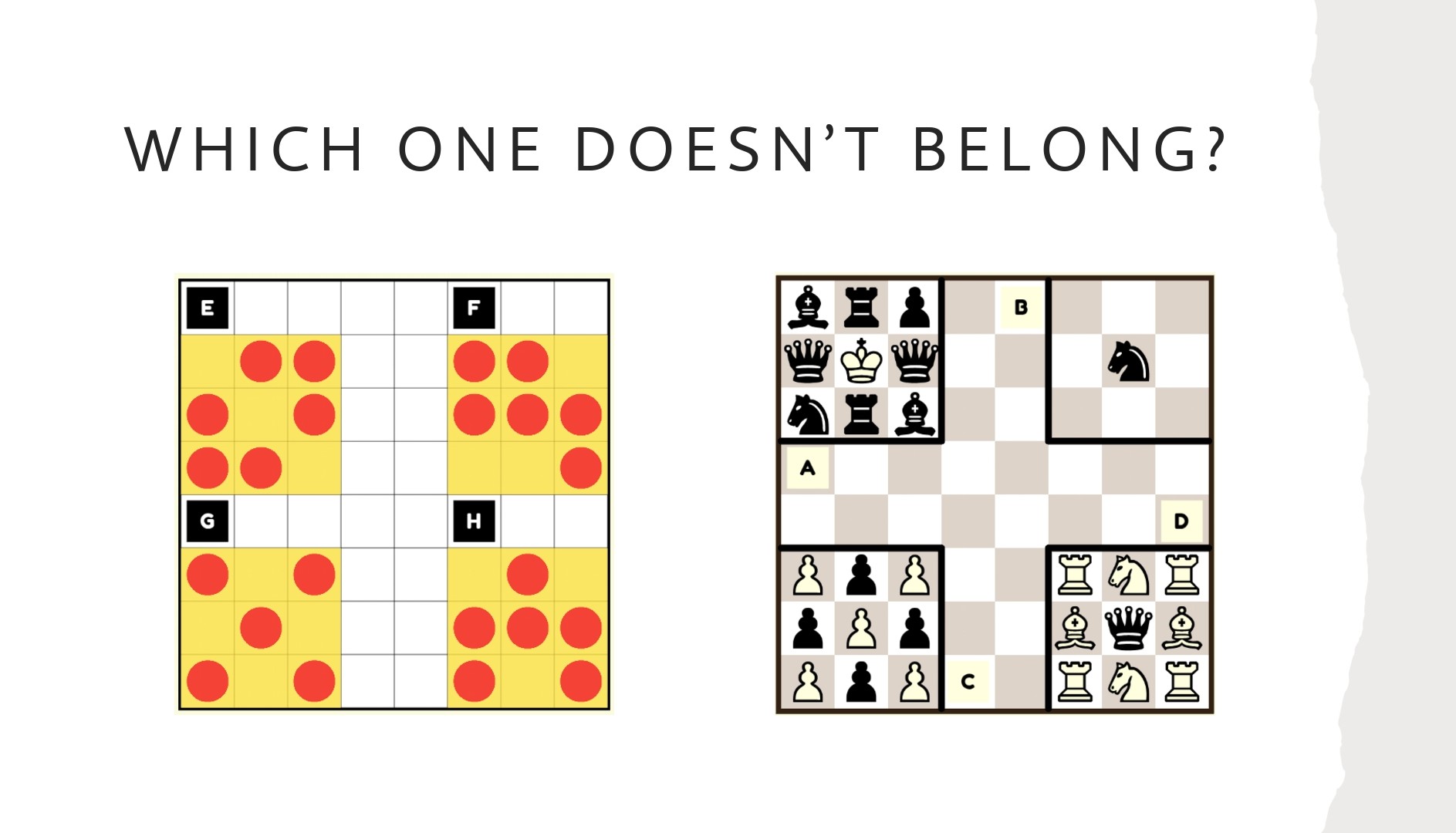
Fabulous participants
Our 22 participants tonight were a mixture of vocal and nonvocal. Cameras on and cameras off. The chat was busy with shares and questions. And of course someone was tired on a Wednesday evening, I hope we didn’t tire them out! 🫢😬
We packed it so tightly with tasks to take-away that if felt like a course!!
After I shared my talk tasks these were the main questions that stuck with me:
How long do these talk tasks take?
How long are your lessons and how much time is left to play chess?
Why are we moving away from playing the game of chess to adding all these other areas? When and why did this happen?
If these were the main questions what does it tell us? Were some participants eager to try but not sure how it would work logistically? These talk tasks require a level of trust. Behaviour management must be considered.
You also need to feel safe enough to say to the person in charge, ‘look we might move more slowly through the chess curriculum but the gains will be worthwhile’.
The 3rd question points to a chess teacher of competive chess. Parents may be paying for their child’s future in chess. All lessons are geared towards creating the best chess players possible. Tournaments and medals are the big goal.
There is room for both!
Both chess in education and competitive chess have their place in the world. It depends on the country , the culture of chess there and which category you fall into. I think we need both. I have no judgement. Both are special. Chess is both a sport and tool for education.
My role as a chess educator
I fall into the category of chess in education. I’m an experienced primary school teacher, previously a primary maths lead and now intervention teacher. My skill set lies in pedagogy and in teaching children who struggle with learning maths. So I can talk for hours about the many benefits of chess.
Today I was exploring the 4 C’s through talk tasks.
There is so much to gain through chess, so many benefits that it would be a shame not to gain all the glory. If schools and headteachers are to invite more chess into their school day whether it’s in lesson time or in clubs then they need to know why. Why should we teach chess? How will it benefit my students now and in their future?
Some of my tasks explore creativity. Some develop collaboration and discussion skills. Some focus on reasoning and thinking critically.
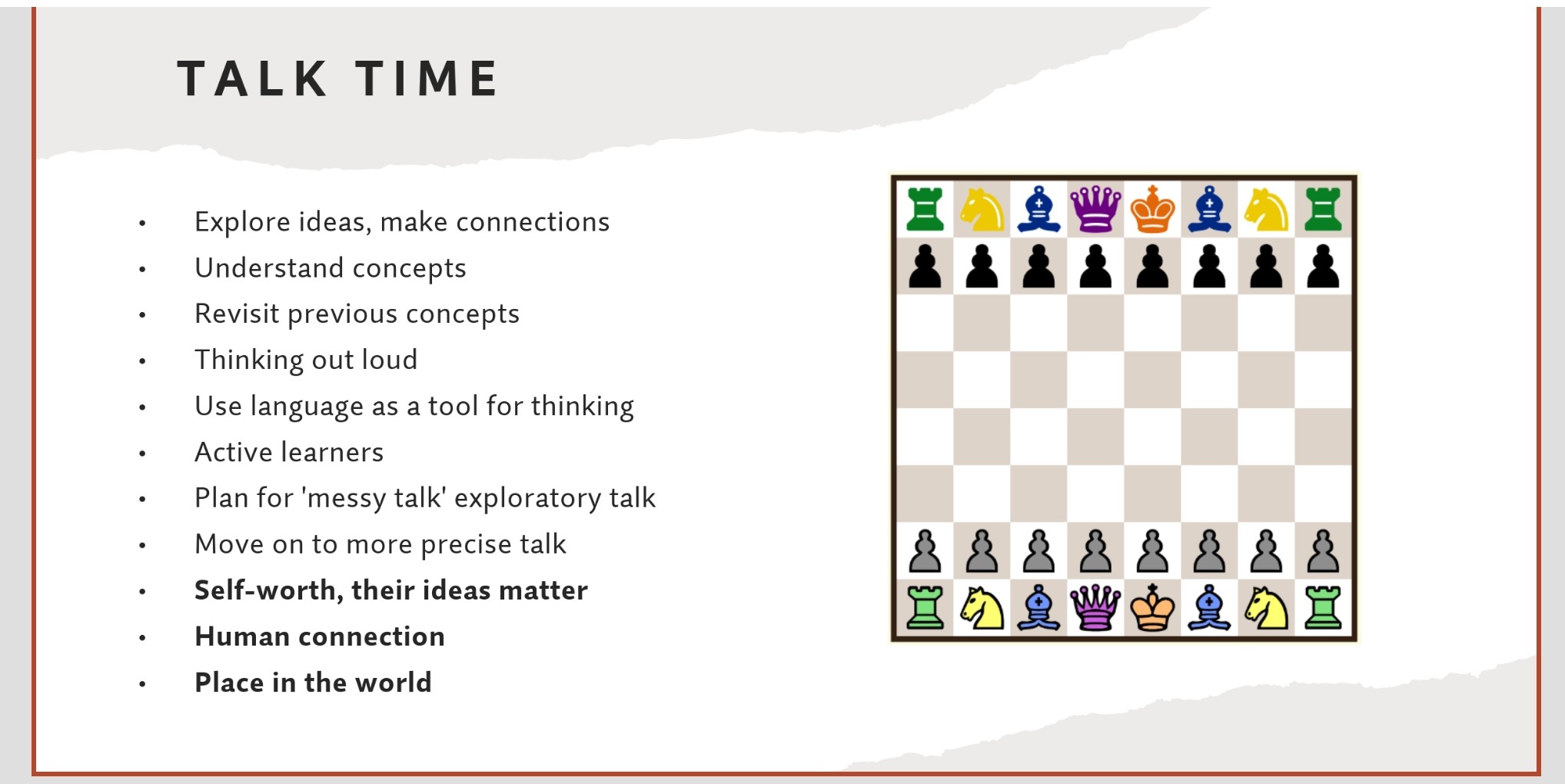
So where’s the problem? Well, there is a dilemma. You will have to work through your chess curriculum more slowly. You have to weigh it up and make a professional judgement. In a class of 30 with varying needs, a 10 or 15 minute talk does some great things!
You also have to train students to have focused talk. Delegate roles, make expectations clear. Children can use white boards or paper to make notes.
Model clear and precise sentences. Think about pairings, I find friends work so much better together. Create a classroom culture where ideas are valued and you praise enquiry and the formulation of ideas. As a teacher model the ‘thinking out loud’ process. After all, aren’t words essential to have thoughts? 🤔
If you look introspectively I will tell you that talk tasks give children a voice. Self-worth. They’re being listened to and they discover they have something interesting to say.
Where you won’t find the 4 C’s
In a world of screens and heads looking down we absolutely have to explore the social connection chess gives us. This doesn’t really mean sitting across the board in silence playing chess. Neither does it mean sitting in your room playing chess online. You will not find the 4 C’s here.
If we move way from looking internally, and beyond the classroom we can take a wider view of the need for talk tasks. I need my students, my children, to know how to speak, to articulate themselves, speak with intent and be able to go into the world with their heads high.
Communication skills are key. In a world where we are bombarded with visual stimuli, fake news and propaganda they need to think critically, think for themselves. We want them to see different perspectives and not feel the need to be right all the time. People have different opinions. Reflect, listen, build on the ideas of others. Think outside the box. Notice.
Being given the time to talk through these tasks works on 3 levels. It’s linked to self identity, learning in the classroom and the future.
I’ve been teaching for a long time and what I love about about my jobs (yes jobs) is that I can be creative.
The beauty of being a chess teacher is the freedom you have, chess is more than just a game and I want to explore it.
I described chess as my secret weapon today. It’s my magic wand that can change lives in the classroom.
I would like to say a very warm thank you to the lovely feedback on my blog and social media posts. We loved the questions and shares too.
Although I don’t have any quotes now I will add them next week. I did see a few but didn’t record them. Great insights that I’d like to share. We also enjoyed a sneaky peek at Hasan’s chess and arithmetic booklet. Great work 👏
What’s your why?
My homework for you in today’s blog is to write your vision. What is your rationale? Why are you a chess teacher? Imagine you have to persuade the headteacher sceptic who knows nothing about chess. Why should you teach chess in their school?
Chess in education or competitive? Or maybe you fall into both categories?
Don’t forget to try a talk task. Let me know how it goes, give time to think and time to talk.
It’s 3am and this night owl needs to sleep. John and Rita, I wanted to visit Portugal but I replaced my travel dream with the lovely Brigitta and a night of chess talk. I had a great time. 😉
Hari x
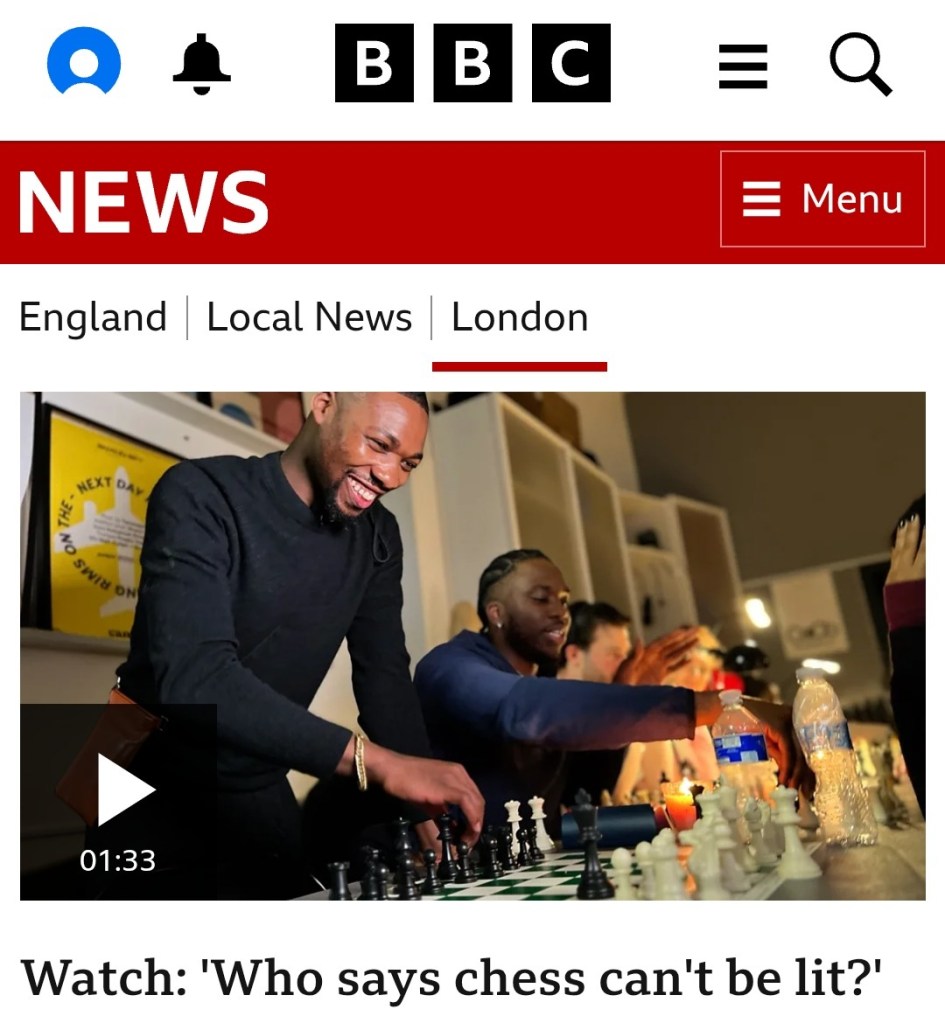
P.S. Watch this little gem of a video. One and half minutes of the chess connection. ✨️
https://www.bbc.co.uk/news/videos/cd7d27wpqz5o
 LogiqBoard BLOG