

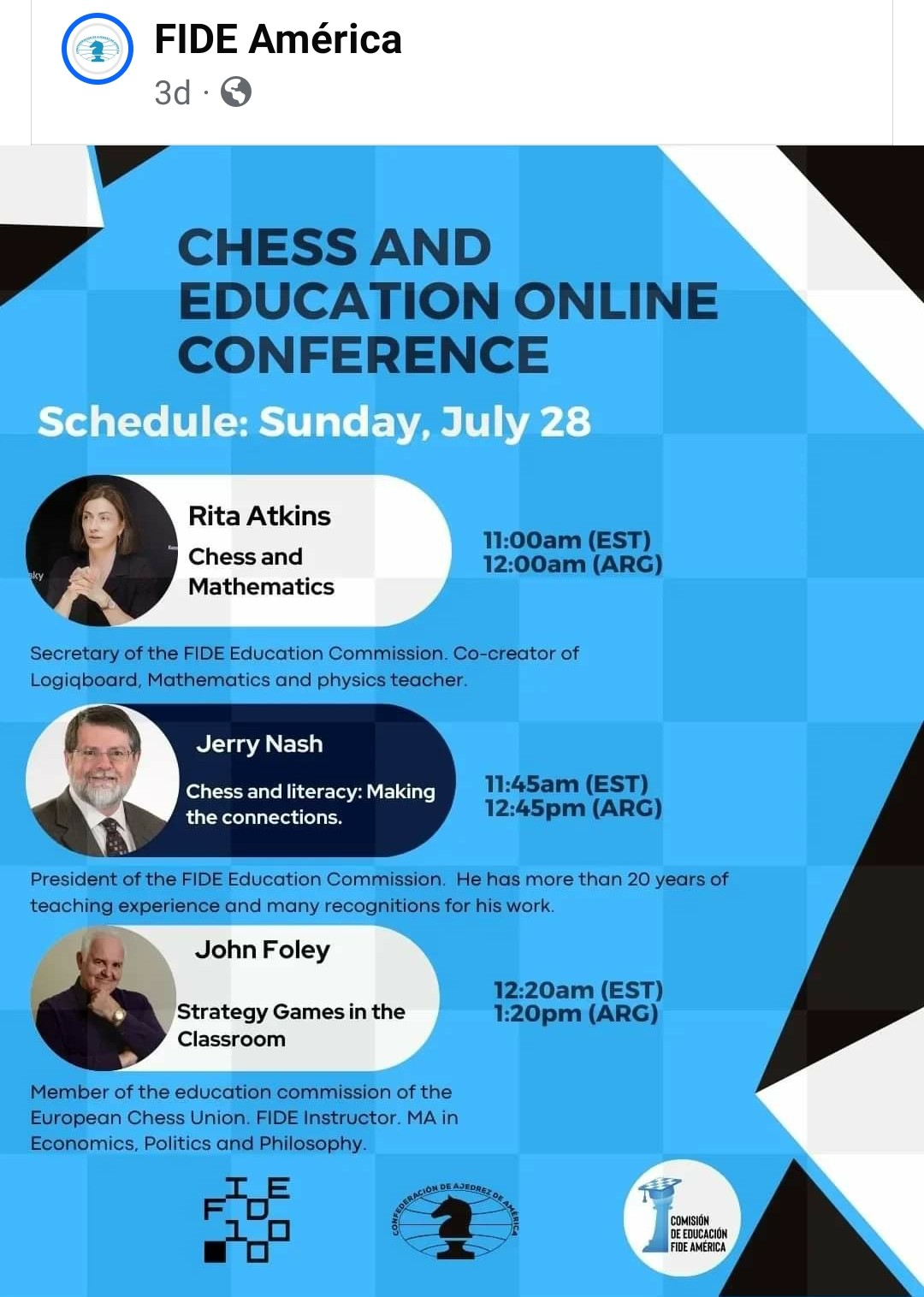
Today’s blog is all about Sunday’s online Chess Education Conference hosted by Fide America. A two-day conference, I was only able to join on the Sunday and I’m so glad I did. It was a great success!
A good conference has to tick certain boxes. I don’t want to spend my Sunday listening to a ‘Show and Tell’ style day where speakers only share what they do. A variety of small and big voices and themes make a good content list.
In today’s blog I’ll be sharing what I look for in a conference:
1. Begin with the Big Names!
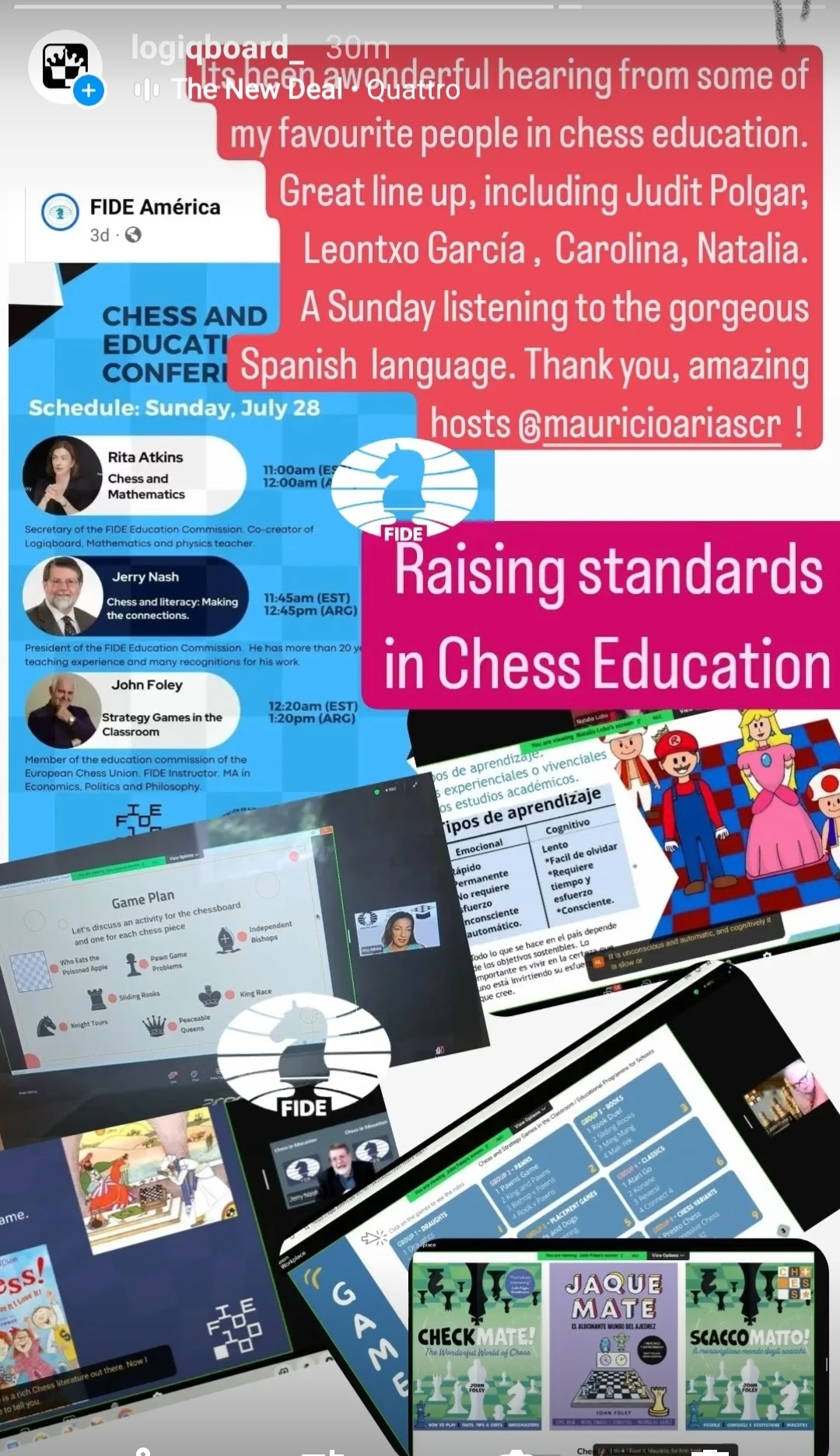
The Sunday began with some very big names from the chess world. Who doesn’t want to hear Judit Polgar talk about how chess education belongs in schools and her journey in becoming one of the world’s greatest players. She also spoke about the next big Chess in Education Conference, at the Chess Connects Us Festival. This will take place in September at the Chess Olympiad in Hungary.
Leontxo Garcia also spoke in Spanish about his valuable work in schools. When these are the first two speeches you know it’s going to be a good day.

2. The Big Issues & Strategy Games
I want someone to talk about the latest news in chess education and wider issues. I always like a round table discussion with several speakers. On Sunday there was a talk on wider issues by John Foley.
He began with with strategy games and the skills they can give our children. John shared a compendium of games from one of my favourite Chess Plus courses and included logic puzzles and chessy maths. Definitely worth checking out!

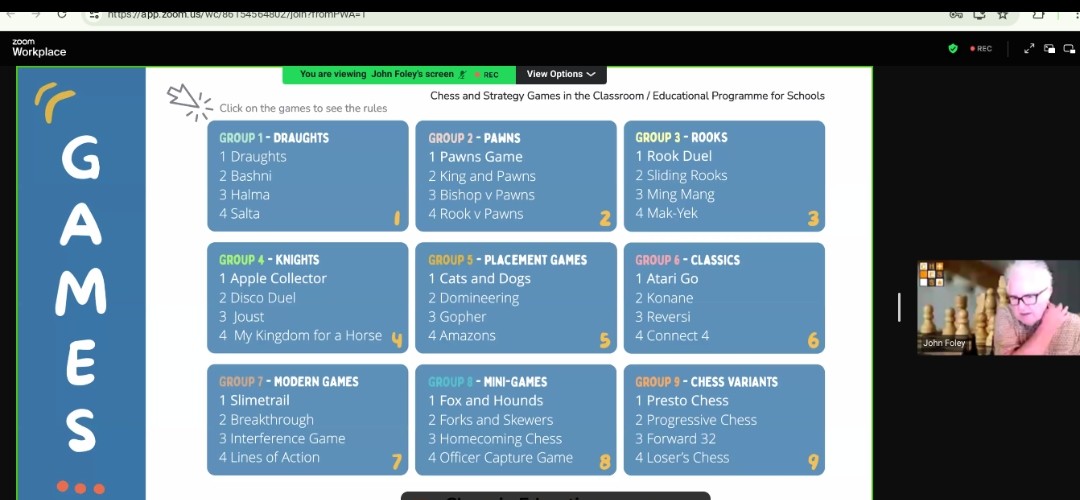
He also did what John does sometimes and that’s a talk with a sprinkle of controversy. Never afraid to talk about wider issues, John explored the question What’s wrong with chess in schools? In our big drive for chess in schools we must always know where the downfalls are so we can do better. I want a speaker to make me question my work and vision!
So what’s next?
Should we push for chess in schools or begin with strategy games first? Soft competition or tournament training?
What happens after a programme is established? How do we measure success? How do we maintain high standards? Why do some schools or countries embrace chess and others do not? Should it be part of the curriculum or are clubs the way forward? What makes a great primary school chess tutor?
These questions went through my mind as I listened. I don’t want ‘rose tinted’ presentations about how everything is wonderful in a conference. Chess is about critical thinking so I want presentations to make me think critically.
3. CLASSROOM STEALS
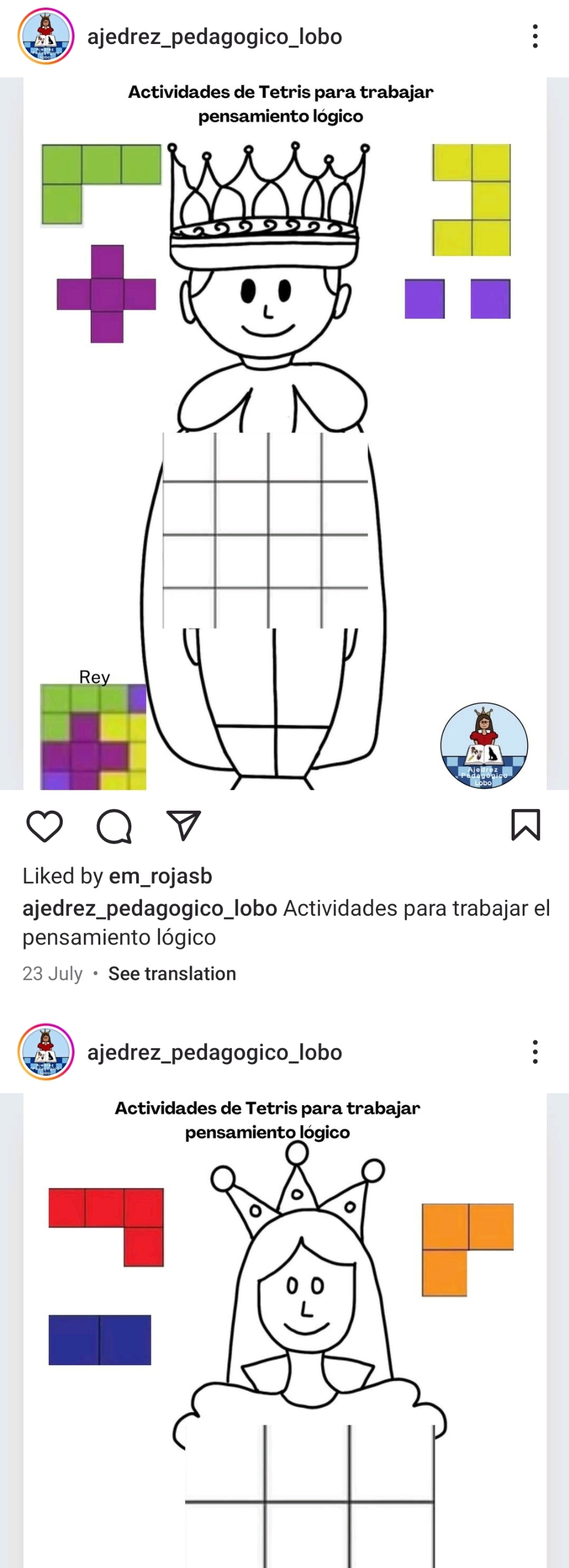
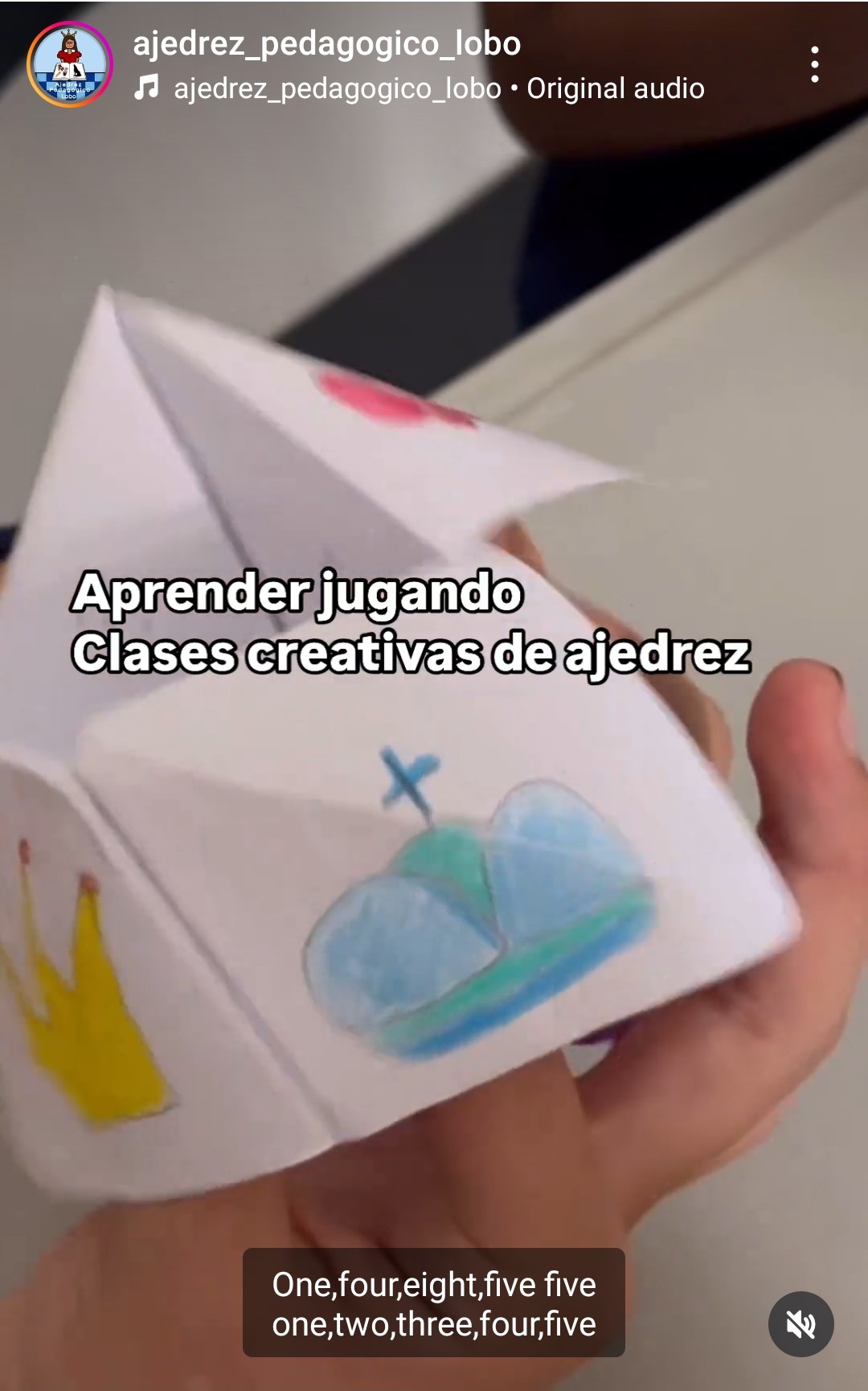
I love talks where I can use ideas back in the classroom. Natalia Lobo gave a wonderful talk about her classroom practice. Now I don’t speak the beautiful language of Spanish but I read the subtitles and the photos were a great help. I now follow Natalia on Instagram (see her insta photos below) and I look forward to trying out some ideas. Good conferences should lead to connections and collaborations.
4. Chess and Literacy and friendly reminders!
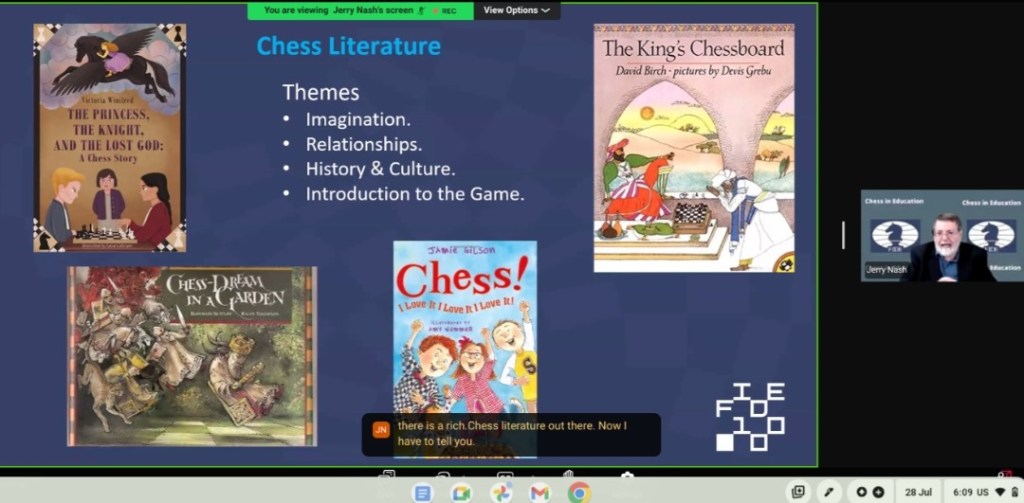
Jerry Nash did a brilliant presentation on chess and its cross-curicular links to literacy. His talk reminded me how chess fiction is rich, exciting and growing at a rapid rate. There are so many wonderful children’s chess books out there right now.
I’m disappointed with myself because another year has gone by and I’m yet to explore the wonderful writing tasks linked to chess. I leave it to the end of term and then something else always happens.
Once more, my year 6 students have left for secondary and I didn’t ask them to write that persuasive letter to the headteacher where they’d argue why chess must go on! And what about an acrostic chess poem or a day in the life of a chess piece?
I like chess talks that remind me of what I know as primary school teacher where I sweetly tell myself off for not being more organised!
There are rich learning tasks by combining chess and literacy and Jerry shared some great examples. Not only in writing but in oracy. This is an area I must dedicate time to.
5 Learning more in my field
I also want to hear from experts in my field (maths educators). It was a pleasure to hear from LogiqBoard’s co- creator and Fide’s Chess in Education secretary Rita Atkins. Rita’s talk was jam packed with problem solving tasks and games for the classroom. She showed us how to plan progressively, slowly building challenge. Making learning accessible to all but challenging those that can go further. It felt like a mini course on maths and chess tasks so thank you Rita! ( I need a separate blog to share these fabulous tasks…) 😉

6. Heartstrings
My favourite tick box is heartstrings, that moment where you’re reminded that you love what you do and why you became a teacher.
Do you know my number one reason to teach chess and strategy games is not linked to maths! It’s actually to do with social and emotional skills.
Fernando Moreno gave a wonderful talk about his work as counsellor.
In my debut article the Gift of Chess I spoke about how chess can be transformative. It can shape attitudes and behaviour. It can help children explore and control emotions. It provides a safe space for the lonely child or the child that struggles with emotional regulation.
Fernando spoke about his amazing sessions teaching children, his work with families and migrants. Real stories of how chess teaches life skills.
All conferences must include these stories of how chess changes lives.
7. Around the world
I also enjoyed Carolina Lujan talking in Spanish about a new diploma in chess education for a university. Exciting times ahead when chess courses are offered at university level!
8. Great hosts
I have to finish with the importance of great hosting. A conference needs hosts who keep everything ticking, solve problems, encourage questions and answers and just add bursts of energy.
Mauricio, a great host, said some wonderful things about LogiqBoard, in Spanish but I knew it was positive! He also shared other resources and platforms which is so important. I’m certain the 500 participants left with a wealth of knowledge, resources and excitement to teach.
Thank you Fide America for opening up this free conference to participants outside of Fide America. That was quite a vibe! Please fly me over for future conferences! 😉
I’ll leave you with a question and my two favourite quotes:
So what do you look for in an education conference?
Chess definitely has a place in modern education, Judit Polgar
Think problem not solutions, the questions are more important than the answers, Rita Atkins talking about problem solving.
Happy August everyone! 🌞🌊🏖
Hari x
 LogiqBoard BLOG