
by Hari Neocleous
Welcome to my second blog where I’ll be taking you on a journey into my classroom. I want to show you how you can teach a brilliant problem solving task called The Minimum Problem. Let’s start at the beginning…
Introduce the big question:
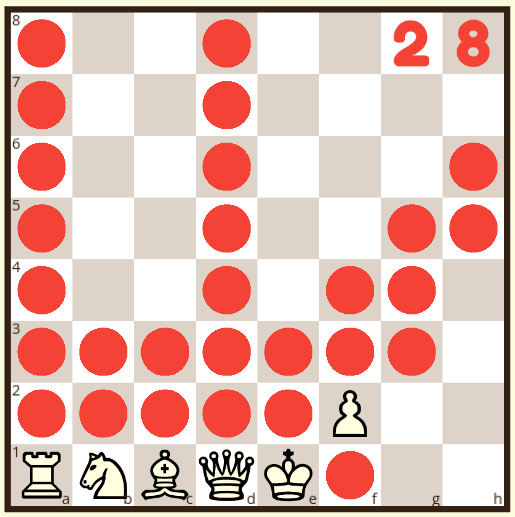
Can you place the six different chess pieces on the chessboard so they attack the fewest number of squares?
Starter questions: We begin by discussing what ‘under attack’ means in chess. I then show the children different pre-saved boards which are saved in my LogiqBoard library.
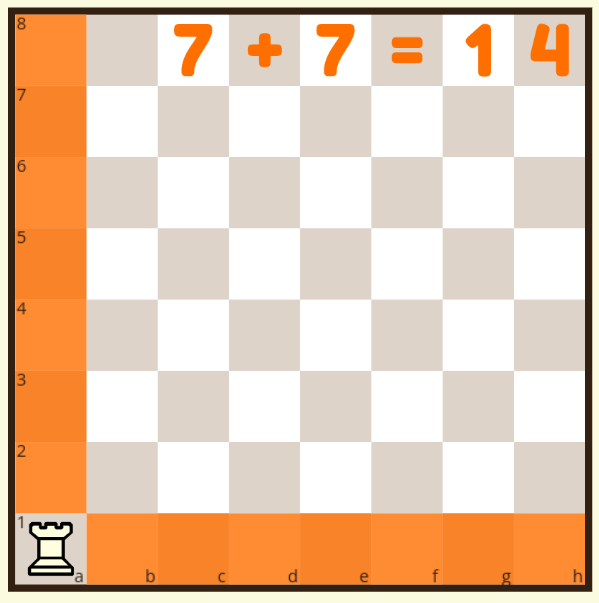
Board 1: The rook is on a1. Which squares does the rook attack? How many squares in total?
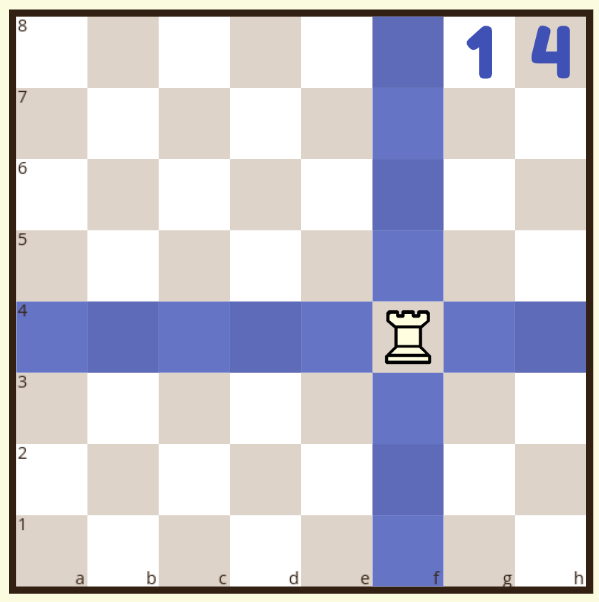
Board 2: The rook is on f4. Which squares does the rook attack now? How many squares in total?
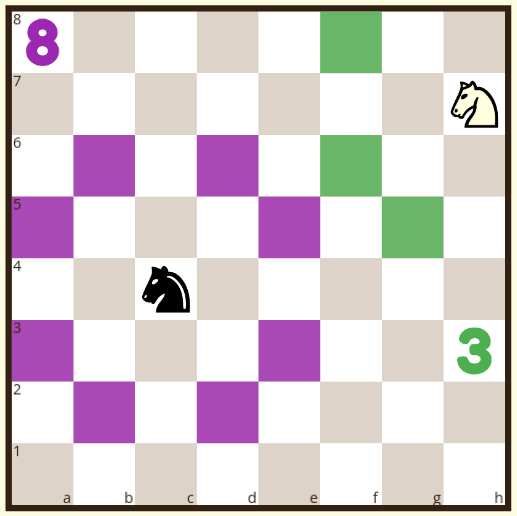
Board 3: The knight is on c4. Which squares does the knight attack? What about if I moved the knight to h7? We talk about how this knowledge might help us find the best position for the rook or the knight?
I show children how to use the paint tools to shade the attacked squares and record the totals in the corner. The children create and memorise these images easily with LogiqBoard’s brightly coloured squares.
Exploration time: I give children some time to ‘have a go’ at the big question.. The motivation they have at the start of the lesson needs to be tapped into! I praise ideas and effort. You could ask students to place the 6 pieces on their chess starting positions and paint the squares under attack. For children who need extra support, give them one piece at a time. I walk around and ask my students why they arranged their pieces in a certain way. What do they notice? How could they reduce the number of squares being attacked?
Come together: After a short exploration it’s time to go over the rules. In The Minimum Problem the pawn is not allowed on certain squares. Can the children say which rank the white pawn cannot be placed on? (1st and 8th rank). I ask them to explain why. At this stage I’ll also model counting strategies. I don’t want to hear children counting each individual square. I prefer them to subitise (instantly recognise a number of squares) and add ‘chunks’ together.
The main task: Children are now ready to solve the big question. They arrange the pieces with their partner and paint squares on LogiqBoard. I love hearing their ideas. Some spread pieces out, some children keep them on home squares, some go for corners or move their pawns up as if they’re moving to the other side.
The 6 square solution is in the next post, that gives readers a chance to enjoy the challenge. It’s from two of my best chess players in year 6. Early on they explained in detail why the queen must be blocked into a corner as she has the greatest attacking power, followed by the bishop and rook as they are also long range pieces. After trial and error and some silent moments they managed it.
By the end of the session all my students felt that they had achieved something. They were mathematicians on a chessboard. The goal was to beat their own score each time. Success was their personal best. They used their critical thinking skills, using their knowledge of attacking power and made informed decisions when they positioned their pieces. They compared the difference in coloured squares when swapping pieces around. ‘If I move this here then the number of coloured squares increases by…’ The children identified problematic chess pieces and blocked them in.
It’s important to talk about the gains at the end of the lesson. This shape and space problem developed critical thinking, reasoning skills, visualisation skills and addition skills. Some also considered how this knowledge could be connected to a chess game. I often see powerful pieces blocked in!
To finish, I challenged my primary school students to go home and see if they could find another solution on LogiqBoard. Could they beat their score or could they find a solution with 5 squares? I first discovered this problem on a Chessplus course. I found the 5 square solution, emailed it to Chessplus and now I was asking them to do the same. They copied their links and sent their various solutions to me.
Good luck finding the solution with 5 squares! I’ll post the solution before the next blog.
A big thank you to Chessplus for their inspiring course.
LogiqBoard is waiting for you. 😉
Hari x
 LogiqBoard BLOG